Malalo as It Is Lived
The following is a summary of the letters for APRIL 1963 Learning the Ground: Food, Faith, and the Slow Work of Staying
Malalo Mission Station
Malalo as It Is Lived
By April of 1963, Malalo is no longer new—but it is not yet easy.
The station sits high on its hill above Buakup village, open to sea air and weather, exposed in a way that is both gift and burden. The ocean lies below, beautiful and indifferent. The path up and down the hill is walked daily by villagers, students, nurses, teachers, pastors, and children—each step a reminder that nothing here comes without effort.
Malalo is a hub, not a destination. Boats arrive and leave. Students come and go. Teachers rotate through. Villages from the coast and deep inland look to this place for schooling, medicine, and leadership. The circuit stretches north toward Lae, south toward Salamaua, and inland toward mountains that rise sharply and hold their own fears.
April settles into this rhythm—not dramatic, but demanding.
Food and the Shape of the Land
Food, in April, is never incidental.
Ina writes carefully about gardens, not because they are picturesque, but because they determine survival. On the coast, land rises and falls at impossible angles—forty-five, sixty, even eighty-five degrees. Gardens cling to slopes that barely hold soil. After one or two plantings, the rains carry the earth away and the people must cut new ground, clear bush, burn trees, and build pig fences again.
Pig fences are not symbolic. They are labor: posts driven into rock-hard ground, bamboo stacked carefully, three feet high, because one wild pig can destroy months of work overnight.
Here they grow taro, sweet potatoes, cucumbers, pit-pit, beans, corn, pumpkins, greens with strong flavors that must be learned, mangoes, citrus, coconuts, papaya. Bananas come in varieties that must be cooked, boiled, salted, wrapped in leaves—few resemble the bananas known back home.
Rice grows well but is slow to catch on. Cocoa promises income but requires patience and constant weeding. Copra brings cash but demands hours of drying under uncertain weather.
Ina understands this not theoretically, but practically: gardens determine who walks hungry and who does not
1963 April 4
.
Raising Animals Where the Ground Slips Away
The Ericksons try, imperfectly, to raise animals.
Cows are brought in—twelve at first. Some die. Some fall off cliffs. Eventually, a few remain long enough to provide milk for the family. Chickens are less cooperative. Ducks do slightly better. Meat cannot be preserved reliably; earthquakes break jars, heat spoils salted cuts, electricity is uncertain.
So when a cow is butchered, it becomes a feast. Meat is shared quickly with teachers, nurses, pastors, carpenters, and church workers—people who rarely taste meat unless a wild pig is caught. What cannot be stored is given away.
Ina notes this without drama. It is simply how abundance and scarcity are managed here
1963 April 4
.
Children Growing Between Worlds
Paula and Tommy grow steadily into Malalo.
Paula, nearly three, is blonde and blue-eyed, visibly different from her New Guinean playmates. Tommy, younger, with darker eyes and soft curls, blends more easily. They play barefoot with village children, teachers’ children, house girls’ children—learning early that belonging is not about sameness.
Illness moves through the villages—measles, mumps, chickenpox—and somehow passes the Erickson children by. Ina notices, grateful but unsentimental. Health here feels provisional, never guaranteed.
By April, Ina is expecting another child. She shares the news gently, without emphasis, trusting that life will make room as it always must
1963 April
The Dispensary and the Weight of Care
The dispensary remains central.
Ina has two nurses and two nurse’s aides now—capable with routine work, but emergencies always fall to her. Cuts, fevers, falls, infections, childbirth. Care does not pause for Sundays or holidays.
When aspirin arrives by airmail, it is immediately useful. Paula runs a fever. Tommy falls on the school steps, smashing the bridge of his nose. Swelling, bruising, difficulty breathing—Ina debates sending him to Lae for X-rays.
Decisions like this are constant: when to wait, when to act, when to trust observation over equipment
1963 April 19 to Estelle family
.
Holy Week at Malalo: Improvisation and Faithfulness
Easter arrives quietly but fully.
Good Friday services are held in the old, failing church. On Saturday, visitors arrive—families from the sawmill, children who play themselves into exhaustion. On Sunday, friends from the Bula girls’ school come, bringing guests of their own.
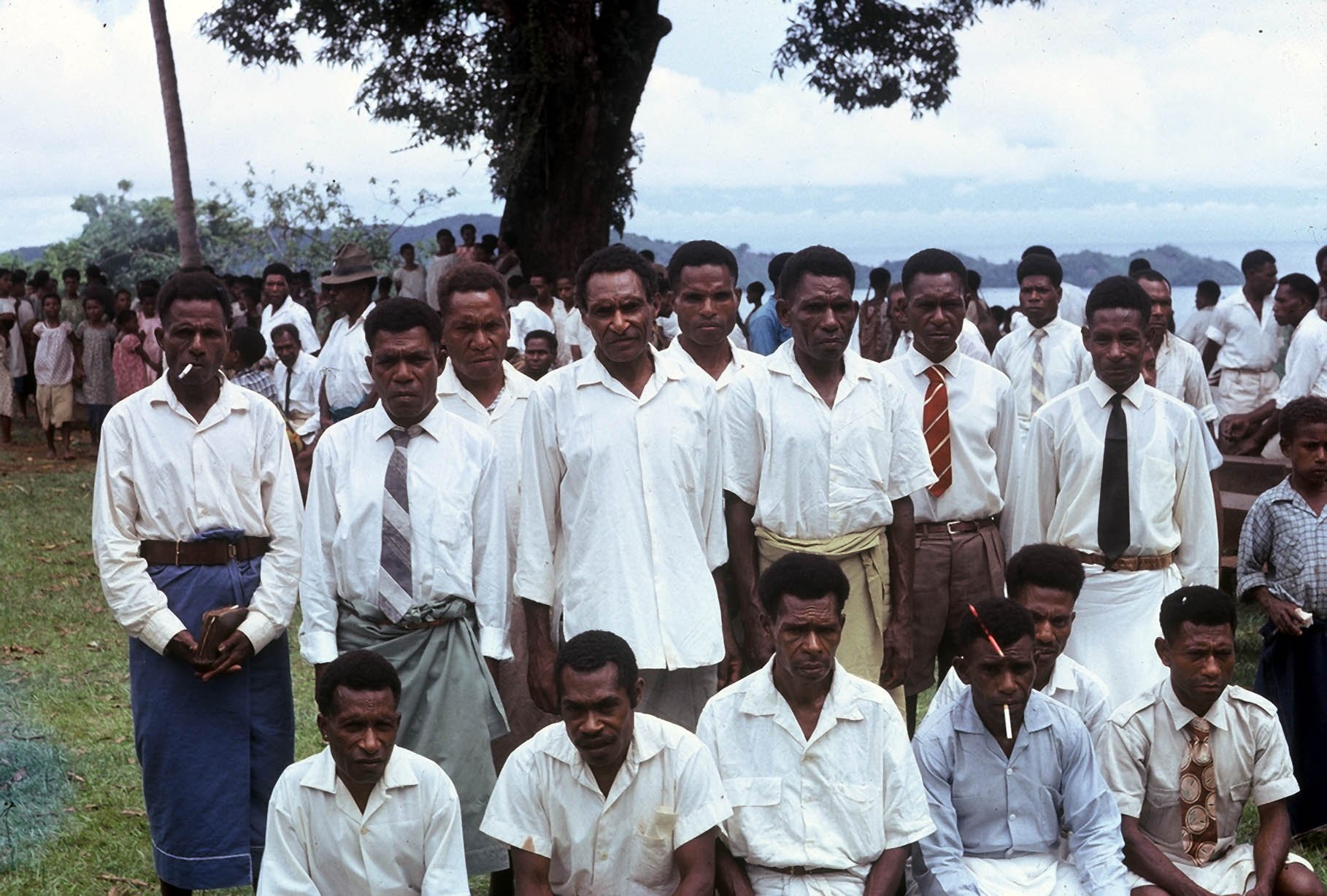
Three marriages are held during the morning service. Brides wear simple white dresses sewn like communion garments. Men wear white shirts and lap-laps. The service stretches long, unhurried.
Later, an English communion service is held in the school. Flowers appear in ink bottles and tins—arranged carefully, lovingly. Al wears his vestments. The teachers’ desk becomes an altar. The pulpit is draped.
Nothing matches. Everything belongs.
Dinner follows: ducks cooked carefully, potato salad, pumpkins, beans, slaw, tomatoes, cranberries, meatloaf prepared as insurance, pumpkin pie mixed the day before. Ina worries she has neglected the ducks too long, but they are fine. Everyone eats. There are leftovers.
It is enough
1963 April 19 to Estelle family
.
When the Body Says Stop
Plans to go to Lae follow Easter. A holiday from school makes it possible. There is talk of a Chinese restaurant, a movie.
Instead, Ina becomes violently ill. Vomiting. Cramping. Diarrhea. Exhaustion overtakes intention.
Then labor begins.
Ina takes progesterone tablets, aspirin, rests. The labor stops. She recognizes the cause—not illness, but overextension.
She writes the letter quickly to catch the boat. There is no drama, only acceptance: the body here insists on honesty
1963 April 19 to Estelle family
.
Work Beyond the Station: Airstrips and Mountains
Al returns from the Buangs area with news of an airstrip under construction at Wagua. The land barely allows it—two thousand feet carved flat by hand, dirt carried in bags, layer by layer.
A tractor—secured earlier through mission effort—has helped cut timber. The strip will soon allow coffee to reach market and sick people to be flown out.
Mountain teachers and pastors are cold. Sewing projects and warm clothing suddenly matter more than ever.
Malalo remains coastal and open. The mountains remain demanding and exacting. Both belong to the same circuit, the same responsibility
1963 April 29 to Ericksons with…
.
Lae, Briefly: A Different World
When the family does reach Lae later in April, it feels like another universe.
Three months since the last visit. Cars. Buses. Ice cream. A Chinese restaurant. Pork omelet, chow mein, prawns, rice. A movie where the children sleep on a blanket on the floor.
Paula eats her ice cream carefully, determined to make it last. Tommy devours his and immediately wants hers too.
It is indulgent. It is brief. It reminds them what Malalo is not—and why they return to it anyway
1963 April 29 to Ericksons with…
.
Giving, Receiving, and the Cost of Faithfulness
Back at Malalo, the congregation struggles to meet budgets.
Teachers and pastors go unpaid. Evangelists lack food and clothing. Solutions are improvised: women walk ten hours carrying thirty pounds of taro to sell so the money can support the work. Shells gathered on the coast are sent inland, where they hold value.
These are not symbolic sacrifices. They are physical.
Ina observes them closely. Faith here costs time, food, energy—measured not in words, but in weight carried and distance walked
1963 April 29 to Ericksons with…
.
April’s Meaning
April does not rush.
It teaches the Ericksons how Malalo works—not in theory, but in practice. Food must be grown where land resists. Faith must adapt where buildings fail. Children must grow where cultures overlap. Care must be given without backup.
Malalo in April is not yet what it will become.
But it is already teaching them how to stay.
Sources
April 1963 letters by Ina Erickson from Malalo Mission Station
1963, April 19.
Letter written by Ina Erickson from the Malalo Mission station to Durward and Estelle Titus Box 224 Route1, Carlos MN USA
Dear mom and dad, Willa and Martin,
Thank you so much for the baby aspirin. I surely didn’t expect you to send it airmail. I have had several uses for it already, as Paula has had a fever one day, and Tommy fell in the school. He went head long and whammed the bridge of his nose on a step. He couldn’t breathe very well and his nose and eyes puffed up so much but they were black and blue. At first I thought it was broken and as there was a ship I thought that I’d take him in and have it x-rayed just in case. This was on Easter Sunday, and the boat was going on Monday, but that didn’t work out and I will tell you why later.
We had company, a single girl came for Good Friday. We had services in our old, dilapidated church, then, on Saturday, the people from the sawmill1 came with their two children. The little girl is six months older than Paula and their baby is about 13 months old. They romped and played until they were all so tired and crabby on Monday but they did enjoy each other so much. It really is a shame that they can’t play together more often.
On Sunday all of our friends from Bula2 came- three of them with their six friends that were visiting them. I had fixed two watermelons into balls, and had lemonade and cookies, when they came in the morning before church. We had church again in the old church, and it lasted from about 10:30 to 12 noon as there were three marriages. They get married at the regular morning service and the bride wears a white dress like the ladies make for communion, and the men wear white shirts and lap laps. Then we came up to the school and had our communion service in English at 1 o’clock. Al wore his vestments and some native people had very thoughtfully put flowers around the room, some in ink bottles and even in tins, but it was so thoughtful and added so much to the service. We put alter clothes on the teachers desk and had a cloth for the pulpit that they have in the school for such occasions.
About 3 o’clock we had dinner. I’d put two ducks in the pressure cooker the day before and cooked them for a couple of hours and then put them in the icebox overnight. Then early in the morning I stuck them in the oven. I didn’t have time to look at them until after the first church service had finished. I had a loose cover on them and they looked a little dry so I poured some water over them and left them for another couple of hours. When it came time for dinner, I was really scared as I realized how I’ve neglected them all day. I had no idea if they would be good or not. Fortunately, God had been watching over them and they were all right. I had fixed some potato salad, pumpkins, coleslaw, beans, sliced tomato and opened some cranberries. I’d made a meatloaf just in case there wasn’t enough duck and I wasn’t sure how many might be coming. I had mixed up for pumpkin pies on Saturday so I had that for dessert. It wasn’t anything spectacular, but everyone must’ve had enough as there were a few leftovers. I’d wanted to get some rolls made, but didn’t. I had gotten some bread from Lae.
We decided to go to Lae on Monday as Tuesday was considered a holiday from school, so Phyllis could go too. There is one Chinese restaurant in Lae and we were going to splurge and go to a movie and have dinner there. Well, Monday I started to vomit and vomit, and then started with severe cramps and diarrhea. I thought it was food poisoning, but no one else got it. In the afternoon then I started labor so I had to stay pretty close to bed. I had progesterone tablets on hand and took some aspirin and went to sleep, and it stopped. Must get this letter on the boat. I’m fine now and no one else got it so I guess I was just overtired.
Love, Al, Ina and the kids.
1 Sawet was south of Malalo and had a sawmill that belonged to the congregation. It was about a 3 hour boat ride. When the Erickson’s arrived at Malalo, Peter and Evelyn Beck were running the sawmill in 1962. Their daughters Carol and Rhonda. Later the Graham Littles ran it.
2 Bula girls school

1963, April 29 with photos
Letter written by Ina Erickson from the Malalo Mission station Alvin and Louise Erickson, Box 1327, Glendive Montana, USA
Happy Mayday
Dear mom and dad, Erickson,
Thank you so much for the package. We got it this week when we were in Lae. Tonight with great ceremony, we will open it. You are always so thoughtful, and we do appreciate your love and concerns and prayers for us. I really think it is too bad that you can’t enjoy Paula and Tommy now. It would be a delighted to have grandparents to show off to and gets so excited over everything. Paula just loves packages and just about dies until she sees what is inside of every one of them.
This week and we went to Lae. It was the first time in three months that we had gone to town, so Paula and Tommy really had a field day as they got to ride first on the ‘Bictor’ our boat, the Victor, than in cars, trucks and buses or ’ twactors’, as Tommy still insist that everything on wheels are tractors. They wouldn’t get out when we stopped someplace for fear they wouldn’t get any more rides. Paula thought it was pretty good that daddy could drive a car. It was really a treat when daddy bought some ice cream cones. Paula ate her so carefully making it last, Tommy, however, ate his as fast as he could, and then insisted Paula give some of hers to him. We went to a Chinese restaurant for dinner on Thursday night and really enjoyed some good food. Pork omelette, chicken, chowder, and rice, sweet-and-sour, pork, and fried prawns. We were really stuffed when we were through. To top it all off we splurged and went to a movie the following night. We took the kids along, put them on a blanket, and let them sleep on the floor. Paula was asleep when we went in and was still sleeping when we came out. it was a clean war picture and we enjoyed it very much.
Here are some snaps that we took around our yard. Maybe you could have some prints made and send them onto mother. (Estelle)


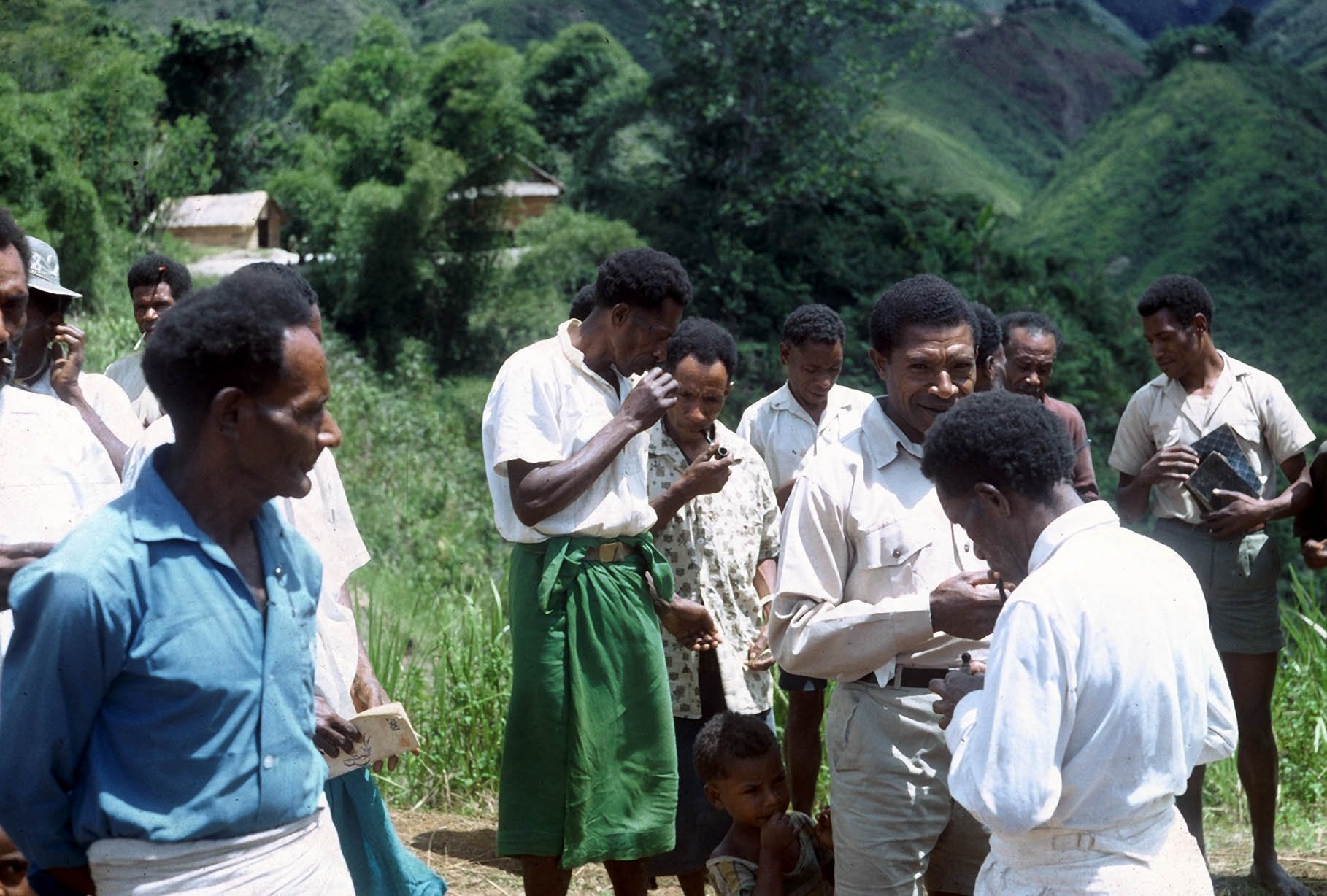
1 & 2 the Sunday school from Malalo in our yard. They have their offering of cucumbers and pit, pit, and sweet potatoes.
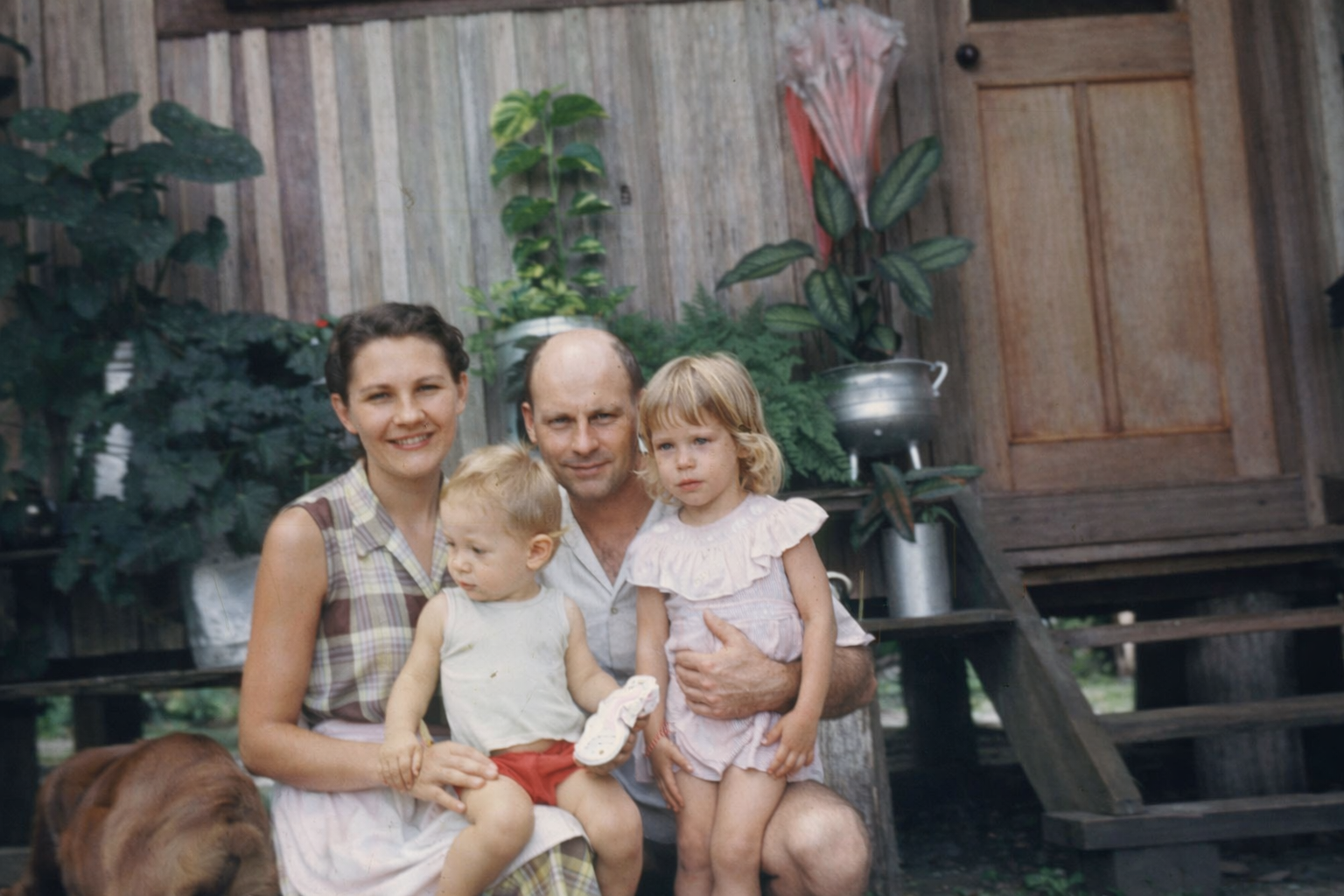
3&4 . Phyllis, Paula, and Tommy on our front steps, Phyllis is our teacher. The Sunday school again with Paula and Tommy
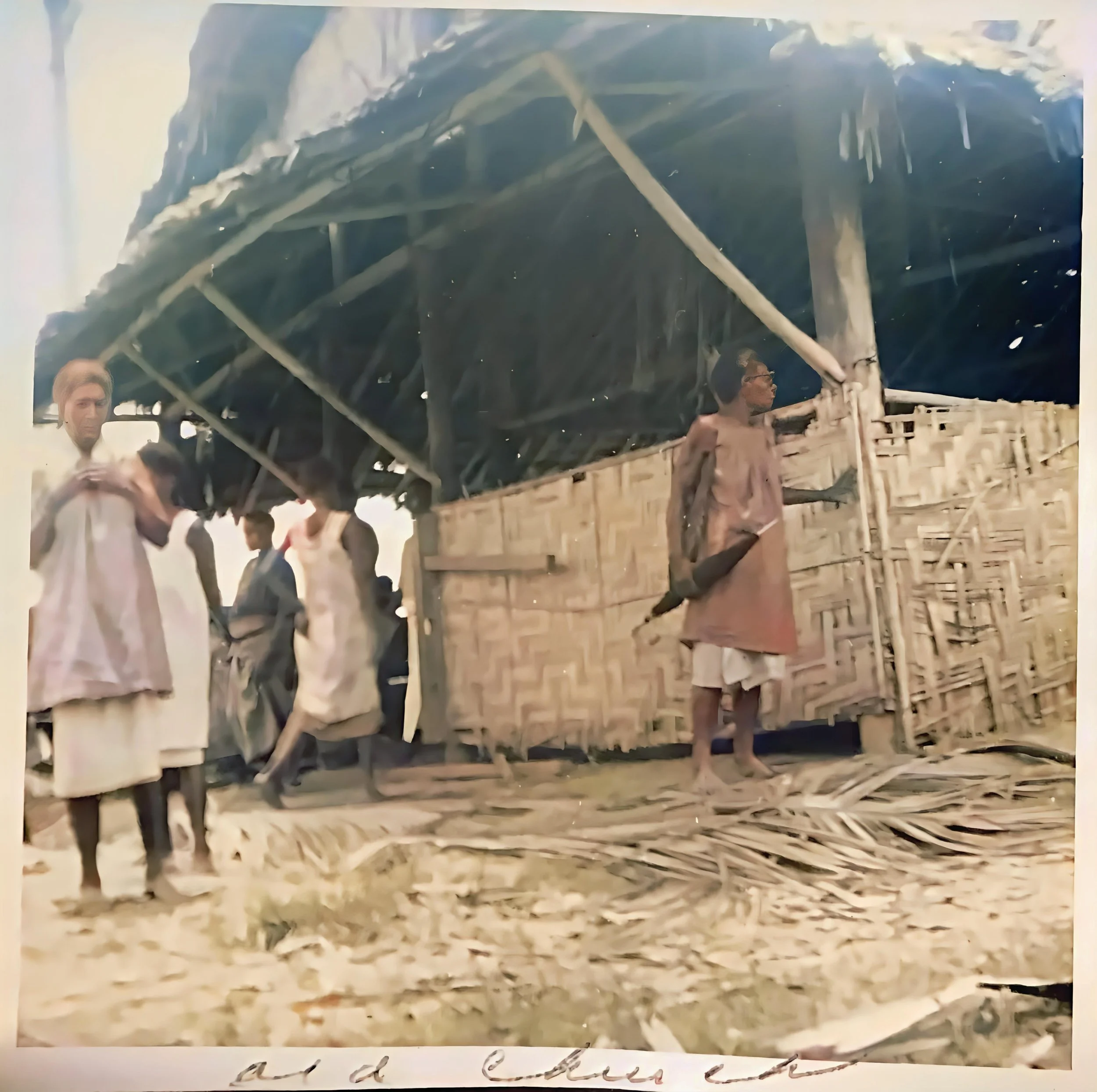

5. The old church after heavy rain that took most of the back off of it.
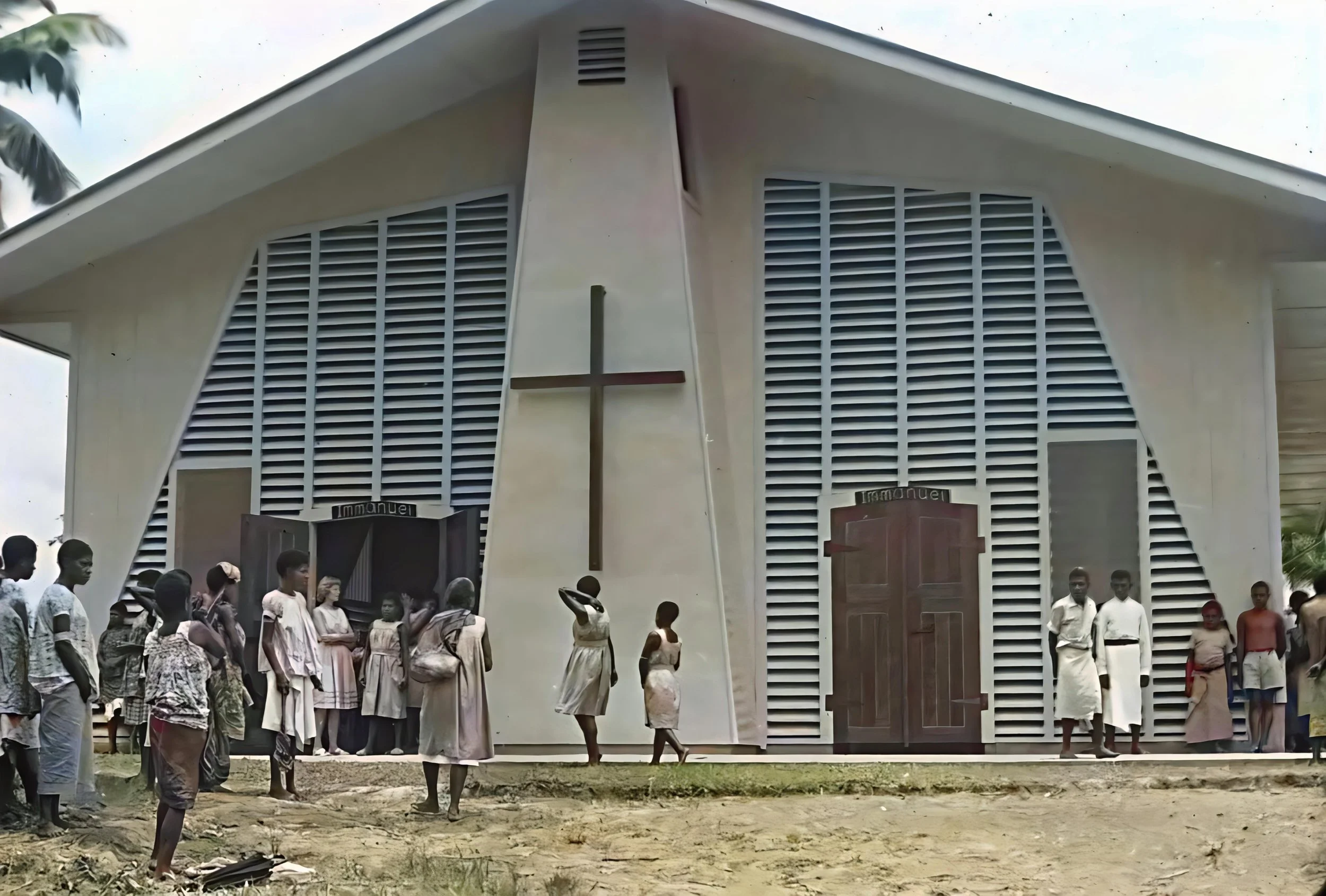
6 the front of the new church
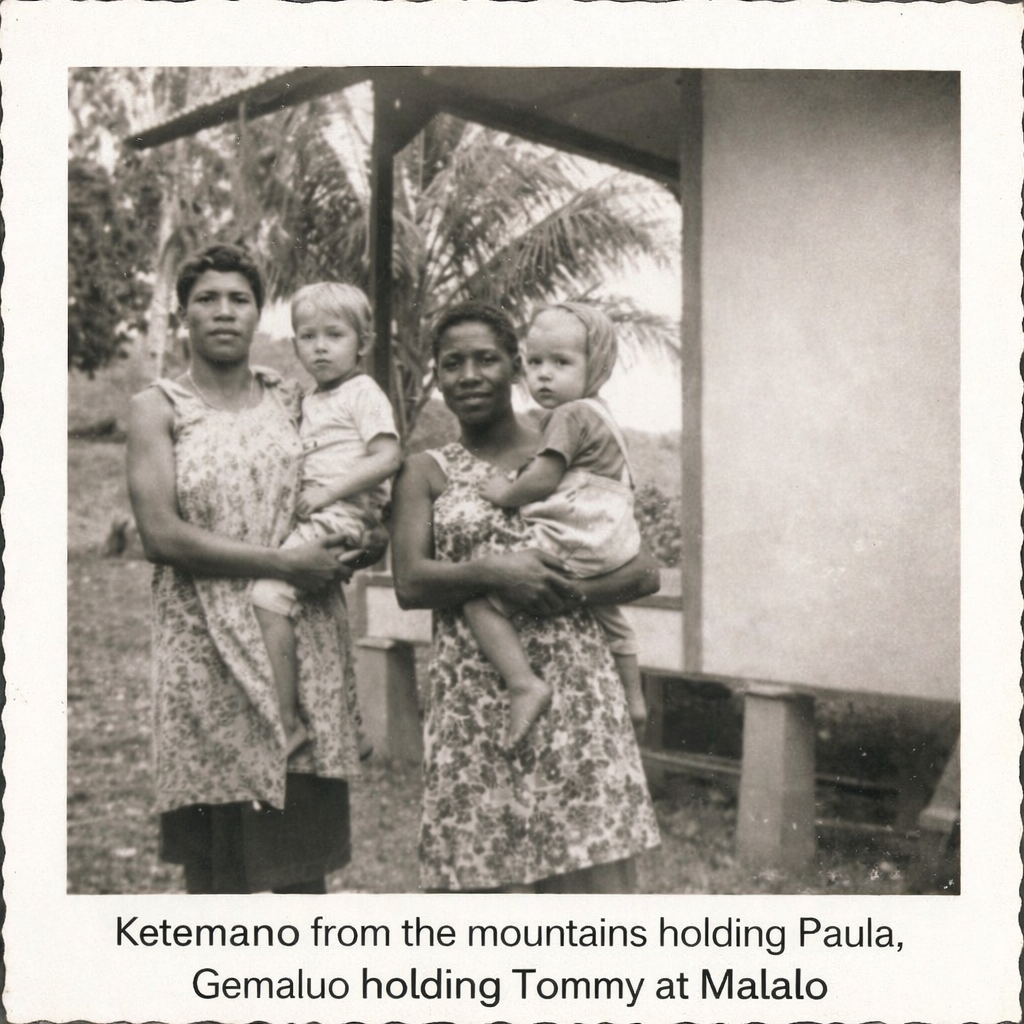
7& 8 Our house girls with the kids. Ketemano is a girl from the mountains and she is holding Paula, Gemaluo is holding Tommy and she is from the coast. The mountain people seem to be thicker built than the coastal people, with the coastal people usually being taller.
9. Our dispensary. You can see the old one in the back. That used to be the ward where the sick people would stay, but now, since we tore down the old one, they have fixed a room in this bush hut for the medicine and are using it –for now. The floor is so bad we keep going through it. The new foundation is in the foreground. Now we have some of the frames for the sides going up.

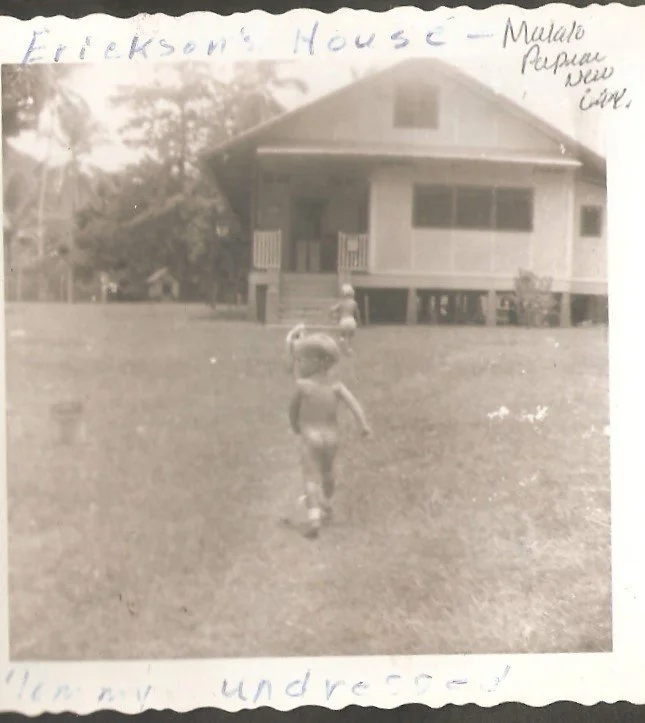
10. Al’s office and workshop. The room nearest the biggest tree is the office and looks over the ocean. There is nearly always a nice breeze in there. The other end is the workshop. As soon as we get a place to store things, we can put our trunks in there. We need to build a new girls house but for now the girls are living in this. Once their new place is built, we can use the workshop as a guestroom. It will be a little easier to have guests if we have a room with a bed to put them.
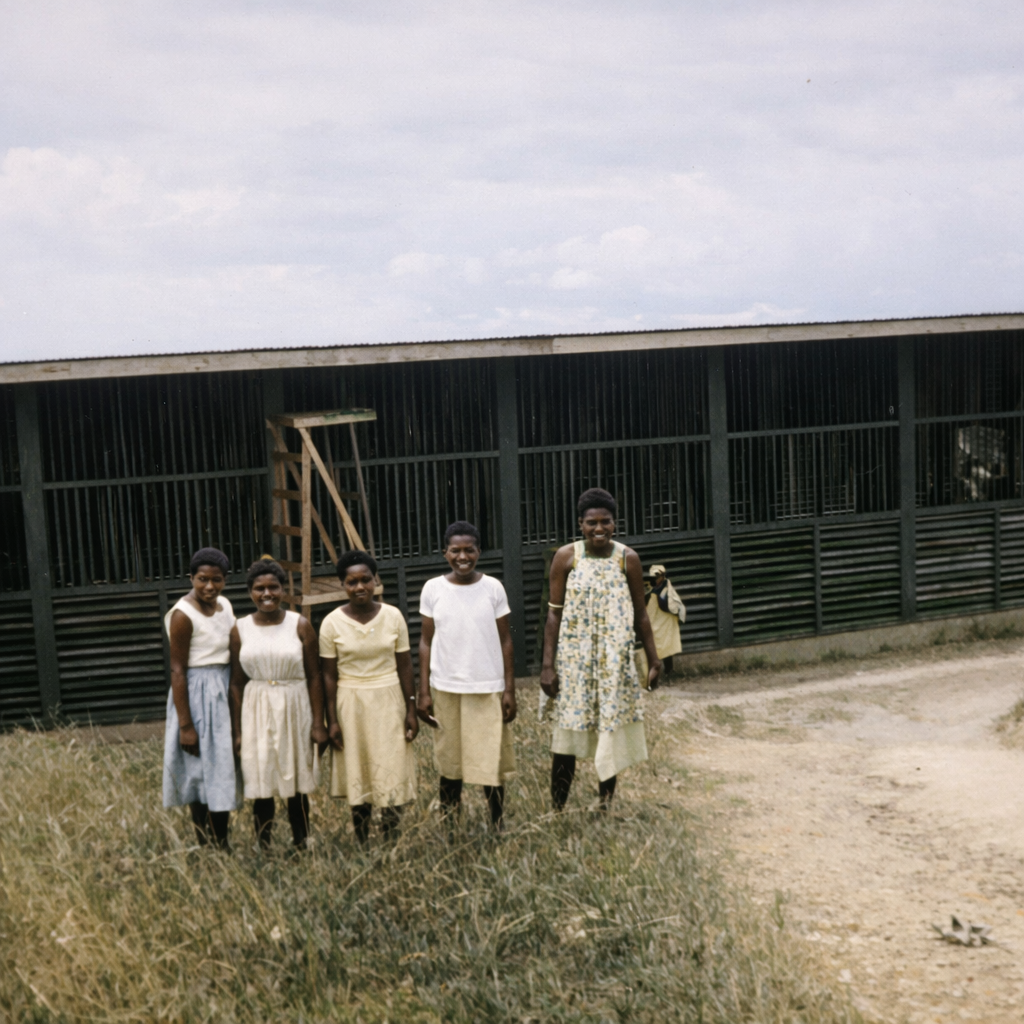
11. Our nurses on the broadside of the new church. The heaviest girl on the right is just another village girl.
12. Tommy as he usually is. I can’t keep clothes on him. Even with suspenders and belts, he can get them off as soon as I’m out of sight.
Mother wanted some detailed letters as various groups were asking her to give talks on our life and work here. First English in Alexandra are part sponsoring us so they were interested in our activities. Yesterday or rather Saturday we' posted a parcel' as Australians would say to you . There is a big carving for Helen and Charlie, a pickle, fork, and some little spoons for you. Be careful when unwrapping the paper because Al said he wrapped them in some scrap paper. There are two little catchall cups for dad‘s desk, and a pencil box for Greg, and a comb for Vicki. Then there are a bunch of shells that you can give to people like the lawyer, that fixed our will, the Browns, and whoever you think appropriate. That lady that gave Helen five dollars, Mrs. Zimmer could have something from us.
I was just checking through what clothes I had on hand for a new baby and found that we have a whole barrel full of things that they have outgrown, I guess we will have to have one of each in order to use them up. There is nothing we need. We will use the afghan for its baptism- the beautiful blue, yellow, pink, and white one you made for Paula.
We’ve been having enough rain to keep the vegetables growing, but not nearly what the normal usually is. We just have gentle showers, not the downpours were used to. Watermelon, corn, and tomatoes are growing now. The people bring them to me to buy so that they can buy rice, or something a little more substantial for them to live on.
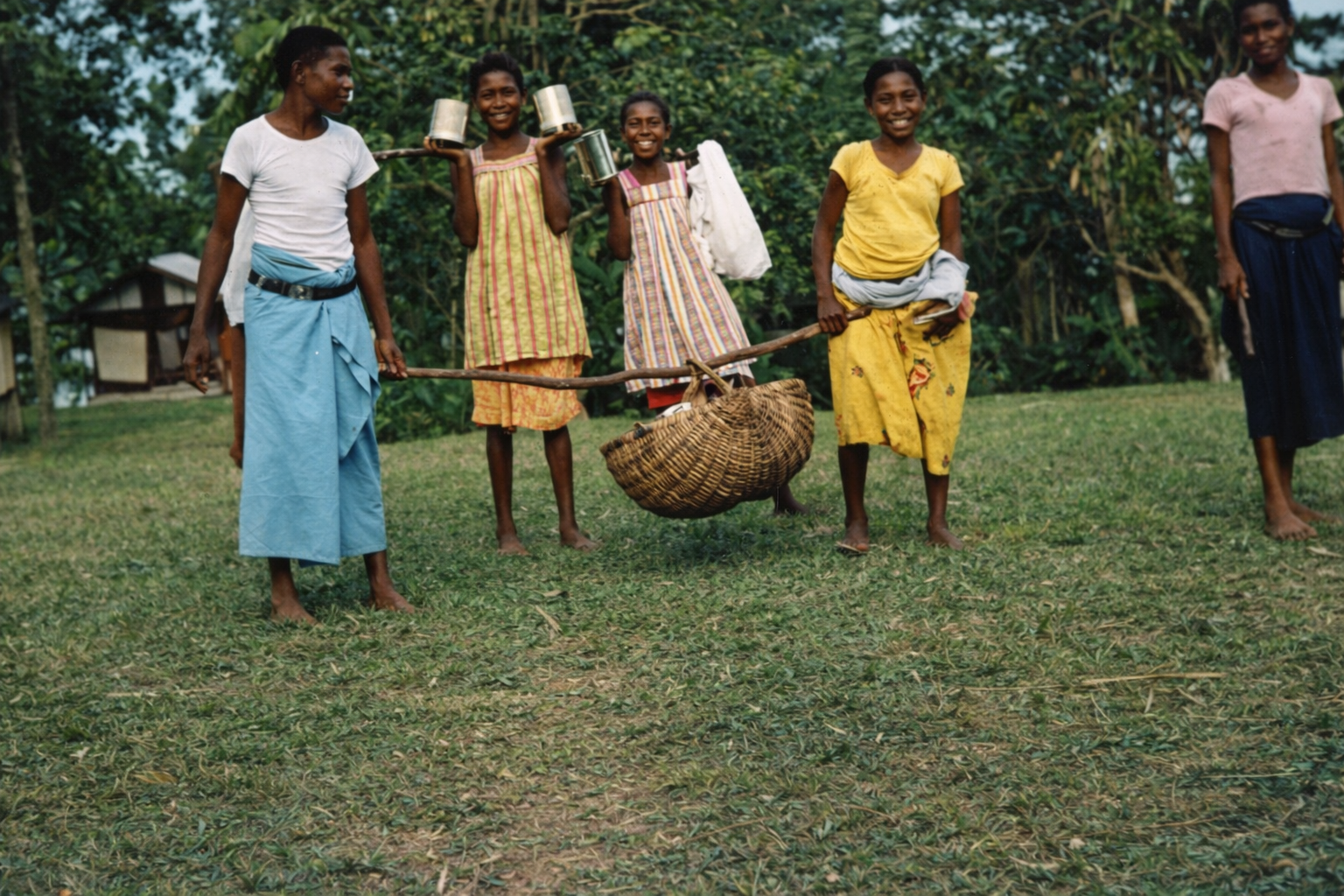
Vegetable basket. Ina would buy veggies from the people circa 1963
Some of the congregations have been having quite a time meeting their budget, so they aren’t able to pay their teachers and pastors salaries. They decided that each person should bring a little bit of taro, and then they would bring it down for us to buy and then put the money into the treasury. Al says the walk from their village is a grueling 10 hour walk up and down hill after hill after hill. He said if he would walk it in one day, he would be flat out, not caring anything, and there are three women who came caring 30 pounds of taro each in their string bags on their heads with their offering. Really a sacrifice. They get about two dollars for it but that means a lot to them. Our poor evangelist have been having such a time, getting enough food, wood, and clothing, as their salaries are so poor. Al just found out that a common shell that they have here on the coast is really worth money in the mountain areas where these men are living, so, if the congregation just gather up the shells, they will be able to support their evangelist with no trouble. So this last week, we sent bags of shells to the missionaries in the mountain areas for our men working there also. To give them as they need them. I just hope they are as valuable as the people claim.
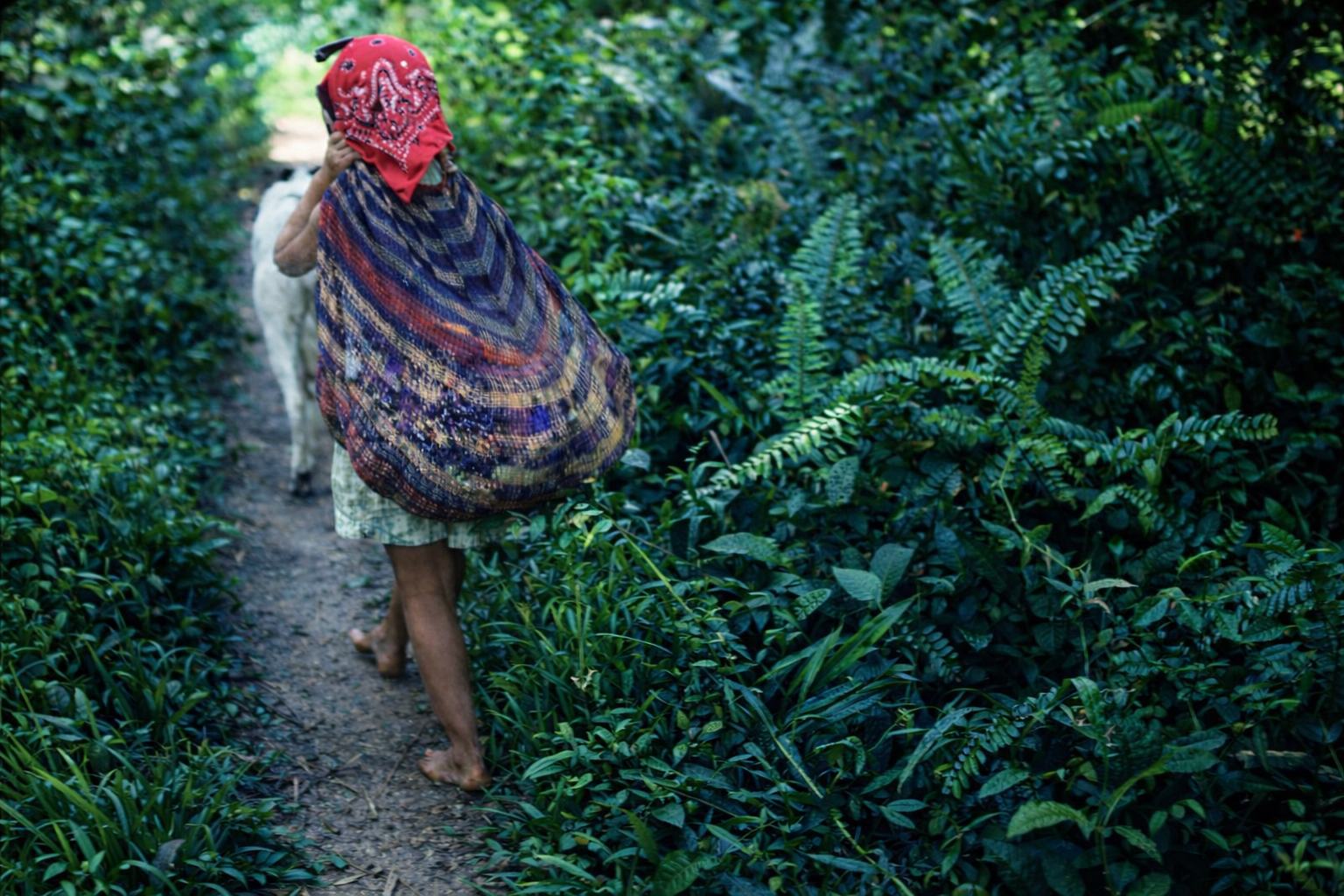
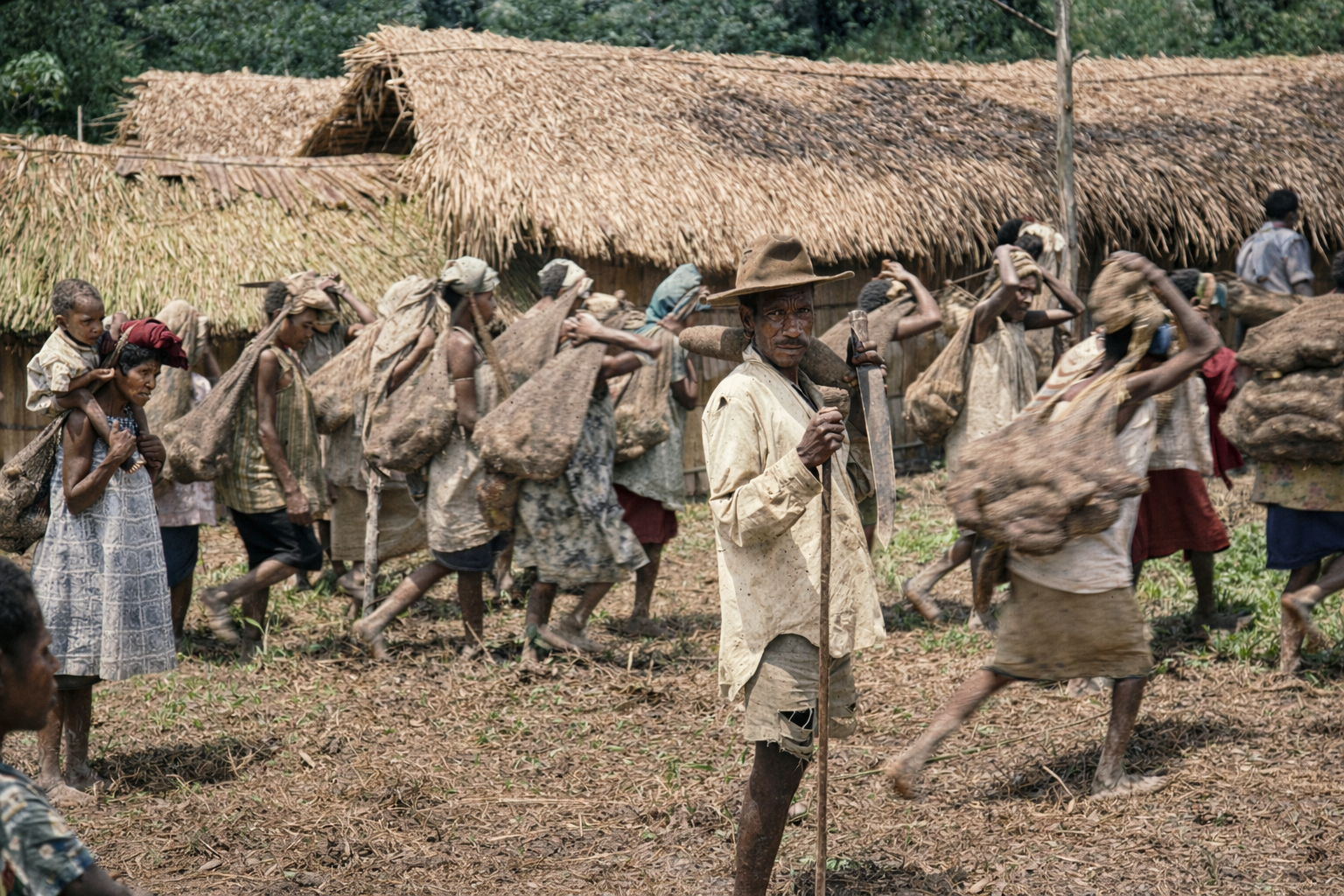
Our church is receiving the first coat of paint. They could have it done in a short while, I think. The missionary ( Fred Scherle) that helped them build it had to go back to America for a sick leave. They won’t be back until September so we will wait until then to have it dedicated.
Our dispensary is finally being built. We had such a time getting it going, but not now that they have a foundation laid, and the framework for the sides going up, I hope they can just keep at it so we can get moved in before long.
This weekend after we got to Lae, our boat went back to Malalo to pick up more native people that wanted to take their produce into Lae. Friday night, it didn’t come back, Saturday it still wasn’t back so on Saturday afternoon so we took a ship out to look for it. The sea was rather choppy with some small white caps. Al had some spy glasses and searched and searched. Finally about two hours out of Lae, we spotted it over by one of the shores quite away from its normal course. We headed that way, and were very surprised when it came to meet us. The captain said that Friday night they had run out of gas as they neared Salamaua. They were close to coral reefs, so he had to really work to keep it from going up on a reef. They tried rowing with sticks they had, but the Victor is much too big for, any progress at all that way. They had a boy swim out with a life ring, and take the anchor out of away, then drop it, and then they would pull the anchor rope until they came up to the anchor again. After all night of struggle they finally got it anchored near the shore. And then they walked back to Malalo to get enough diesel fuel to get the Victor back to Malalo so they could fill her up. It was quite a long walk and then they came back with canoes to the Victor. The sea was so choppy that on Saturday, Metegemeng was staying close to the shore, rather than heading out to open sea when we found them. We laughed and laughed with relief as there were quite a few people on board. We just could imagine it having sunk somewhere. Before leaving, Al had told Metegemeng that he had better fill up with fuel, but when he left the boat he had forgotten. I don’t think he will do that again.
God‘s blessings to you all. We do miss you all a lot. Love, Al, Ina and kids.