December at the Edge of the Year
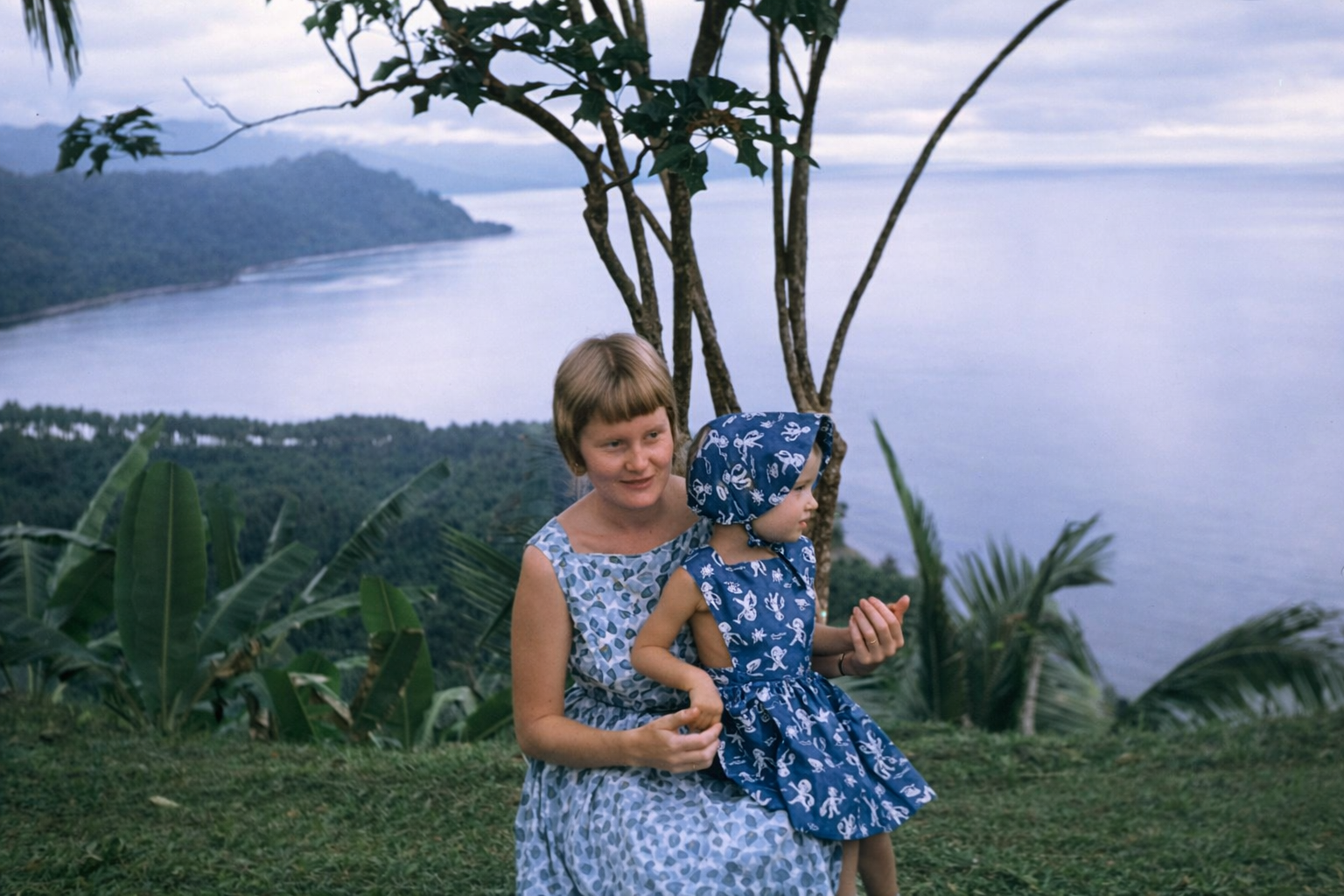
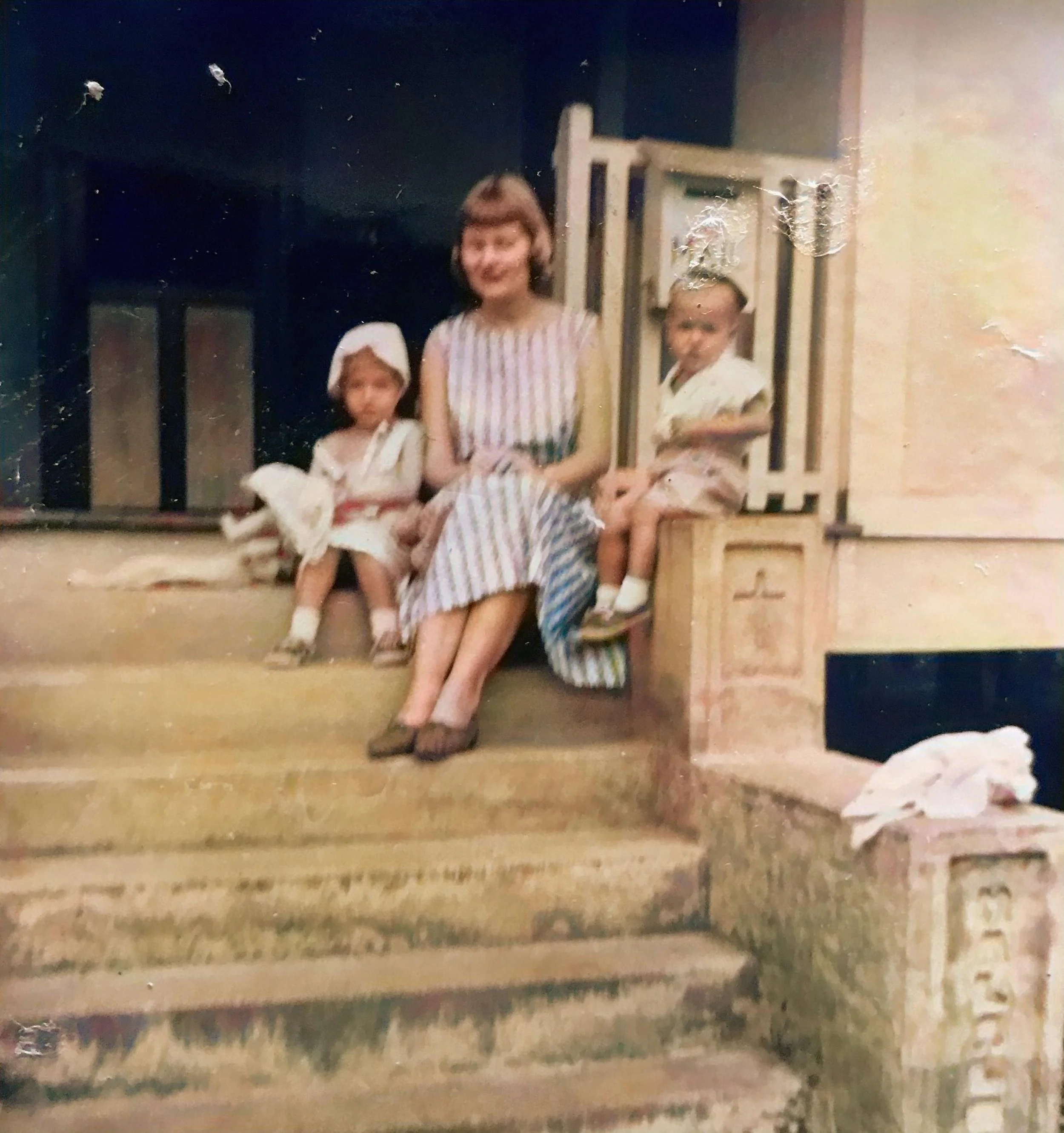
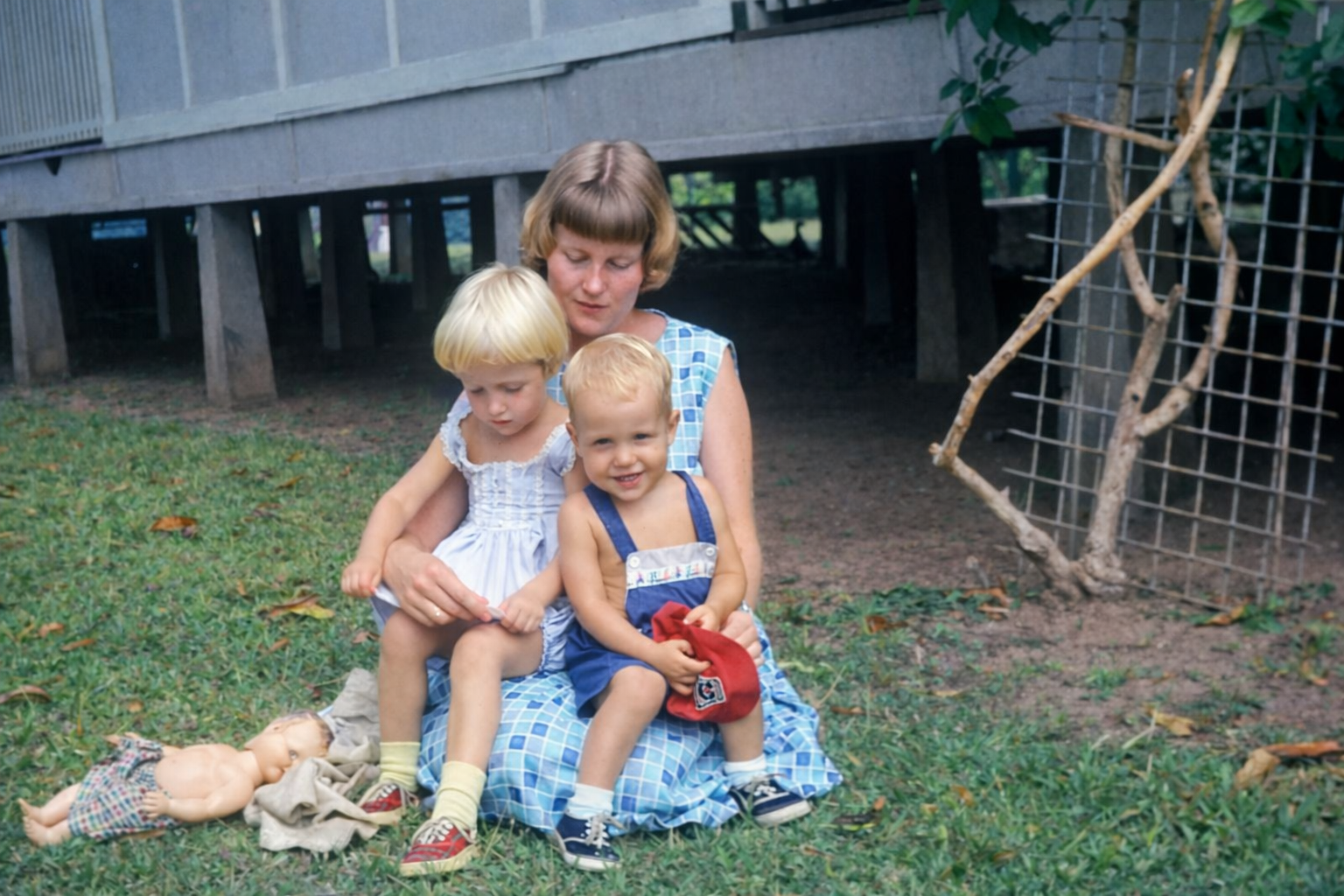
Phyllis Engebretsen from Minneapolis who first arrived July 14, 1962 at 3:00pm as short term teacher arrives to Malalo. She stayed in the Mission house with the Ericksons. she became a wonderful companion especially to Ina and was sort of an aunt to the kids.
The following is a summary of the letters for December 1964
Light in the Heat At Malalo
Malalo Mission Station — December 1964
December arrives at Malalo not with cold or snow, but with heat that presses down steadily, day and night. The rainy season falters and returns in fits. Thunder cracks overhead without warning. The air smells of damp earth, smoke from cooking fires below in Buakup, and the salt of the Huon Gulf drifting up the hill.
Malalo itself remains what it has long been—a mission station perched 500 feet above the sea, reachable only by a winding footpath or by boat below. Fred and Edna Scherle’s postwar buildings still shape daily life: long houses built for airflow, wide verandas, wooden floors worn smooth by decades of children’s feet, students’ sandals, and missionaries pacing at night. December does not change the place. It reveals it.
Violence on the Coast — and a Night Held Back from Bloodshed (Dec 7)
December’s strain is not only mechanical and logistical—it is human, and at times terrifyingly close. Early in the month, Alvin and Ina are pulled into a crisis that begins with a sweating messenger on the Malalo veranda: men from Labu, a coastal village far to the north, have attacked several Busemeng men who were preparing to start work with the sawmill’s new jungle saw. Rumors race ahead of truth—talk of killings, destroyed equipment, even a wrecked speedboat—each exaggeration dangerous in a place where revenge can gather faster than reason. With the Victor in dry dock, the mission responds the only way possible: by borrowed canoe, improvised supplies, and sheer urgency. In the middle of preparations, a snakebite victim arrives, forcing the new nurse to face her first intravenous anti-venom injection while Al and Ina rush down the hill.
They reach the wounded camp through rough seas and high wind, finding battered men—heads swollen, ribs bruised, bones broken—hurt by fists and clubs rather than knives. For hours the coast holds its breath: police are hours away, night is falling, and the Busemeng men are on the edge of retaliation. When word comes that police may delay until morning, Alvin sends a blunt radio message requesting rifles and shotguns—not to fight, but to prevent a massacre and to jolt government officials into action. Late that night a ship finally edges in with thirty policemen, European officers, and a medical assistant, their uniforms and helmets almost comical against the tense darkness. By morning the feared bloodshed has been averted. Those involved are taken to Lae for court, and Alvin reflects soberly that had anyone been killed, “a whole cauldron of ancient hostility” might have boiled over across the Huon Gulf. The family is left exhausted but deeply grateful—another December moment in which disaster passes close enough to be felt.
1964 December 7 by Alvin Ericks…
Christmas Approaches, Unprepared and Unavoidable
Ina feels unready for Christmas. Events move too fast. Boats break down. Court cases stall the sawmill. Plans stretch and then collapse under the weight of bureaucracy and distance.
Al spends days in Lae, attempting to resolve a land dispute connected to the sawmill—only to discover that the government now intends to trace land ownership back through generations. Timber operations may be stalled for years. Industry in New Guinea, Ina observes, is always fragile. The obstacles are immense, the margins thin, and discouragement close at hand.
Meanwhile, Malalo continues to receive people almost daily. Teachers arrive from Bula. Visitors come up the hill for meals, rest, and conversation. Ina feeds them all, often with little notice, drawing on garden produce, eggs sent over from Bula, and whatever can be coaxed into a meal.
Boats, Breakdowns, and the Cost of Movement
December’s story is also written in broken machinery.
Phyllis’s departure becomes a small saga of New Guinea travel. Graham Little accompanies her on the Kuli, towing both the new fish boat and the speedboat—neither of which is functioning properly. An hour out of Lae, the Kuli’s propeller shaft breaks. Temporary repairs allow them to limp into port, where further inspection reveals termites in the framework. The hull will need rebuilding.
The Victor, the mission’s lifeline, is hauled out and inspected. Nearly every board on the bottom is rotted. That it never sank feels like grace narrowly received. Repairs will be expensive, but the Victor has earned enough over the years to cover them—just.
These setbacks weigh heavily on Graham Little, new to the sawmill and still hopeful. Ina sees the pattern clearly: enthusiasm meets reality, and reality tests faith.
Children in the Middle of It All
Amid the instability, the children grow.
Kristi remains well, though teething troubles continue. Ina cautiously reduces her phenobarbital, watching closely for fever. Each warm night brings a quiet reckoning: will this be the night something returns?
Tommy climbs relentlessly—trees, posts, anything vertical. When ordered down, he asks earnestly where he is allowed to climb. Fruit in trees is always “lemons,” regardless of what it actually is.
Paula stretches upward—physically and inwardly. She measures herself against sinks and bathtubs, proud of every new inch. She notices everything. Wrapping paper scraps left overnight spark immediate suspicion. Christmas cannot be concealed from her for long.
At night, questions come. Thunder becomes the moon breaking. Will it fall? Will it hurt the house? Ina answers as best she can, holding fear and wonder together.
Loneliness and Letters
December sharpens homesickness.
Ina writes honestly of longing—for parents, for siblings, for the simple reassurance of a few words from home. Phyllis’s departure intensifies the ache. Without a replacement teacher lined up, the coming year promises heavier workloads and fewer hands.
Letters arrive steadily from the United States. Women’s circles, Sunday school classes, and schoolchildren send greetings, prayers, and small gifts. A sixth-grade class deposits five dollars. Teenagers write carefully formed letters about Matthew 28 becoming real to them. These voices cross oceans to reach Malalo’s hill.
Each letter reminds Ina that Malalo is not forgotten.
Reflections from the Edge of Two Worlds
In one letter, Alvin reflects more broadly, stepping back from daily logistics.
New Guinea, he writes, sits at the collision point of ages. Stone Age rhythms meet the turbulent surge of Western modernity. Villages appear ancient—houses made entirely of bush materials, possessions carried in net bags—until closer inspection reveals nails, kerosene lamps, cooking pots, army coats worn under tropical sun.
The blend is uneasy, unfinished, often uncomfortable. But it is real. And it is here, in this tension, that the gospel is spoken and lived.
Christmas Eve on the Lawn
This year, Christmas happens.
Four short-term teachers arrive the week before—two older widows who have chosen service over retirement, and two younger women full of energy and hope. Their presence enriches the season.
On Christmas Eve, the caretaker from Bula brings eggs and peanuts. The Littles arrive from the sawmill with the Christmas tree and the long-awaited mail from Lae. The tree’s branches are sparse, its needles long and soft. Two trees are tied together to make one. Decorated with tinsel and ornaments, it becomes, unmistakably, a Christmas tree.
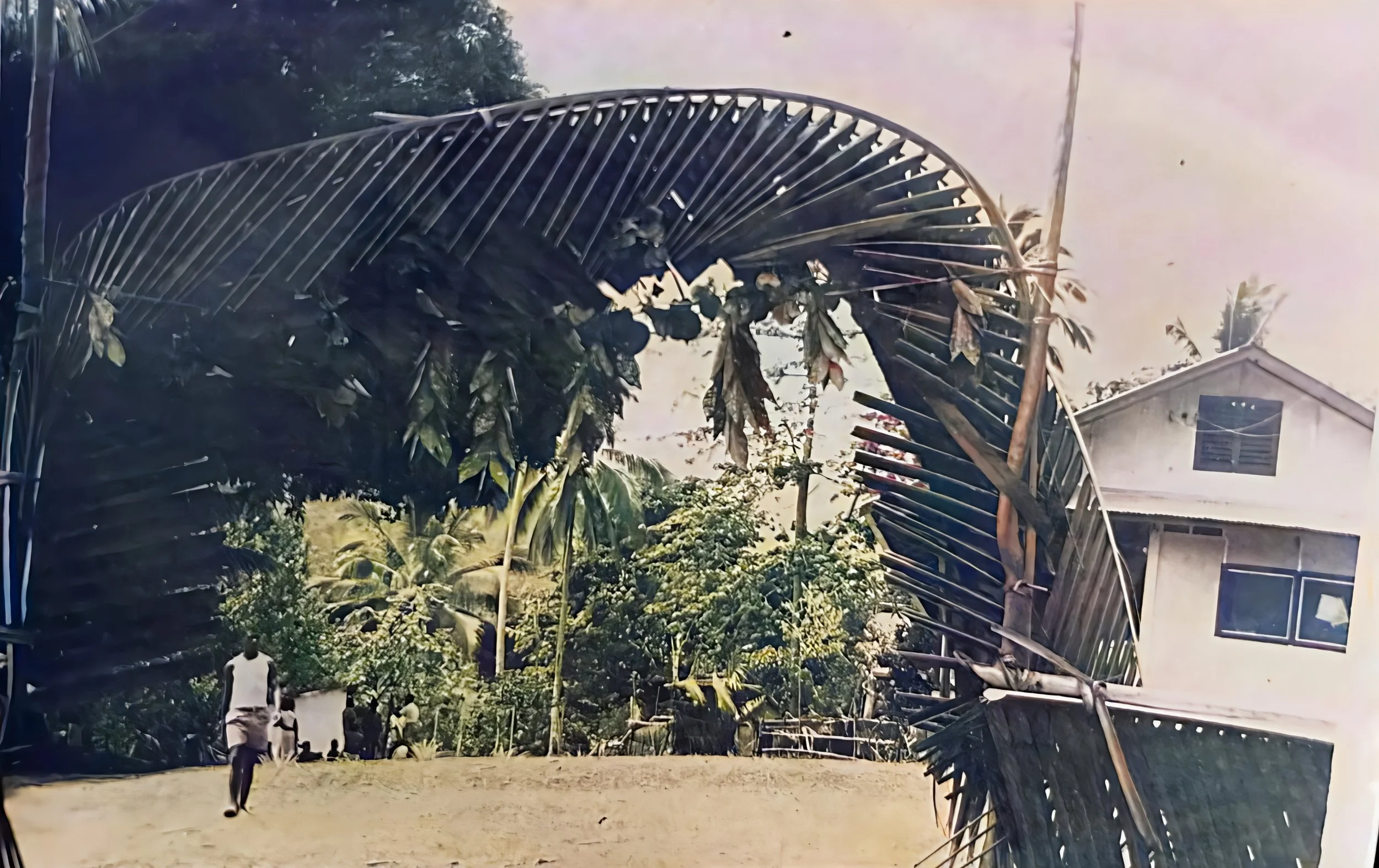
As dusk falls, people gather on the lawn—the only level ground at Malalo. Coconut fronds and banana leaves form a pulpit, a stable, and Herod’s palace. Pressure lamps are mounted on posts. The village below takes responsibility for the pageant this year.
The story unfolds in Jabem. Prophets appear. Mary and Joseph take their places. A curly-haired angel in white lap-lap arrives. Shepherds watch restless sheep. A flashlight angel blazes too brightly and burns out. Wise men follow a star—a lamp mounted on a long bamboo pole—peering through bamboo telescopes. Soldiers clank through the audience with spears and chains.
Kristi laughs. Paula and Tommy are less sure the soldiers are pretending.
When the drama ends, villagers light lamps and coconut fronds and walk down the hill, their lights tracing the crooked paths toward Buakup and along the coast for miles. A few firecrackers punctuate the dark.
Gifts, Gratitude, and Quiet Joy
Inside, supper is finished quickly. The Advent wreath is lit for the last time. The children cannot be restrained any longer. Gifts are opened. Joy is uncomplicated and immediate.
Ina watches, grateful.
December closes not with resolution, but with light—flickering, imperfect, persistent. Malalo remains isolated, overworked, and fragile. Boats will break again. Illness may return. People will leave.
But on this hill above the sea, under pressure lamps and stars, the story has been told again. And that, for now, is enough.
The following are the actual letters for December 1964
1964 December 7 by Alvin Erickson
Letter written by Alvin Erickson from the Malalo Mission station to Durward and Estelle Titus Box 224 Route1, Carlos MN USA
I was sitting in my office discussing next year‘s plans with some teachers, I noticed a boy come up on the veranda. He was sweating profusely, which meant he had come up our hill in a hurry. The look on his face said there was bad trouble somewhere. I knew he was a Busemeng villager from about 5 miles north of our station. We quickly heard the story. People from Labu, another coastal village, 15 miles north of us, had attacked about six Busemeng, as they prepared to start work with the sawmills new jungle saw. Some had been struck down and had not gotten up again.
The first thing that flashed into our minds was getting immediate medical help to them. I ran the house and told Anna to start packing. She started getting medicines ready. I arranged for food, bedding, and transportation with local villagers’ canoes as the Victor was in dry dock. It still would be 4 1/2 hours before we could get out on our mission skid. Our teacher, Phyllis Engelbertson, was to send for the police, when the skid rolled around.
Just in the midst of the bustle, a man came, who had been bitten by a snake. Our new nurse had never given anti-venom, which must be given into the blood vein. The fang marks were definitely there, but the stricken man did not believe the snake was poisonous. A quick discussion was called for. We decided I was more needed elsewhere so we left the new nurse, holding a trembling, hypodermic needle as we took off down the hill. Halfway down, I sent back word to build a big fire on top of our hill. The smoke would be seen by those at the scene of the fight and it might reassure them a little that help was on the way. Nothing like a good 1965 model smoke signal to get the job done.
At the beach the canoe was being made ready. Somebody climbed a coconut tree and threw down about eight coconuts down to give us something to drink on the way and at the scene. Three rolled into the sea and rowed. Soon we were out on the water and the primitive sail made of leaves being hoisted up. A good gale was blowing just in the direction we wanted to go. Suddenly there was a man at the beach with more news. We pulled in again which necessitated taking down the sail, which was no small task as the wind was really blowing. He said some of the Sawers had been killed, and the saw was damaged and the speedboat destroyed. Things started to look pretty serious, to put it mildly. We found out later that nothing he said was true, but truth was beside the point. Since these Sawers were from the village, where we borrowed the canoe from these people immediately started to prepare themselves to follow us and get their own revenge.
Landing at their camp, with a very rough sea, we found some wounded men. No sharp weapons have been used only fists and clubs. With heads full of bulges, battered ribs, and a broken bone here and there, they were a sorry, looking mess. Ina and our other nurse went right to work, well I tried to get the story. It seemed no one had been killed, but many Busemeng men had gone to the scene of the fight and prospects for a bloody brawl were pretty good. Police help was needed with still three hours away at the very quickest. We started to walk up the beach to the fight location. This is going to take too long. The sandy beach was slow going so it would be at least an hour and a half walk. At a time like these, missionaries called upon to size up his own position and possible influence. I figured I could at least be a stalling factor until the police arrived. My quickest way to the fight area was by canoe. I ran back to get one ready, but the people said that the sea had gotten too rough. This obviously was only option I had to so I offered 50 pounds to pay for the canoe if it capsized. Figures of pounds danced in their heads, and we were off. Ina was walking, with instructions to come only if the coast was clear.
Suddenly, the whole situation seem to change. Down the beach came all of the Busemeng men returning to their camp. What had happened? We pulled into shore and they pulled us up out of the surf. A short conversation revealed that the attackers had retreated, and Busman’s had intervened for them to return. Their government leader had successfully kept them from taking the offensive. I thought the possibility of any large scale fight now ended. The police should be coming before anything could get started. The people were made fully aware that police were coming and they should take nothing into their own hands. Ina again fixed up some more bruises with one of the men bleeding from the ear. We were relieved that no one was critically injured.
The threat of pitched battle passed, and no place to sleep. We decided to start walking. Over an hour down the beach toward Malalo, we parted company. (In three streams waste deep.) It was 5 o’clock and time for the mission radio. I left the beach and walked into the girl’s school-Bula. They have a radio that we can transmit on. Ina walked onto Malalo another 2 1/2 hours away. First of discord were heard. They were having trouble locating the police. But that was only a temporary block. I decided to walk onto Malalo.
At the beach new word came. The attackers sent word that they would be back after dark and hunt out the Busemang’s. I walked 20 minutes to their village. Another tidbit of information came from the camp. An elder innocently passing through the attackers area had been severely beaten up by a large group of men. A shiver went up my spine. This would really inflame the Busemang’s. A great number of fighting men had gathered. I told the councilman the police were coming. His people were in the right as long as they didn’t start anything.
Darkness had now descended. Since policeman had to come by boat, problems were now evident. I hiked back to the Bula school in time for the second mission radio schedule. The police had decided not to come until morning. The ship captain didn’t know the waters. What’s there to get excited about?
From what I knew of the station, and of the Busemang’s, it was obvious that only one thing was keeping them from attacking. That was the eminent arrival of the police. If they got the idea that the police would be delayed, there was still a long night ahead. The hot bloods would gradually turn the rest from reason to revenge. No words were now minced. Tomorrow morning might well give the police a few corpses. Threat of attack all the way to the village were stirring up the men folk to protect their families. It was a matter of life or death. If there were no police being sent, then must pass a message from here to Malalo. The high-powered, rifle and shotgun with ammunition should be sent immediately. By this time Ina was back to Malalo listening to the radio. I heard a Roger Roger.
The urgent request for guns was the last ace in my hand. If necessary, I could have stationed myself on the beach between the two fighting parties, and held them off until morning if the guns came in time. However, I anticipated another effect. This short sweet demand for guns would no doubt put a firecracker under some government officials in Lae. We started talking about ships and police again. He promised to have lights on the beach at Busemeng, which would lead the ship in. There are no reefs along the coast between Busemeng and Lae. I could tell that the mission people in Lae were on our side, and with the assurance that they would do what they could. Mr. Boerner of Bula and I set off to get kerosene pressure lamps. By 8 PM I was ready to go back to Busemeng with a Busemeng teacher.
There was an air of suspense in the night. Far across the bay, we could see the lights of several lamps flickering at the Busemeng man camp. Word was passed back to the village that if they were defeated, a conch shell would be blown, and the women and children should all head for the hills. This is no doubt and unnecessary precaution since the numerous Busemang’s could well hold their own.
Arriving at the village I found all the women and children were now back at the camp that only men were at the camp. Lights were placed on the beach to guide the ship in- if one came. The lights would also indicate to the men across the bay that we were anticipating the arrival of the ship. Nine and 10 o’clock past. Lights across the bay disappeared, occasionally making everyone more uneasy as to what was going on. 11 o’clock found me stretched out on the platform of a large canoe. Many women were sitting around, but not talking. I was half asleep.
Begin to look as if no ship would come. As soon as the guns arrived, I would start walking towards the camp. Suddenly someone thought they saw a ship. Yes it was way off in the night. We waited another half hour. It was drawn closer. Finally three of us mounted the canoe with a lantern, and went out from sure. At a snail’s pace, the ship edged its way in, afraid of the reefs. It was a long time before we boarded her. About 30 policemen were on board, including two European officers, and a European medical assistant. It was a moment of comic relief to see these New Guineans with their new police uniforms, helmets, shields, and big boots. They were really decked out.
It didn’t take much effort to get the girls of the village to bring out canoes to pick up some of the snazzy fellows. Tension was eased, but no one knew what was going on at the camp.
Many arrangements were made for drinking water, bringing of food, ship to follow at dawn, etc. the policeman marched off. Nothing more could be done. Had fighting already taken place? The guns had come by now. It was 1 AM. Word had come that looters had attacked the camp, but many rumors were floating around so the police hadn’t been informed. Let them find out for themselves. The canoe which helped me earlier was now at Busemeng. The nurse and I boarded it along with seven men and started paddling. 2 1/2 hours later we arrived at the village below Malalo - Buakup. Up the hill, with bedtime at 3:30 AM.
The next morning, we could see the ship, leaving Busemeng and heading up the coast. It’s stopped in several places. We felt quite sure that the police had overcome any situation. Later, we learned no further fighting had taken place. Knowledge of expected police intervention had been a strong enough deterrent. All involved persons were taken to Lae to be brought to court. Nothing tragic had occurred and we hope it will blow over. Had some killing taken place, a whole cauldron of ancient hostility would have boiled up and done much harm in the whole gulf area.( Huon Gulf) We really thank God this was averted. (end of typed portion of letter written by Alvin)
The following is handwritten note by Ina:
We hope and pray you’ll all have a very blessed Christmas. We plan to have a bit of company and possibly the littles too. Graham just arrived so we hope we can clear up the trouble with the saw. We wrote well – Al wrote, I typed it, -because we thought you might be interested. It was quite an experience. The man’s snakebite turned out not to be a poisonous one, and he was all right. Kristi is good.
Phyllis plans to leave for Lae tomorrow and will fly from Lae to Australia, on Sunday – on Sunday night fly to Hawaii and Seattle and Minneapolis by Wednesday.
Love, Al, Ina and family.
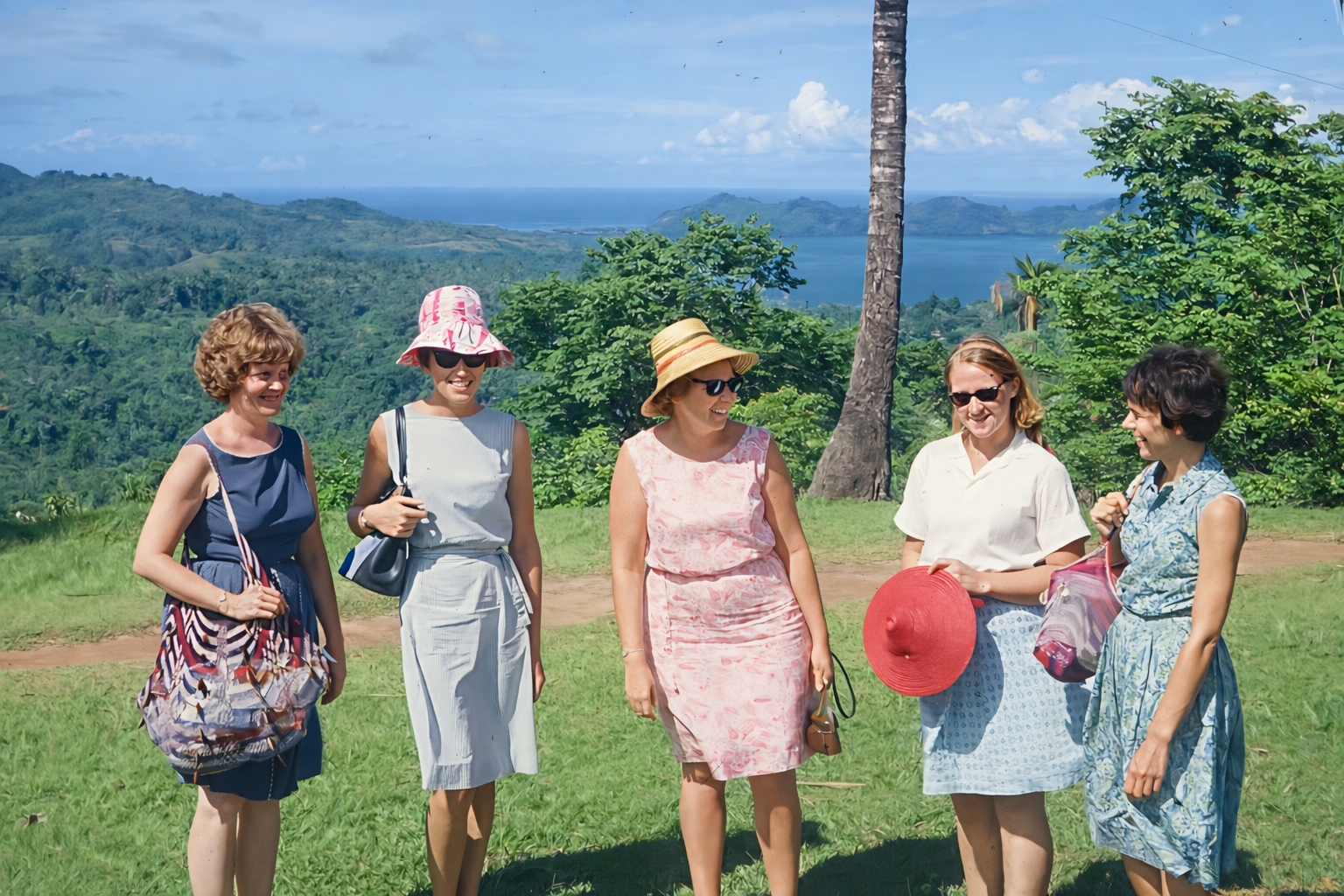
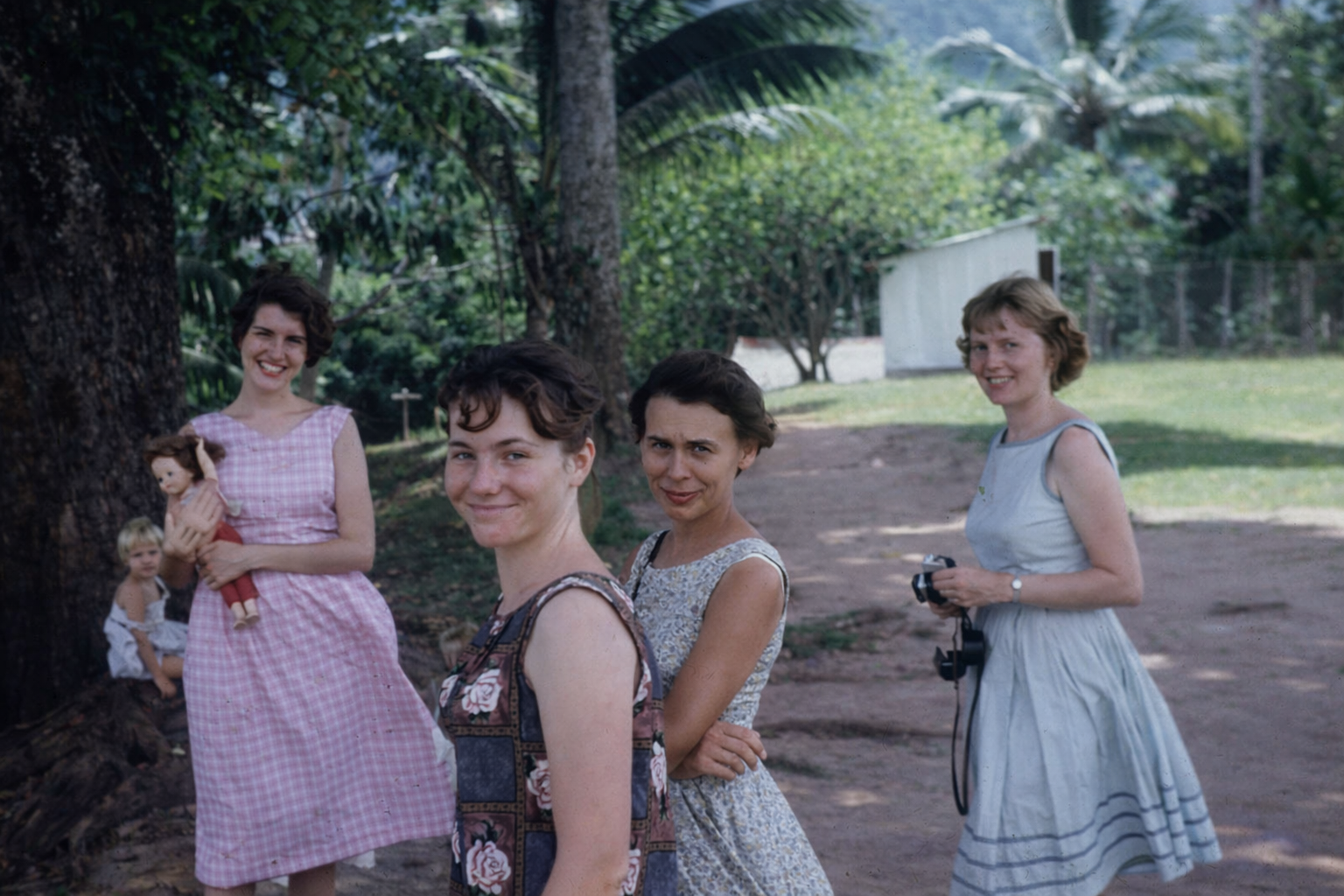
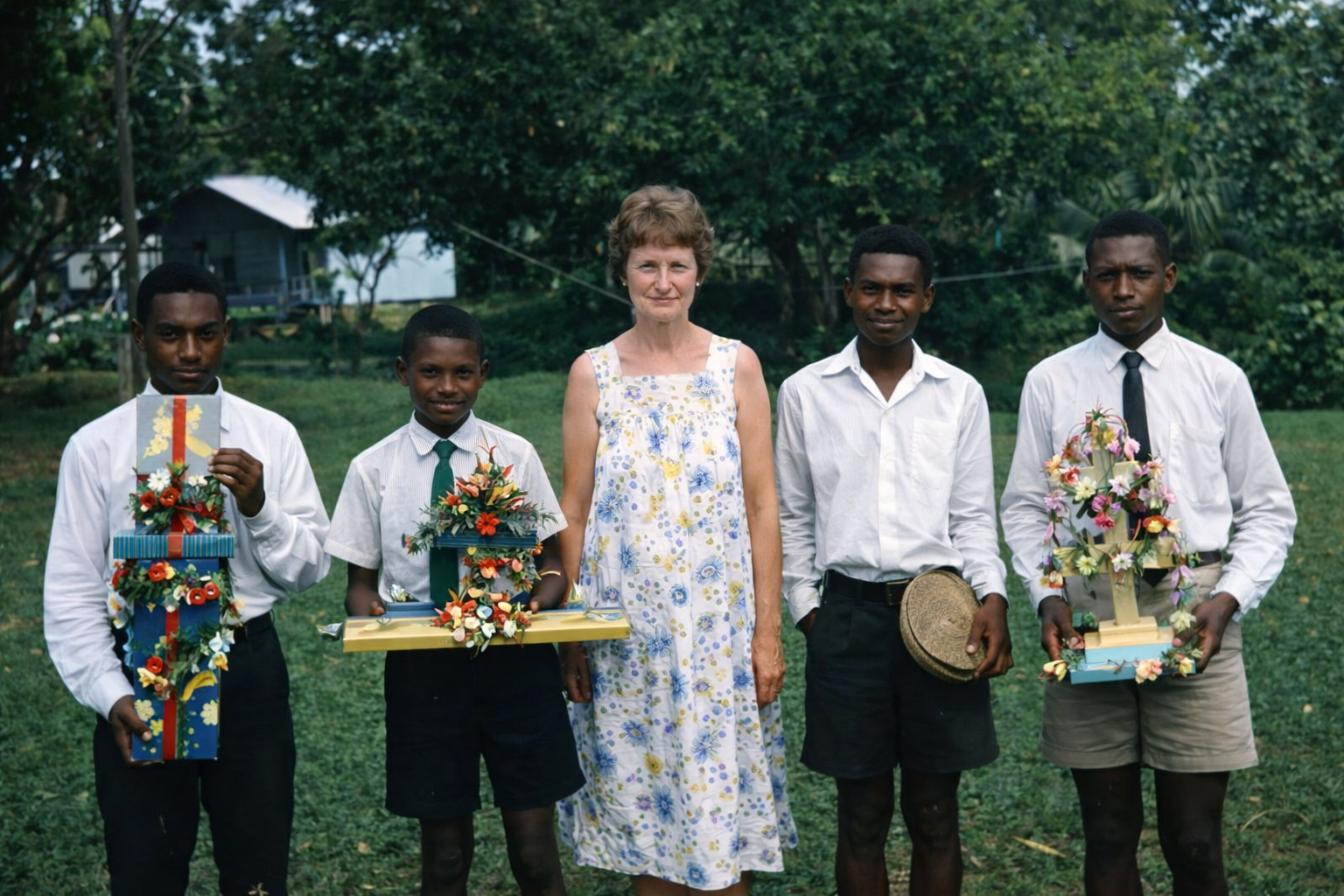
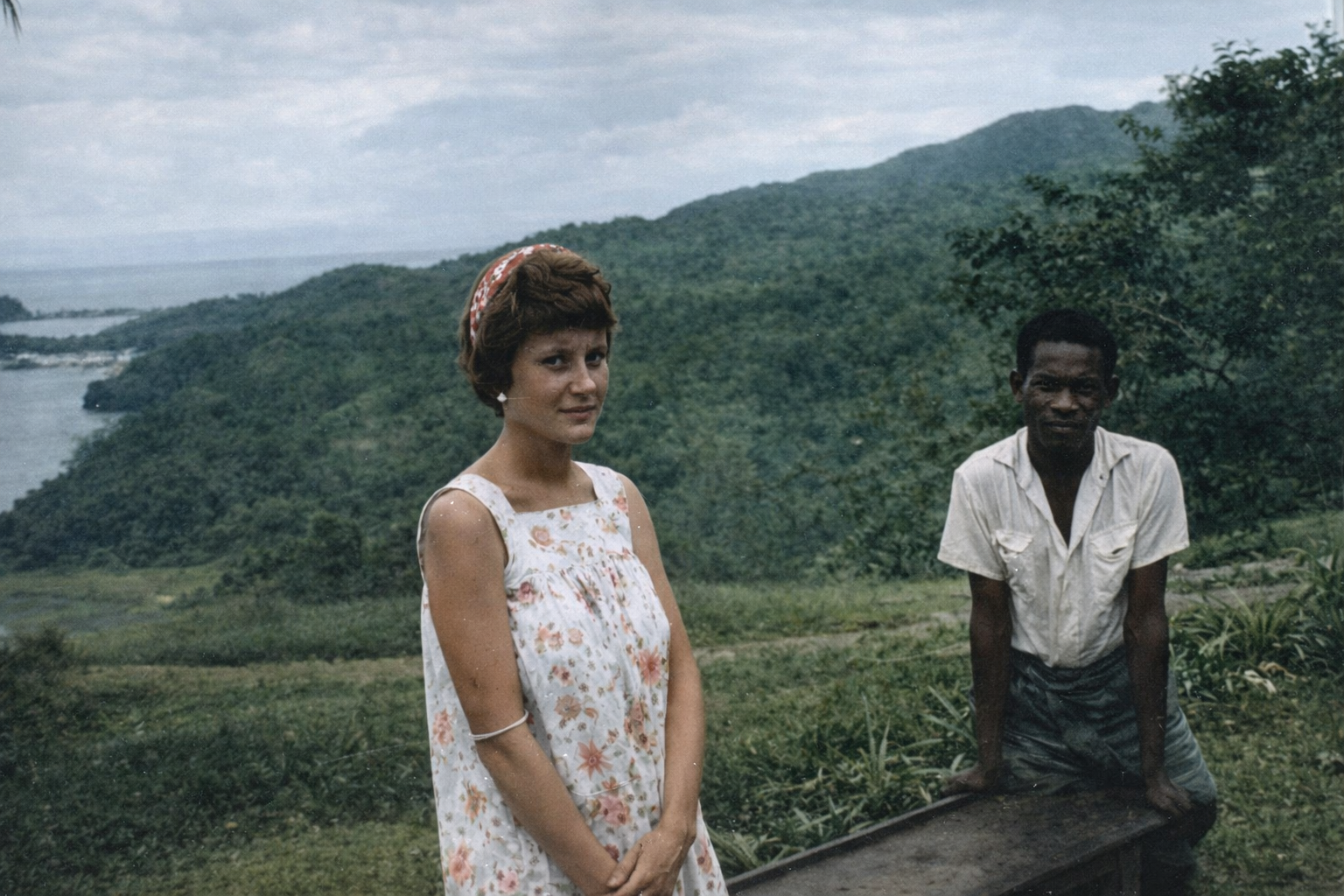
Photo 1: Phyllis on the left with large Bilum and teachers from Bula School. Photo 2 Ina holding doll with Paula in background, Unknown teacher, June Prange and Phyllis holding camera. Photo 3 and 4 -farewell to Phyllis.
1964 December 13
Letter written by Ina Erickson from the Malalo Mission station to Durward and Estelle Titus Box 224 Route1, Carlos MN USA
Dear folks,
A happy and merry Christmas and blessed! We hope to have pictures for you for Christmas this year, family ones, I mean, but haven’t gotten them finished. We hope to get them to you in the near future. I expect the girls from Stevens Point this afternoon. I seem so unprepared for Christmas this year, just seems we can’t get ahead of events. Al was in trying to get the court case settled over the fight and placement of the saw. But it seems that the government is now going to check everyone’s Ancestors to see who really owns the ground.(probably from when Adam was made.) it will take yours so we’ll just have to forget about the timber for years.
Phyllis had a typical New Guinea sendoff. Graham went in with her on the Kuli, as he was towing the new fish boat, and the speedboat, which both had ceased operation, and an hour out of Lae, the Kuli propeller shaft, broke. They were able to patch it together well enough to get on into Lae. Then it took several days to fix. In the fixing process they found that termites had gotten in the framework, so the hull of the Kuli will have to be rebuilt. The Victor should be back by the end of January. It seems that nearly every board on the bottom was rotted. We surely were lucky not to have had anything happen to it. We didn’t realize it was in such poor shape. Fortunately, the Victor has made a little money over the past few years, so I hope it will be enough to cover the expense of repair.
Graham really has had the setbacks with the sawmill. He’ll really be grateful if he ever gets it into full operation. This is just why there is so little industry in New Guinea. The obstacles are so great.
Kristi has been pretty well. I’ve tried to decrease her phenobarb, except when she has a fever. She has quite a time teething, but so far hasn’t had any more convulsions. Tommy is such a little monkey. We keep finding him at the top of trees, 15 and 20 feet up. When I make him get down, he asked so innocently “where’s I can climb?” I want to get the lemons, lemons are any fruit that is in the tree whether it’s oranges or guavas or what have you.
Phyllis left her combination transistor radio and the phonograph for the school, and since things deteriorate so quickly when not use, and ours isn’t working at present, we are using it. It is good to be able to have Christmas music. Paula is really stretching up. She is so proud because she can reach the top of the sink without the side of a chair. And when she lays in the bathtub, there is only a foot to go before she reaches the end.
Mr. Boerner from Bula sent over a huge bucket of eggs. I really can do a lot of Christmas baking now. I wrapped the children’s presents last night, and didn’t clear away the evidence of bits of wrapping paper, and Paula wanted to know why I had the paper out. Just can’t wait for Christmas. Believe me not much passes by her notice.
Dad, do you realize that I haven’t heard a word from you all of the time we’ve been here. I really would appreciate just a few words! Christmas makes me so lonesome for you all, especially now with Phyllis going. We don’t have a replacement for her so we will have lots of work next year. It will be good though then the year will go so much faster.
I’ve started with little sessions of drawing, coloring and painting, writing numbers, and letters with Paula. Tommy sometimes too, but he isn’t much interested yet, he’d rather look at books. Late night when it was thundering, he asked me “who do the moon broke? Will the moon come and break our house?” I don’t know how he got the connection that the thunder had anything to do with the moon. Both kids keep wanting to know when they are going to find grandpa and grandma.
The boat is in… We pray that the love of God will be real, and that the peace of God, which means all understanding me dwell in your hearts and minds. Greetings to Dorothy, grandpa, Bill, Claude, Bette’s, Inez’– I had a nice letter from her recently and Erva’s – she is a faithful letter writer, as is Dorothy.
Love Al, Ina, and family.
PS: thank you all so very much for everything. We do appreciate it all so very much. Mom, could you send some more liquid aspirin and another bottle of infant aspirin that is so much easier to get into her when she is sick.
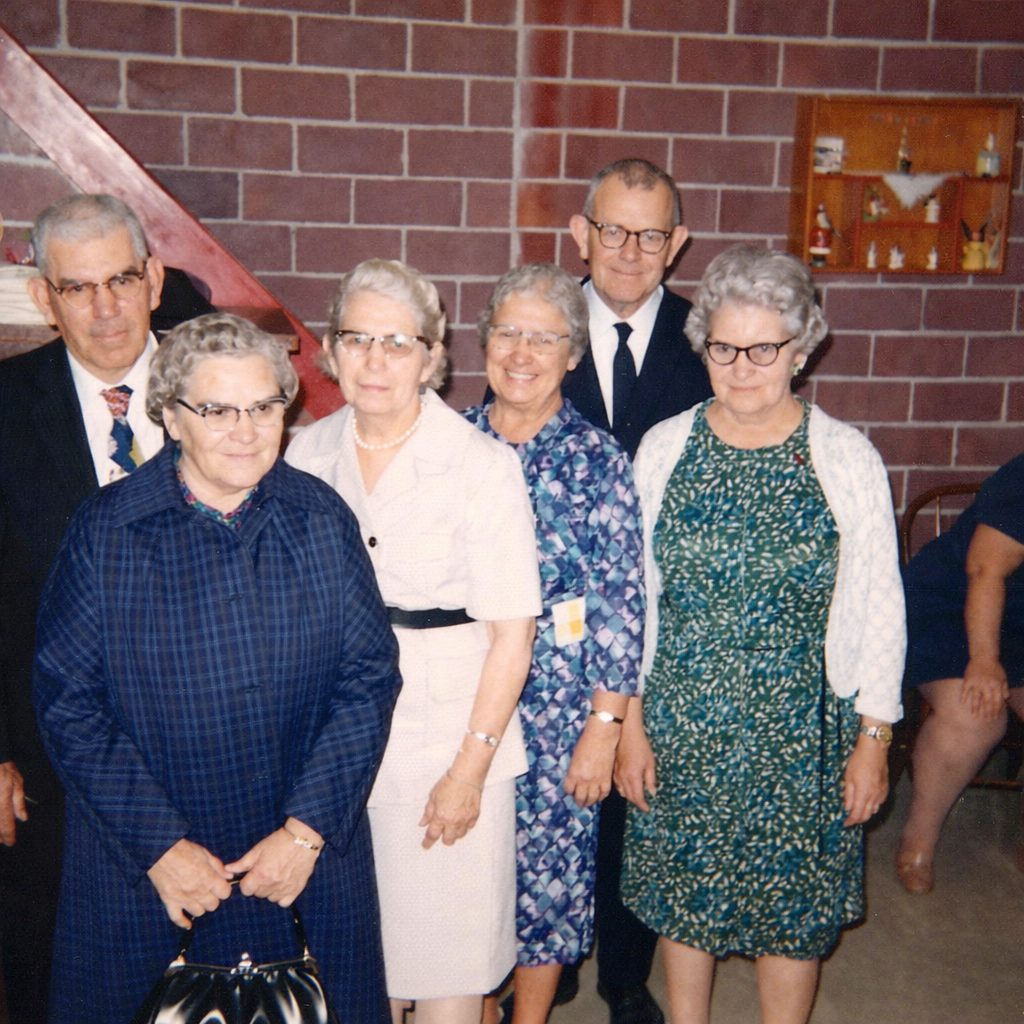
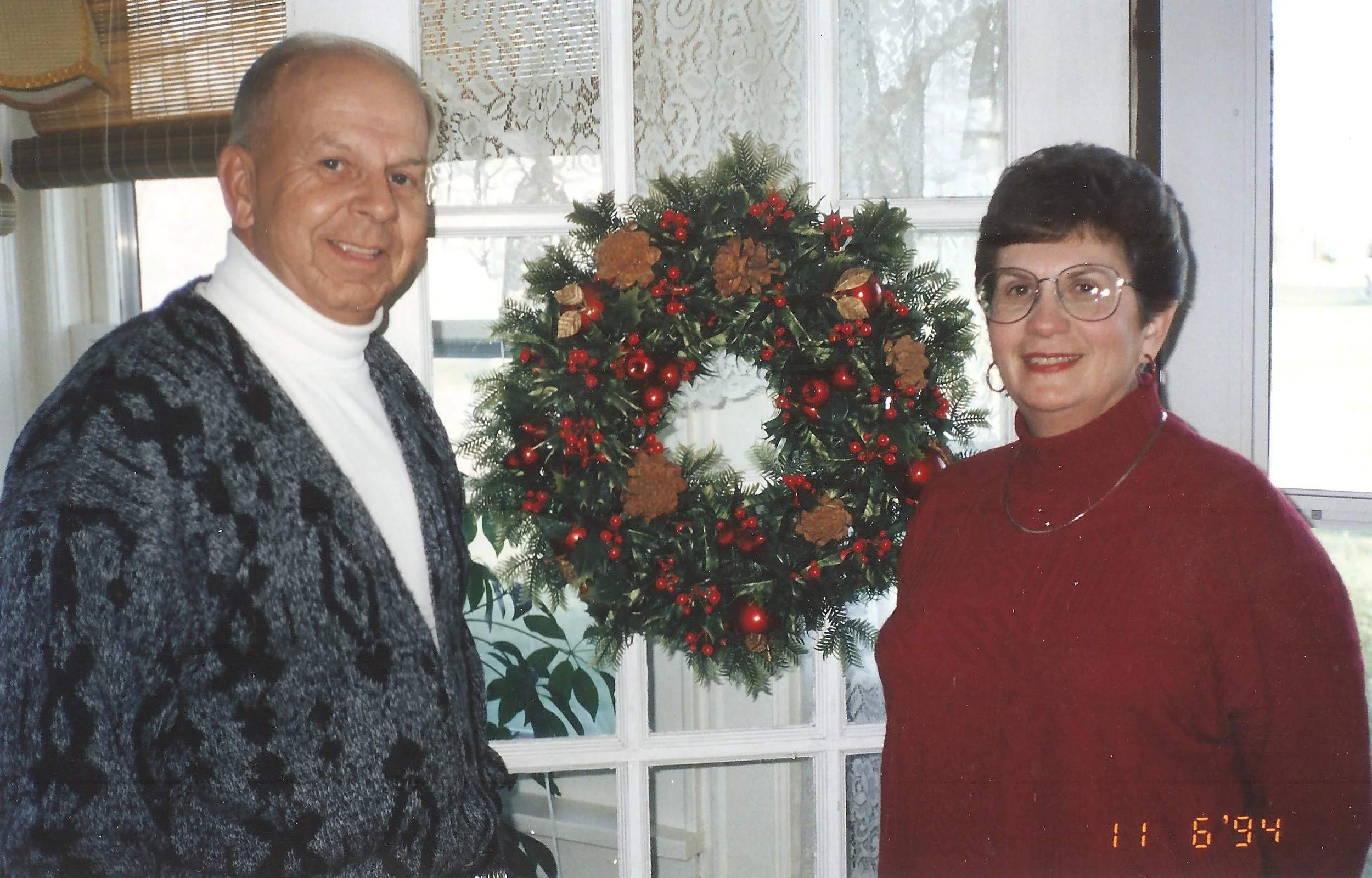
Ina’s aunts and uncles, her mother Estelle with the white sweater. Photo 2: Ina’s cousin Bette withe husband Jerry. Bette, Claude’s ( with the colorful tie) daughter who is the same age as Ina. They grew up together like twins. The went to everything together in their small rural town on Minnesota.
1964 December 17
Dear Charlie and family ( Ina’s Uncle)
So very good to hear from you. We don’t get much news from or about you since neither Beryl or Willa live in Minneapolis. Minneapolis is kind of home to me. It will be nice to have you people living there even if none of my immediate family will be there when we come home.
Rising teenagers in the day and age, especially in the city is no easy task. I’m glad Ellen is happy. I hope she’ll work really hard at making a warm home for Lowell and Kim. I’m sure they are looking forward to a baby of their own, though to us, it seems on wise, especially when she is had such a bad time, and they do have bills. I think I can understand. Al’s school years were a bit of a struggle, but I think they were very good years. Our New Guinea years are very good years. It seems that God can speak to us a bit better, when we are struggling and dependent on him, then when everything is going too well.
I certainly hope that Ben and Bruce can find themselves. I think perhaps it is good for Ben to learn to handle his own money to try his wings, he hast to do it sometime. It’s a painful time for parents, but put him in God ‘s hands and trust that he will guide him. The nightmare you must have gone through when the boys took off like that. It is good that you did stand by them, in later years I’m sure they will appreciate that.
Oh, how I hope and pray that Betty will be happy this time. I hope that Gerry isn’t deceiving her, and that she will make a happy home for him. Above all, I hope that they make Christ the center of their lives.
Kristi had several convulsions. I’d rather think it stems from her fall. They came when she has a slight temperature. I’ve been giving her phenobarbital, and that has gotten her through. It will be a test if she can have a temperature without a convulsion. It is something that some children have, some have it until they are three or four years old. They just have to be watched until they outgrow it.
When will Ellen ‘s baby be due? I am waiting patiently for word about Beryl’s baby. I surely hope that all goes well with her this time. I hope that Cheryl can find a steady fellow that will provide her with some sort of a stable home. I haven’t heard much about Michael. Just what has happened to him? I think that I heard that he is going to school or some such thing. I just received a house full of company, and I see the boat coming, I’m expecting a couple more ladies. We pray that you will have a very blessed Christmas and a year filled with joy along with some of the hardships.
Love, Ina
Dear friends, (written by Alvin)
Not without inward mirth, and perhaps 20th century pride, many of us have considered the fantasy of having Moses or Ben Franklin, or even Abe Lincoln plopped down in the midst of our present day life. Wouldn’t Moses be ready for another 40 years in the wilderness if he tried jaywalking on one of our freeways? Wouldn’t Ben get a shock if he tried putting his fingers on some of our modern electrical inventions? No doubt such an occasion would really tickle our lives.
On the other hand, we might provoke a few guffaws if we were to go back and walk around with the Israelites. They would have a great time watching us try to eke out a living from the soil or apply our rigid hygiene standards. It might bring a blush or two to our efficiency, experts to have to spend two or three hours a day collecting firewood to cook the evening meal.
These few thoughts help us to focus in on life here, in New Guinea, where the slow-moving stream of Stone age life suddenly joins the gigantic, turbulent surge of western world’s amazon. The unchanging flow of New Guinea society struggles to its course only to become more and more and off-color blend with the twisting unsatisfied tide of the modern life it has encountered.
A casual glance at most New Guinea villages might cause us to guess we were in an era sometime before Moses. Roofs, walls, flooring, home posts are all right from out of the jungle. Almost everything is carried in net bags made a bush material. Drawing closer we start to notice the use of “European “cloth, nails, cooking pots, knives, kerosene lamps, canned meat, and other things of low price, but great usefulness. We might see a cowboy hat, or a Swiss Alps type or a million things just about all in horrible repair. Big safety pins might hang from the stretched earlobe as adornment or an old man in spite of the blazing Sun might still strut around in his old army coat.
Dear Peter and Evelyn, (Beck)
For a few sweltering days we thought our lovely, rainy season had finished but once again, it has been a bit cooler. Have you heard? The new miller has arrived. Suddenly they were here. Bob Ramin called on the skid, saying that they would be coming to Malalo to live until the new house was ready.
Graham Little is his name and they have two children. Robin, a busy five and Heather 21 months old and they are from Newcastle.
It’s kind of too bad when you see someone so fresh and enthusiastic and know what frustrations are in store for them. They moved down to Sawat right away. We ordered a new stove as yours was really done for. Al and Graham had made big plans for the Simbang. It was supposed to bring their supplies and empty the stacks, then the night before it was to arrive, they radioed that they couldn’t make it. The Kuli broke down but good. The driver shaft I believe Al said…. Ina
1964 December 22 from Mary Ann Bell, Glendive, Montana
Dear Mr. Erickson,
Our sixth-grade class has deposited five dollars in your account. We hope you may be able to use it for pleasure or whatever would seem best. We hope you will receive this as a Christmas gift. We are having a Christmas program today. This program is made up mostly of Carol’s. Gerry Ebelt will be ordained next Sunday, 27 December in our church as a pastor.
We are having very cold weather here. Last Tuesday it started blizzarding by Wednesday it was -24° and visibility was zero, so we had no school. By now most roads and schools are open. We now have about 2 feet of snow.
We pray your sick child is better or completely well. We wish you a very merry Christmas.
Yours truly miss Anderson, six grade class, Zion Lutheran.
1964 December.
From Sally Bard 5050 Garfield Ave., South Minneapolis, Minnesota
Merry Christmas. May the joy of this season fill your hearts. I pray that your New Year will be filled with God ‘s peace and blessings! Our eighth grade Sunday school class at Bethlehem, Lutheran Church, Minneapolis, Minnesota is studying the Good News so we wanted you to know how much we appreciate your efforts to spread the good news. Mathew 28 verse 19 through 20 became alive for us.
December 6, 1964
Dear Reverend and Mrs. Erickson,
I thank you for what you are doing for the last fortunate people in the world by teaching others the word of God, and all his wonderful things he did. In our Sunday school, the teacher had us pick a missionary to write a Christmas greeting. May you have a merry Christmas and a happy new year and many more.
Sincerely, Sally Bard.
Date unknown from Alvin
Lutheran mission New Guinea medical department dental section.
Madang PO Box 56
Territory of New Guinea.
Joachim H boy
Dental surgeons
To Reverend Erickson at Lutheran mission Malalo,
Dear Reverend Erickson, thanks for your letter regarding the Ex- dental student Simeon. At first some general information: all dental students had to pass their first examination in form of a written test. That means that they had to answer questions, which were given to them type written. The subject involved the teaching staff of the government dental training – first course – first six months. The students had got the subject over a period of two years, which means a repetition of 4 to 5 times in each subject.
As I saw, they did not, and would never grasp it, and because we could not go on this way, repeating a six or seven time, and also as Dr. Braun wanted to see them treating patients, I made this test. That outcome was, that there was not one of them who passed out of the six students, Simeon was the weakest of all. And not one subject he got 70%. And only one subject he came over 50%.
As there was nobody who passed, I could not take the responsibility of the patient. Finally, even Dr. Braun, Dr. Heist, and Dr. Kuder found, that their knowledge was too much below the minimum level. So, I asked the boys, what they would like to do now. Two wanted to become doctor boys in Yagaum (they are already in training), to try to get higher standards (they are already in Baitabag). Simeon wanted to try a doctor boy training in a government hospital. He wanted to try in Lae. The mission agreed with their decisions, and as I am too far away, perhaps you can help him get a training there. I don’t know, what he told you, but these are the facts.
Yours truly, Joachim boy
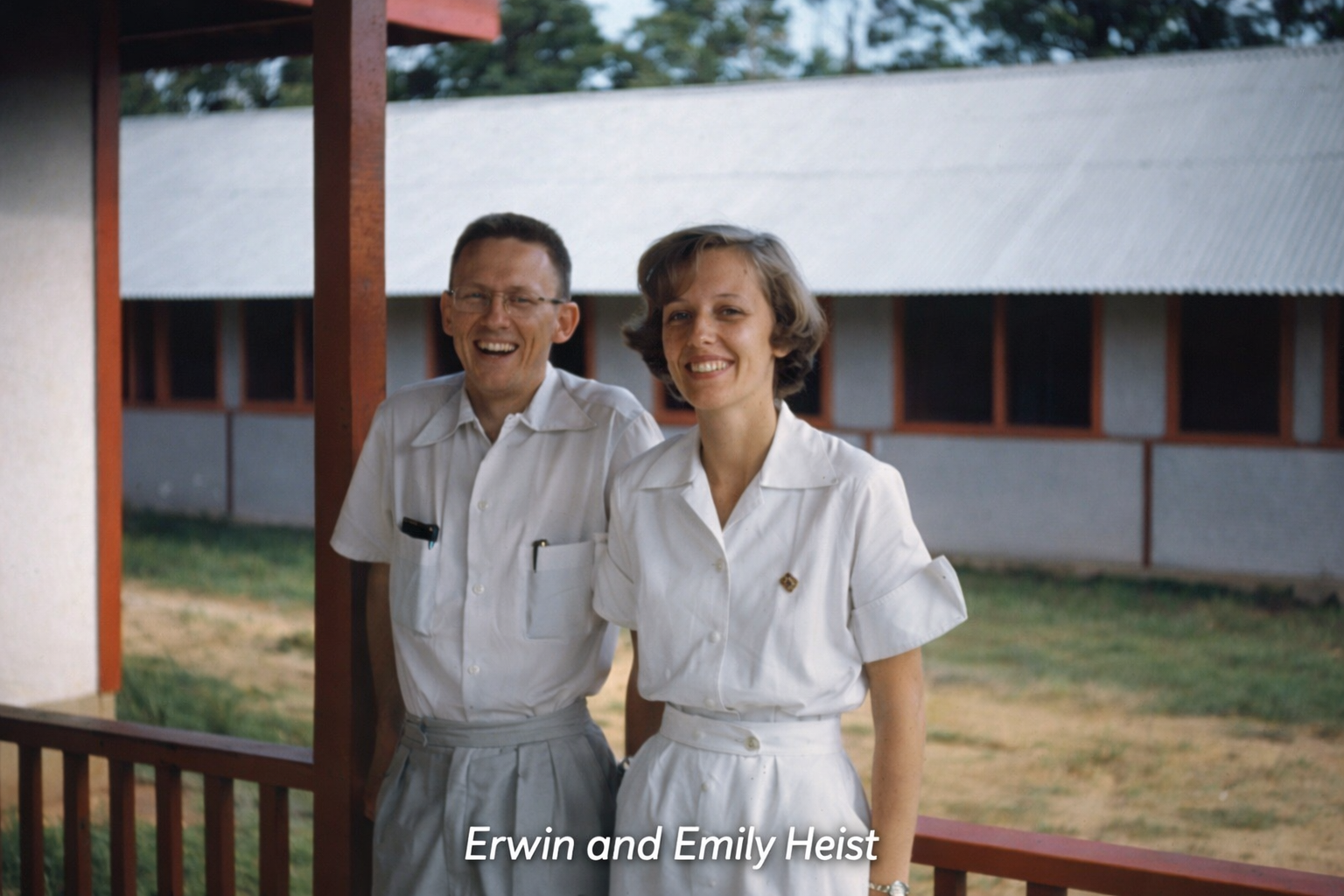

Dr Heist and Dr Kuder in photo 2 which is taken from Karen McCann’s journals at https://freepages.rootsweb.com/~mccannkin/misc/NGchiii.html
1964 December 26
Letter written by Ina Erickson from the Malalo Mission Gertrude and Laurence Rasmussen 608 Sunrise, Park Ridge, Stevens Point, Wisconsin, USA
This letter was typed by Mrs Rasmussen and sent out to friends, supporters and family of the Erickson’s.
Christmas Pageant
Greetings, dear friends,
Each year I thought perhaps we could tell you how we spend Christmas, and each year it got put off until the next year. Last year the program got rained out in real New Guinea fashion, this year we were, however, much more fortunate.
The week before Christmas we were joined by four young short term teachers. Two of them were over 60 – widowed, and they decided not to spend their active years in a rocking chair but to put their valuable experience to good use. They’ve really made a wonderful contribution to the New Guinea people and much enriched Our Christmas. The two other girls were truly young and years as well as spirit. They were girls that we had been fortunate enough to meet in Stevens Point our year of internship.
The German caretaker arrived from Bula with about six dozen eggs and homegrown peanuts on Christmas Eve. The new sawmiller and his wife and two children arrived with the Christmas tree and our Christmas mail from Lae. Our Christmas tree this year was a bit like the fur trees at home with long soft needles. The branches were a bit far apart, so we tied two trees together. Covered with balls and tinsel, you couldn’t really tell the difference.
As dark neared more and more people begin to congregate on our lawn, the only level place at Malalo. One of the villages had set the stage for the Christmas program that takes place every Christmas Eve. Coconut fronds, and banana leaves prove to be very versatile and we used to make a pulpit, the stable for Mary, Joseph and the palace for king Harrod. Coconut palm strewn on the ground were seating for the audience. Post had been erected in various strategic places to Coleman pressure lamps used for lighting. Each year a different village is responsible for the pageant. This year the village just below our hill had the privilege of presenting the story. We thought they did an excellent job.
A black, curly haired angel appeared to Mary in a white lap lap with well-shaped, palm, branches tucked and back. The narrator continued with that story, in Jabem, the various prophets appeared with their prophecy of the coming of the savior, while Mary and Joseph took their place in the stable. An Angel appeared to the shepherds as they were watching their bleeting, restless, black sheep in their fields at night. The angel blinked his flashlight, and immediately the ball burned out, as the great light shown around him. Two more angels appeared with the first. Their attempt to sing praises, somewhat fizzled, and they made rapid embarrassed exit. Soon a great star, which was a lamp on a long bamboo pole, waving about was discovered by six Wiseman, dressed in turbines and lap laps, searching the skies with long bamboo telescopes, they made their way to Harrods court to inquire as to where they might find this new king. They encountered a little difficulty, being questioned very closely with spears behind them. They were admonished, returned to tell Harrod when they had accomplished their task. An angel appeared as they were sleeping and told the Wiseman it would be wise to return a different way. When Harrod found that he had been foiled, he sent his helmeted soldiers with clanking chains, complete spears and shields into the audience. Kristi thought it was funny, but Paula and Tommy weren’t so sure the soldiers didn’t mean to take their baby. Fortunately, Mary and Joseph had been warned by still another angel and had gone to another country before the soldiers arrived and wrecked the stable were they had been abiding. The soldiers went back to report to her that they had killed all the babies, but that they had lost all of their food in the process and would we have a little more? With that the drama ended.
At the close of the service, the people lighted their small kerosene lamps or dried coconut fronds, and proceeded down the hill, making a lighted outline of the crooked path down to the villages on either side of Malalo, and along the coast for several miles. This year there were a few firecrackers for sound effects along the way.
We all came back inside and finished eating the supper that hadn’t been quite finished before the start of the program since dusk is at 5:45. After lighting the wreath for the last time we could not keep the children from the gifts under the Christmas tree no longer. We all enjoyed watching their happy expressions as their treasures were discovered. Thank God for the very gift of his Son, that might have been the hope of living with him forever. May this be the very rich New Year for all of you, and discovering a bit more of the wonderful love of God.
Love to all in Christ name,
Al, Ina Paula, and Kristi