Surprise, Stewardship, and the Work That Keeps Going
The following is a summary of the letters for AUGUST 1964
Malalo Mission Station
Malalo in Late Dry Season: Cool Evenings, Long Days
August brings a welcome coolness to Malalo. The rain still comes, but not with the same relentlessness. Clothes sometimes dry between washings. Evenings invite lingering conversation instead of collapse from heat.
From the hill above Buakup, the view remains unchanged—sea, jungle, paths worn smooth by feet—but the work never repeats itself exactly. Each week brings new combinations of people, needs, and decisions.
Malalo holds steady not because it is finished, but because it keeps adapting.
Fruit, Memory, and the Way Letters Begin
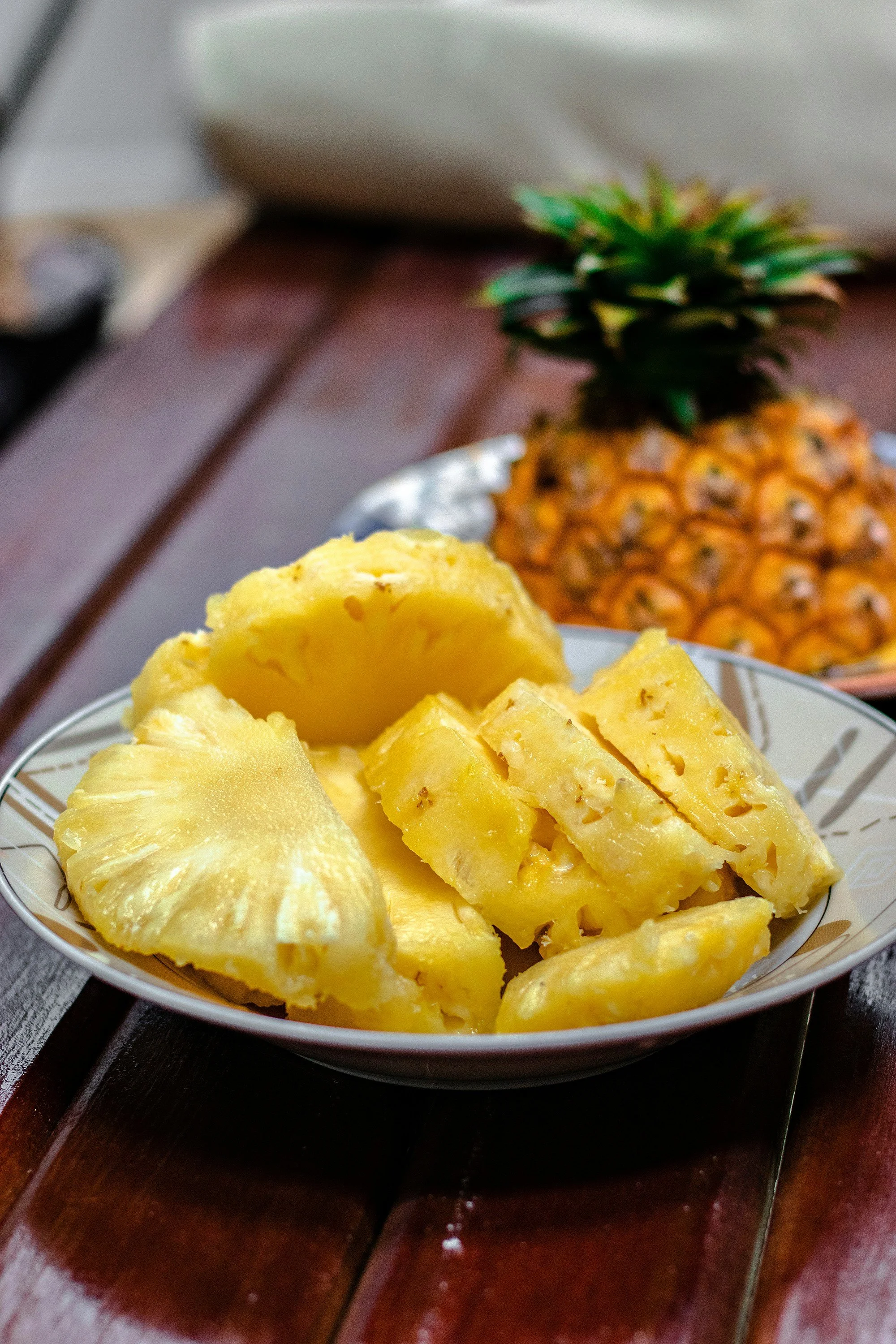
Ina begins August as she often does—with food.
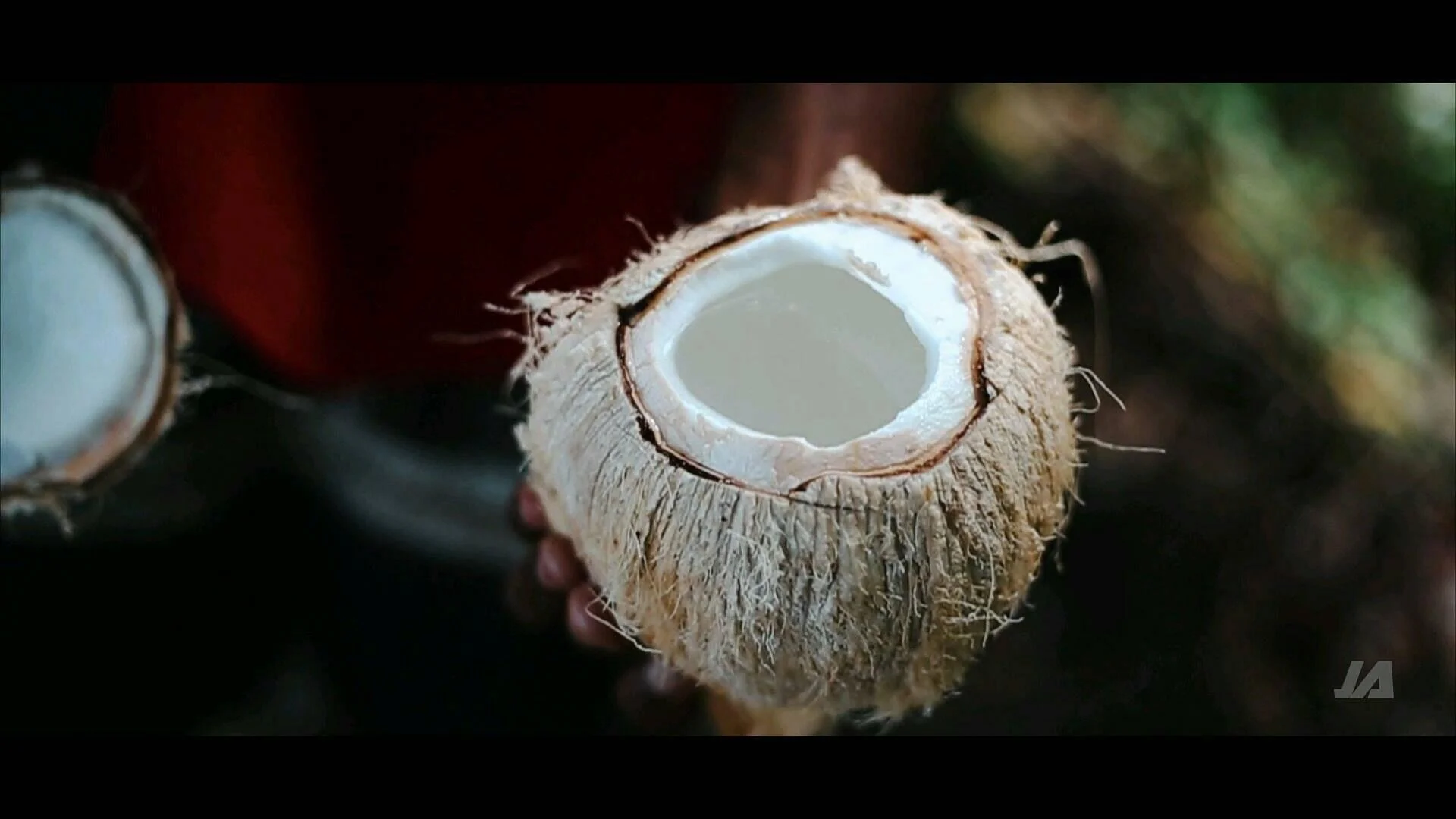
A piece of coconut arrives fresh in her hand. Pineapple still tastes sweet after three years. She imagines cool cantaloupe, yellow and orange, dotted with black seeds like beads. Food becomes language, invitation, connection.
She writes as if speaking across the table, not across an ocean. Have a piece of coconut, she says, knowing they cannot—but wanting them to feel included anyway.
This is how Ina keeps distance at bay: by naming small, tangible pleasures that carry memory with them.
An Unexpected Reunion from Stevens Point
August’s first surprise arrives in Lae.
While Alvin is passing through, he runs into two young women who had attended college in Stevens Point when the Ericksons were there. They had come to New Guinea on short-term teaching assignments—and deliberately said nothing so they could surprise them.
And they did.
The timing is improbable. Planes into the mountains do not run on schedules. Alvin spends two days traveling, separated from his cargo, short on food, uncertain whether the plane will come at all. It is the sort of journey that seems foolish—until it works.
These reunions matter more than they first appear. They collapse years and miles in an instant. Old friendships reappear in new terrain. The past steps directly into the present.
Both women will be stationed in the Ericksons’ district. There will be time to visit. Time to laugh. Time to remember who they were before Malalo shaped them so thoroughly.
Sawet: When Success Becomes Its Own Problem
By August, the sawmill at Sawet is no longer struggling to survive.
It is struggling to keep up.
Production has increased so much that old assumptions no longer hold. The mission can no longer buy all the timber Sawet produces. New markets must be found—quickly—before a large government operation further down the coast floods the market.
Transportation becomes the bottleneck. The mission boat, once reliable for hauling lumber, now has too tight a schedule. Alvin must find alternatives—hiring trucks, coordinating crews, timing boat arrivals down to the day. When two boats arrive at once, it costs $100 a day to keep them waiting. Everything must be loaded immediately.
Then there are details that cut deeper: the boy measuring logs has been adding an extra foot to the circumference, inflating prices. Correcting the mistake will reduce income. Wages have already been raised so the people doing the work benefit directly, even if profits shrink.
Alvin walks a thin line—trying to keep Sawet solvent while slowly moving the congregation away from dependence on a money-making enterprise. The hope is that personal income will lead to personal stewardship, and that the church will no longer need to operate a business at all.
It is an experiment without guarantees.
Meals Under Lamplight: Gratitude Without Pretense
One evening, fifteen work boys are invited for dinner at Sawet.
The table is carried outside and pushed end-to-end with a picnic table. Darkness falls before they are ready to eat. Two kerosene lamps are lit. Dinner is taken by lamplight.
Ina tries to bake bread, but the stove smokes badly, giving everything a barbecued look—and taste. The pies look worse than they are. The men do not care.
They eat heartily: meat and rice, hot dish, pork and beans, peas and carrots, peach pie, bread, cookies. Coffee flows in six rounds before they are finished.
Ina knows she could have cooked three times as much and still not met the need. Gratitude fills the space instead of embarrassment.
This is hospitality without polish, but with abundance of heart.
Children Growing in Inches and Moments
The children change almost daily now.
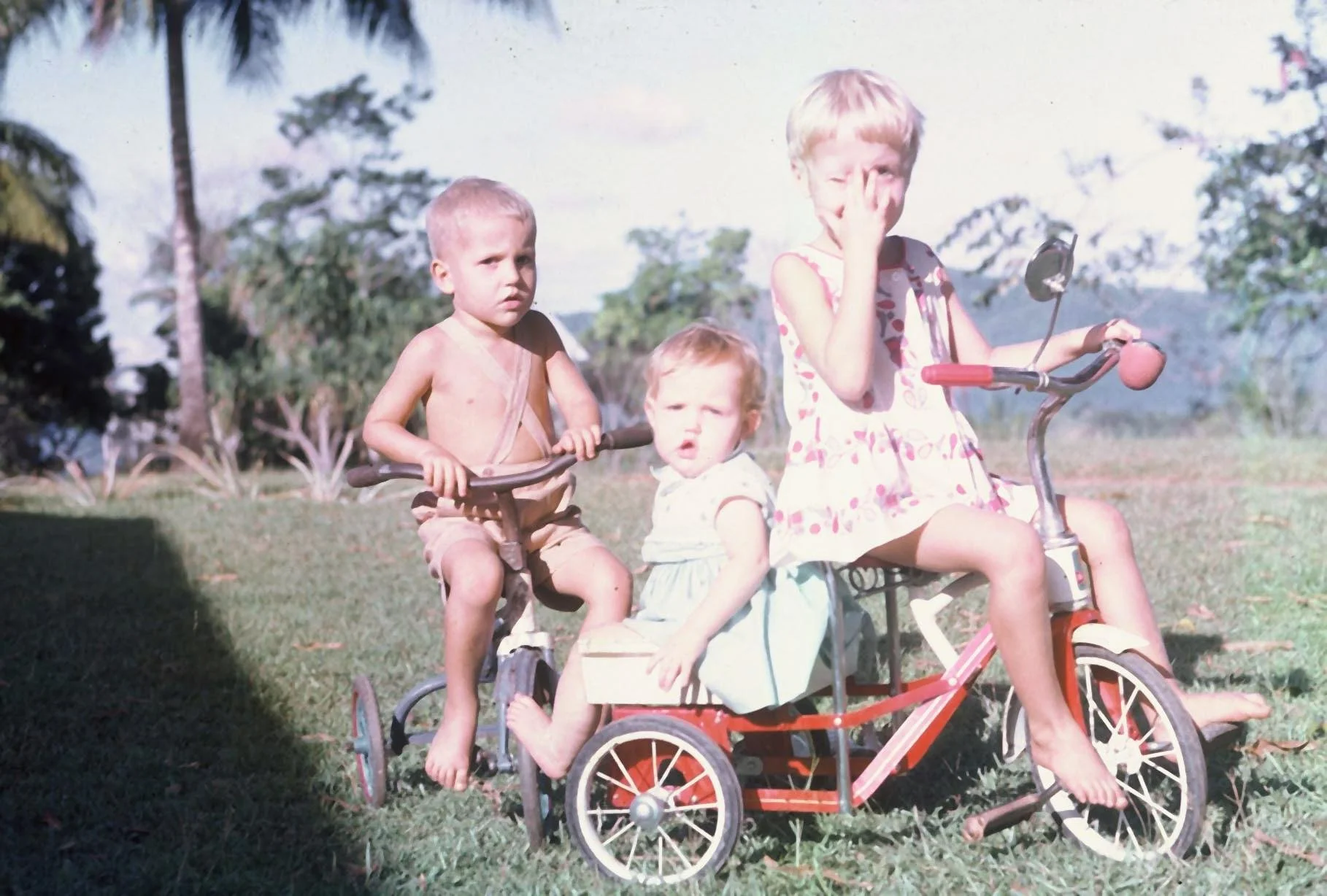
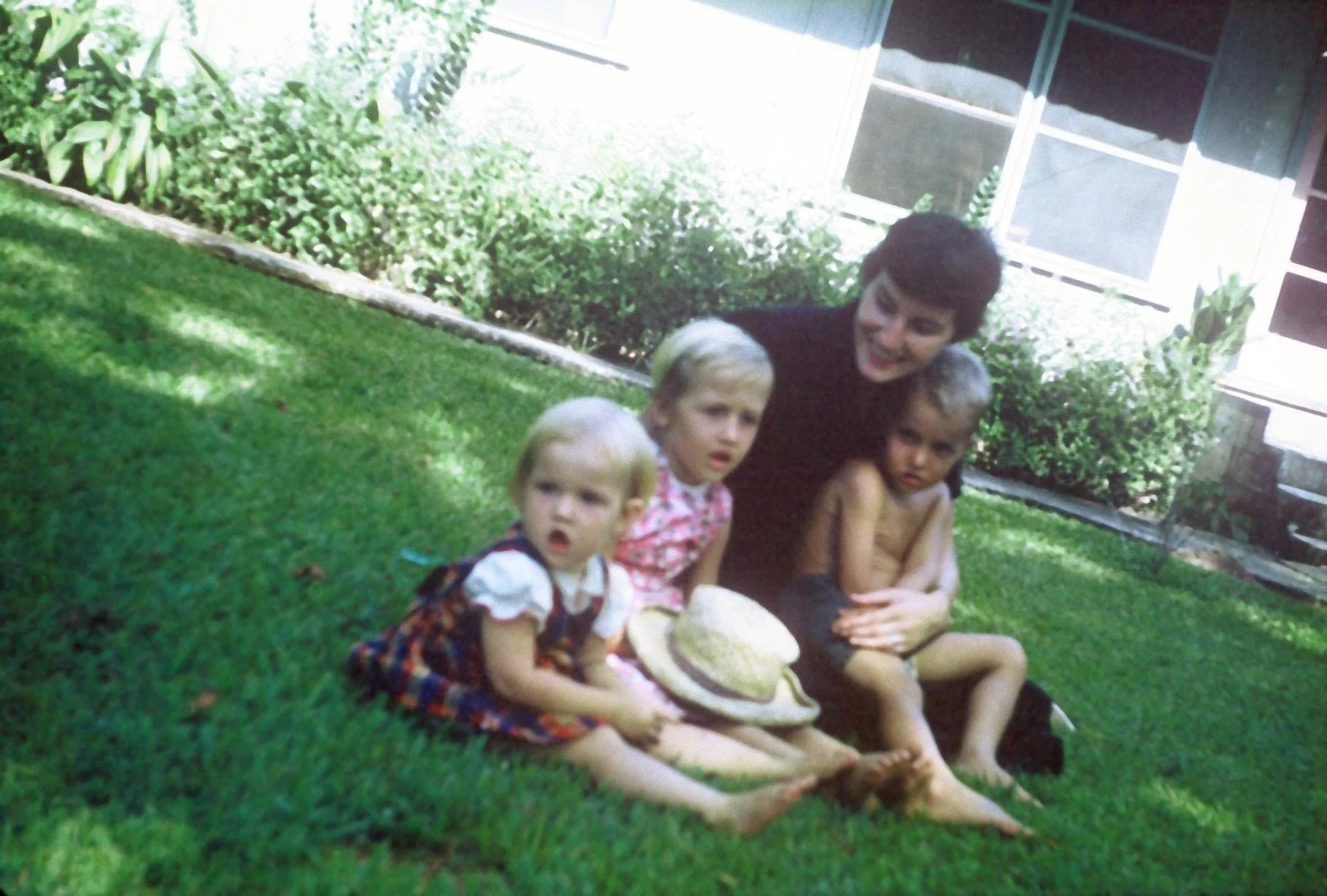
Kristi is twenty-four pounds—plump, determined, endlessly curious. She crawls into cupboards, empties shelves, pulls tablecloths with astonishing reach. She walks confidently between people and across rooms if someone waits for her, but will not yet strike out alone.
She falls, hard, when a gate is left open and her walker goes down the steps. A quick trip to Lae brings stitches and X-rays. She cries briefly, then returns to her sunny self as if nothing happened.
Ina thanks God without qualification. Protection here is never assumed.
Paula stands on the edge of independence. She practices writing her name, proud of each letter mastered. She plans how she will greet her grandparents someday—arms around them, no crying, careful conversation.
Tommy experiments constantly. One evening he appears wearing five pairs of pants, fascinated by buttons. Another day he declares he nearly died, with complete seriousness, though no one can determine why.
They live, Ina observes, very hard lives.
Handmade Gifts and the Meaning of Labor
August letters carry instructions as well as affection.
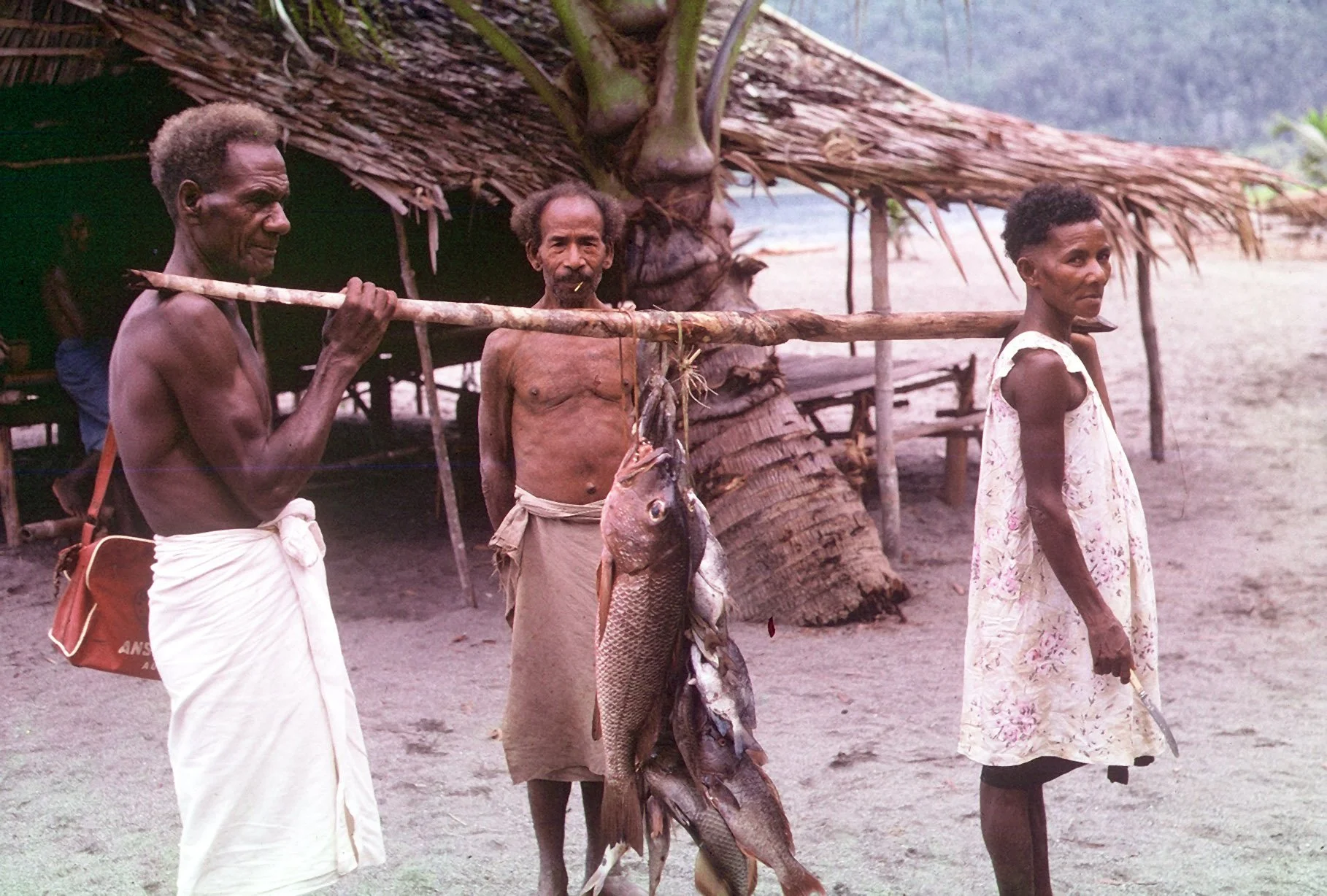
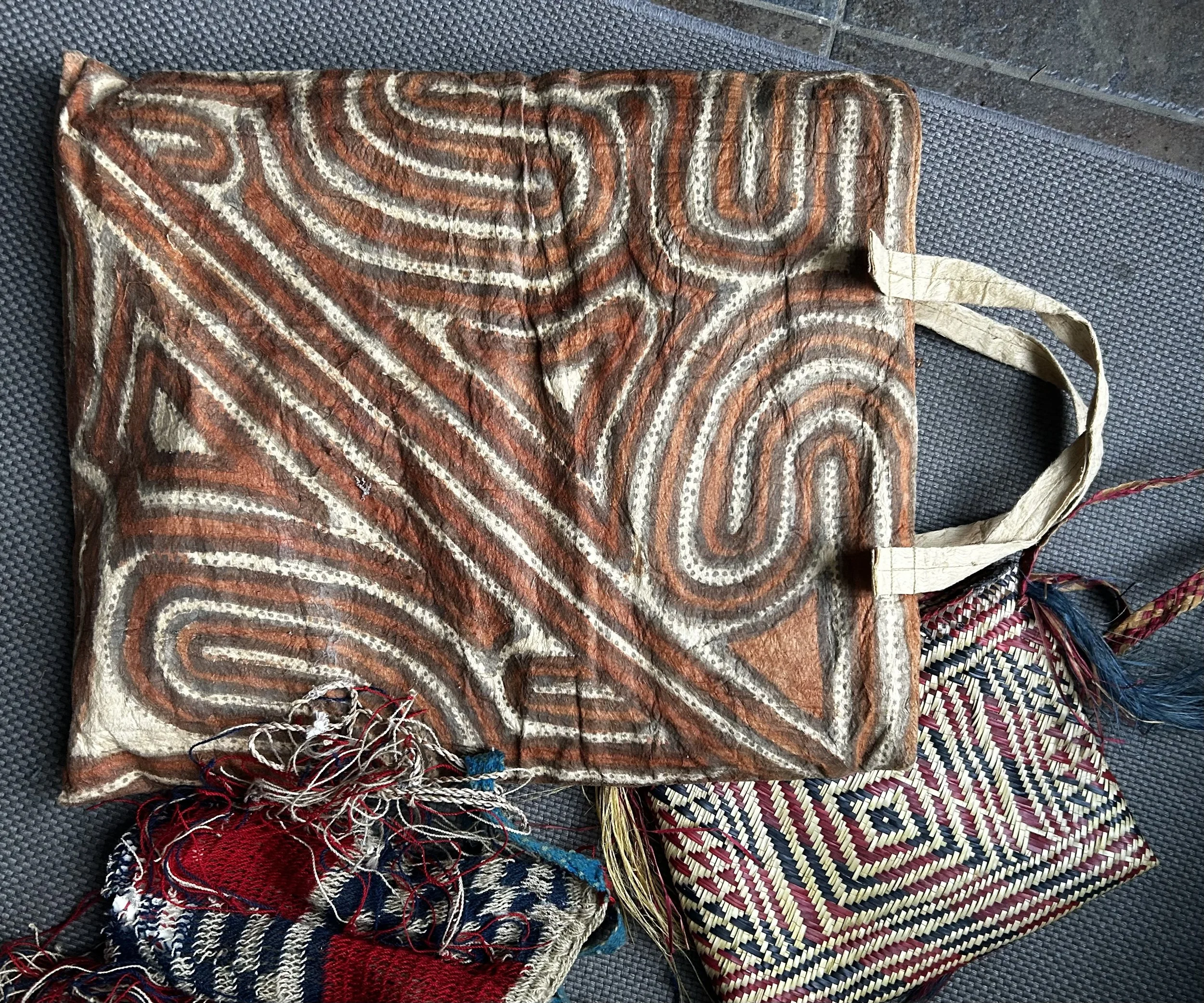
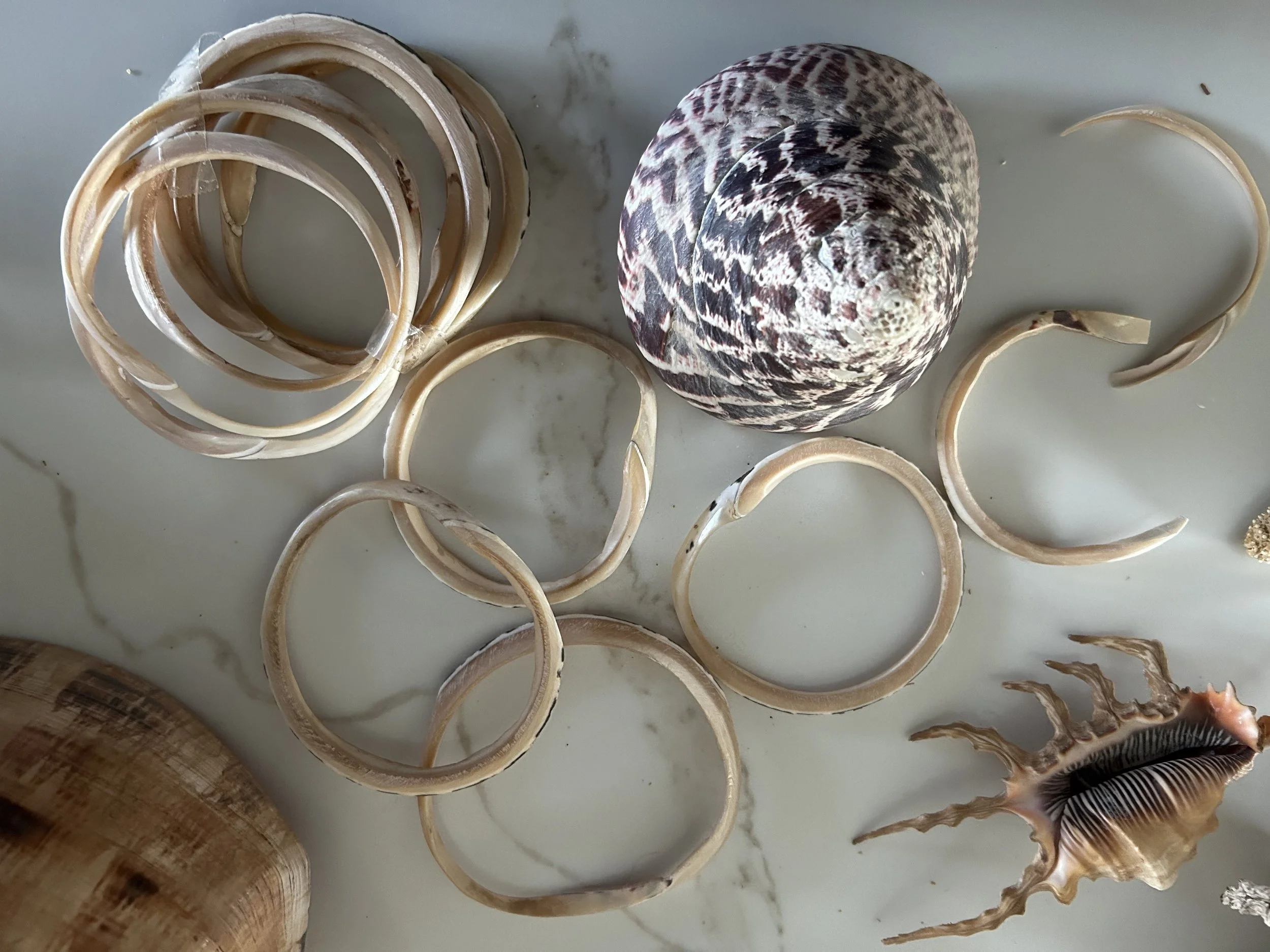
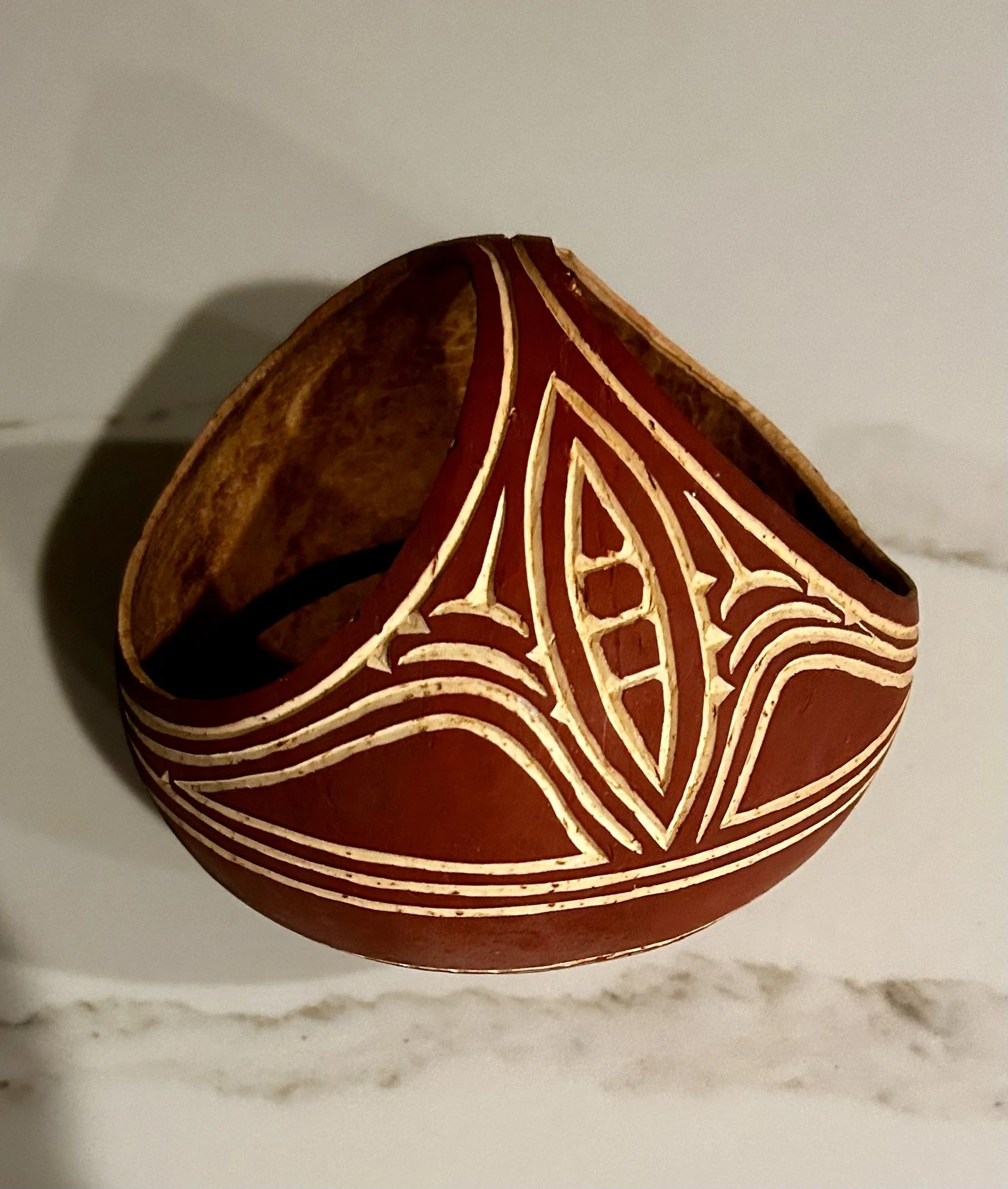
Crosses carved from quila wood, bark cloth skirts, net bags dyed with roots, shell rings worn above the elbow, fish trays, salad servers, masks—each item carries a story of labor.
Ina describes the process carefully: bark stripped and boiled, fibers pounded with stones, yards of string twisted by hand before bags are knitted with fingers alone. Coastal methods differ from inland ones. Every object represents hours of work.
These are not souvenirs. They are evidence of skill, patience, and pride.
She directs where each gift should go, knowing exactly which relationship each will honor.
World News on the Radio
The radio brings unsettling news.
Vietnam presses closer to war. The attack on North Vietnamese marine bases dominates the broadcasts. Ina listens with unease, convinced that if “red” is turned loose, civilization itself is at risk.
Global politics feel distant and immediate all at once. Even here—on a hill above Buakup—the consequences of far-off decisions feel close.
Prayer becomes both instinct and necessity.
Music, Teaching, and Quiet Persistence
Ina returns, slowly, to music.
She plays the small organ when she can, learning hymns imperfectly but persistently. She teaches several boys the notes and the first book of John Thompson—staying just ahead of them lesson by lesson.
One boy is especially persistent.
She hopes that if she can teach them to read music now, someone later can teach them proper technique. For now, persistence matters more than polish.
The arrival of an 8-mm projector causes delight. Films of John Glenn, the zoo, and football are shown repeatedly. Football is the favorite. Alvin plans to show them to the sawmill workers before trading them in for new ones.
These shared moments—darkened rooms, flickering images, laughter—become communal memory.
Hotec Vision: Mountains and Possibility
The idea of a central school for the Hotec people continues to take shape.
They live two mountain ranges inland—two or three days’ walk from the coast. Their only access to market is by foot. None of their villages alone can support an English-language school.
Now, they have selected a site—three hours’ walk from Malalo—large enough to build a village, a school, and eventually a dispensary. Ina imagines being able to get there occasionally to help supervise.
With Sunday school funds, they purchase tools: picks, axes, shovels, hammers. Small incentives, but meaningful ones.
The vision is slow to germinate, but it is alive.
Correspondence That Becomes Community
Letters flow both directions.
Gertrude Rasmussen shares news of weddings, grandchildren, church programs, and slide shows. Ina’s words are read aloud to groups back home. Interest grows. People ask how they can help.
Specific needs matter. Tools matter. Stories matter.
Through letters, Malalo exists simultaneously in Minnesota, Wisconsin, Montana, and New Guinea—held together by attention and prayer.
August’s Shape
August is not a month of crisis.
It is a month of connection.
Old friendships reappear. Work expands beyond expectations. Children grow visibly. Gifts move across oceans carrying labor and love. The wider world intrudes through radio waves, while daily life continues under lamplight.
Malalo remains what it has learned to be:
a place where nothing stands alone,
and where ordinary faithfulness keeps everything moving.
The following are the actual letters for August 1964
August 1 1964
Letter written by Ina Erickson from the Malalo Mission station to Durward and Estelle Titus Box 224 Route1, Carlos MN USA
Dear mom, dad, Willa, Martin, and children,
Have a piece of coconut. Paula just brought me a fresh piece to chew on. Oh, I’d love it, and after three years, I still like fresh pineapple. I do hope someday we can treat you to some fresh, sweet, yellow, juicy pineapple. After a long walk to sit down to cool, yellow, orange cantaloupe, like fruit with round black bead, like seeds or some cool green coconut milk. Doesn’t it sound inviting? It must’ve sounded inviting to two girls that were in college when we were in Stevens Point, because the other day, when Al was in Lae, he ran into them. This is It really was a surprise. They didn’t tell us they were coming, so that they could surprise us, and they surely did.
We’re down at Sawet and have been here since Monday, and today is Thursday. My is it a miracle the way this place keeps going.
We had the 15 work boys in for dinner, rather out for dinner, as we carried the table outside, and put it into end with a picnic table that was in the yard. It got dark before they were ready to eat, so I let two kerosene lamps and had dinner by lamplight. I tried to bake bread when Al said he’d like to have them in, but the stove smoke so badly that it was quite a barbecue taste and looked like it. I did manage to get several pies done, but they had a barbecued look. The fellows were so appreciative, they had six rounds of coffee, before they had enough. I fixed quite a bit of meat and rice, hot dish, but I’m sure I could’ve had three times as much and still not have had enough. I had pork and beans, peas and carrots, peach, pie, bread, and cookies.


Thank you much for your letter, mother, it surely isn’t ‘rah rah’ Erickson’s. It is just, thank God that things have gone as well as they have. We hope and pray that they will continue. We finally have found a new man for the sawmill, he won’t be coming until after Christmas, so Al will still have to get along with the fellows for another six months.
Last night, as we were praying and singing before the children went to bed, Tommy announced that he almost died. I asked him why he was dying and he said they was cutting me. I still don’t know how or what he was talking about, but he was so serious. This morning I saw him peeking at me through the window over the stove, 8 feet from the ground. Someone had left the ladder up so he proceeded to climb to the top. He said, that when Phyllis goes to America, he will go with her so he can see all of the relatives. The furthest he’s gone without his mother, is to the bottom of the hill. Phyllis said she thought perhaps he’d get as far as Lae. Paula said she’d wait until Al and I went. Then Kristi could come too. My thumb healed quite nicely. I gave it a good whack and opened it up again and then I had our Dr boy stitch it shut. After that it healed quite nicely. I really don’t have much of a scar.
Phyllis was planning to go to Lae today, but the rain is pouring down. It has been all week except yesterday. We got enough of a break to get some clothes dry. We still had clothes from Monday’s wash that were still wet. But I do prefer the rain and cool weather to the heat and humidity. We have a little more life when it’s cool.
Kristi is a plump 24 pounds now. She sure loves to eat and she has four teeth and almost 6. Finally, she has gotten off her stomach and onto her knees and really gets around. She loves to empty the linen closet, the kitchen cupboards, and the shelves in the closet. She will walk quite a distance between two people. But won’t takeoff on her own. She sure is a jolly little mite. Paula acts so big at times and so small at others. She keeps reminding Tommy that, he is just a little boy while she is a big girl – both little and boy - being derogatory in her mind as she can unbutton her blouse and put away her own clothes. Tommy struggles, and can finally get a leg into each of the two holes instead of both legs in one hole. Last night he came out with five pairs of pants on. I guess he just got fascinated buttoning them on.
We thank you for your letters and prayers. Will be halfway through then the time will go quickly. There are so many things to do before furlough.
Love Al, Ina and kids.
1964 August 8 to Gertrude
Letter written by Ina Erickson from the Malalo Mission Gertrude and Laurence Rasmussen 608 Sunrise, Park Ridge, Stevens Point, Wisconsin, USA
Dear Gertrude and Lawrence,
Did we ever have a surprise when Al ran into two girls that had been attending OSC when we were in Stevens Point. They both had decided to come on short term teaching bases. You might remember them, Loretta Kuse, of Merrill and Virginia Marquardt Kirsch, I just can’t remember where she is from.
They didn’t tell us they were coming as they wanted to surprise us, and they surely did it. Just happened that Al was passing through Lae, as he can take an airplane in to the mountains instead of the two-day hike. The planes don’t have regular schedules coming out. There was no way of knowing just when the plane might arrive so he spent two days on the trip, parted from his cargo with very little food. He decided maybe he’d take the plane in next time, but walk out. They will both be stationed in our district, so I do hope that we can soon get together. It surely will be fun to see them.
I was also surprised to see a picture of Rick Reichhardt in the Time magazine. Sure, sounds like he has a wonderful opportunity. I’m sure this has really changed life at the Reichart home. I hope it won’t be his downfall as sudden money has been to some young people.
Do you know what the name of the people are at the Whitney printery? when we were there, we had some Christmas cards made with our wedding picture on it. We never did receive the bill for it and we have never thanked them properly. Soon, my mother will be sending a set of a salad for and spoon that some of the people here carved, and I was wondering if you could be so kind as to give it to them and then tell me their names and address so I can write to them. there will be one set for you and another for Claudia Stater. We really do appreciate so very much. You’re getting these letters out for us. This is so small that we do wish to give you at least a token of appreciation for all the work this involves. Claudia Slater was instrumental and getting my OB packs and I would like to thank her also.
August 22 will soon be upon you and the last of your children will be on their own. It must be a wonderful feeling to have raised such fine children. There is a sad, lonesome feeling I’m sure at not having them depend upon you anymore, but a feeling of real satisfaction to having them well launched. what nationality is Cruickshank? I think that Joyce‘s new name will be much easier. You mentioned that Peter‘s future wife was at school at Saint Olaf but where is she from? Where will the wedding take place?
Al has really had his hands full with the sawmill. At last it looks like we have found a new miller, but I don’t know when he will arrive. The production of the mill has risen so much that Al is trying to find new markets for the lumber. Also new modes of transportation as the mission ship were the carrier for all of Sawet lumber has too tight of a scheduled to take on the additional timber that the mill is now producing. The fellows that run the Mill have really been proud of themselves because they have been able to keep the mail going without too many hitches without direct supervision. It has been an eye-opener to many people, not the least to us. The old millers parting words were that they can never run it by themselves. They had no training in bookkeeping. The fellow that is doing the bookkeeping now is a fellow that has completed grade 6 by New Guinea standards. That is pretty good, but can you imagine a sixth grader trying to keep books for several thousands of pounds? The books are in poor condition but well enough to count for most of the money so that we can be pretty sure that none or Little is going astray. The new Miller will be primarily concerned with teaching, first in bookkeeping, and newer methods of logging, which is all done by hand now. He will also be setting up the new mill on a new site with possibilities for a wharf, which will make loading and unloading the ship much easier. It will be a bigger place where more logs can be stored. We never dreamed that we might get so involved in logging.
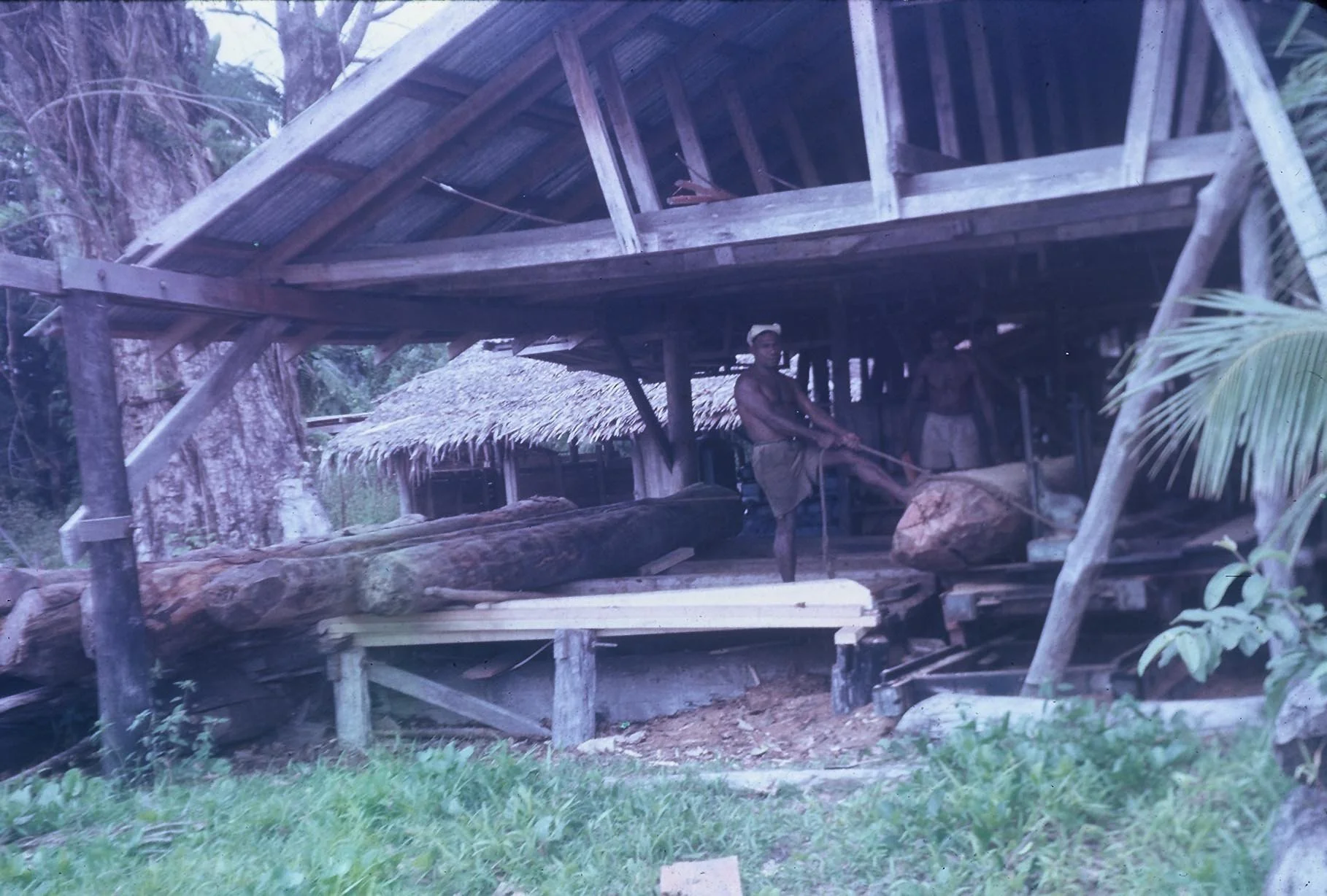
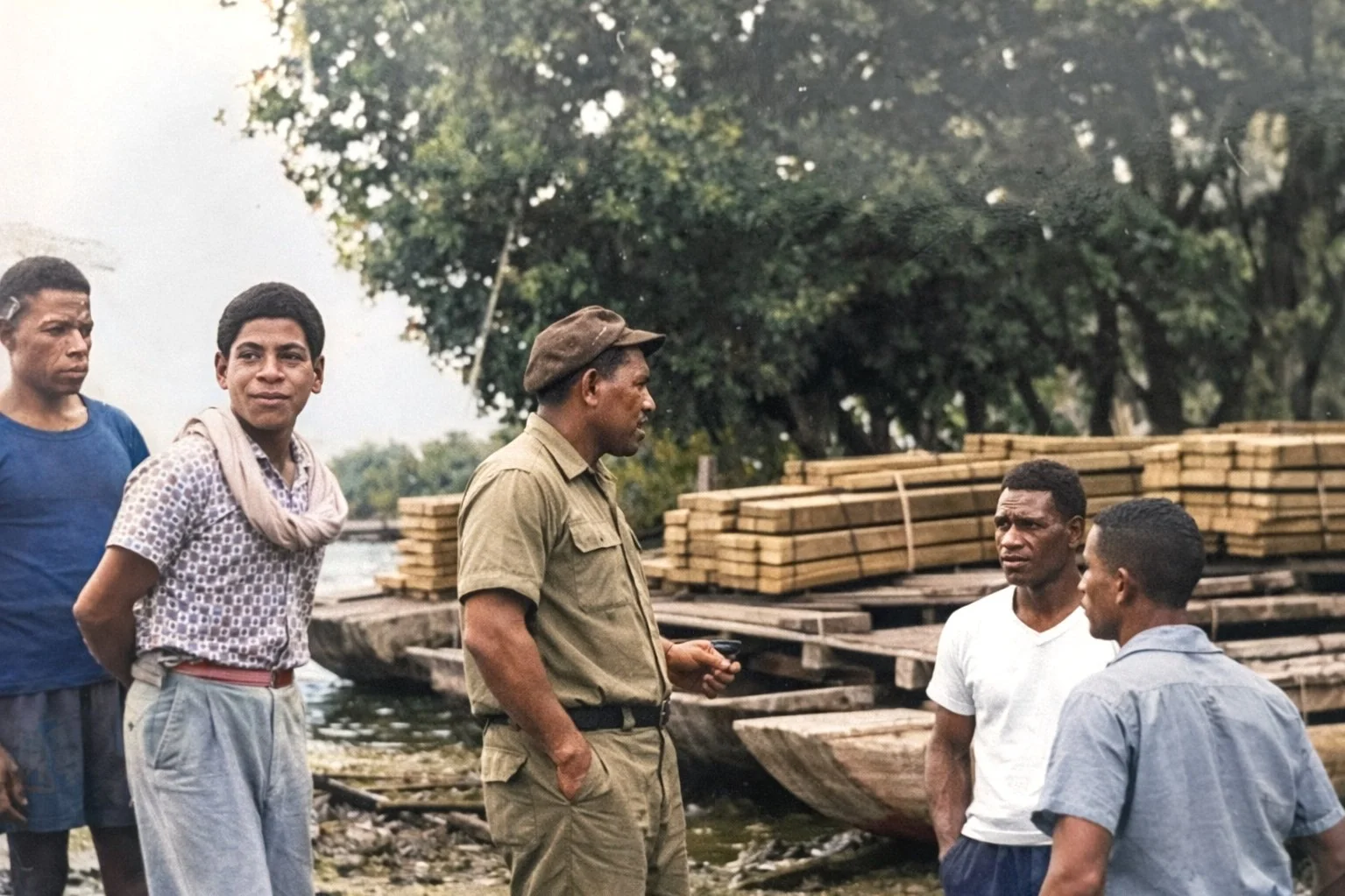
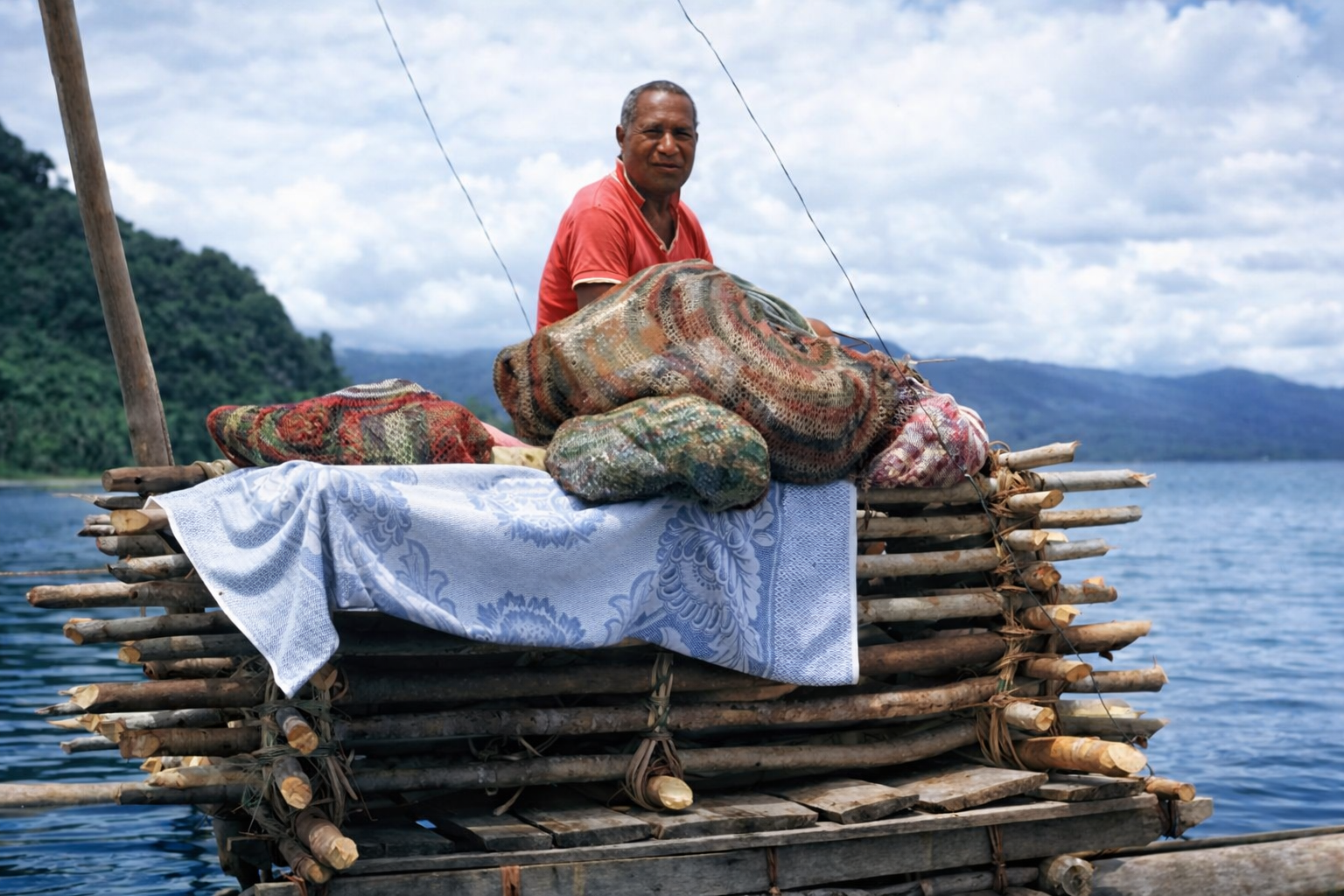
Photo 2 shows the Manager of the sawmill in the cap. Alvin can’t remember his name -60 years later. Note the canoes in the background with large platforms on them for loading the planks on them to the boat. Having no dock creates a alot of extra manpower so this past year Alvin who has had to help run it is realizing the importance of relocating the sawmill to a place that a dock can be built. That is one of his main projects.
Now Al will tell me as we walk through a wooded area if there is a good or poor tree and name the tree, whereas before neither of us paid any attention to any of the types of wood. Then, in looking at the trees, we are discovering that there are many different kinds of birds around and many different kinds of parrot birds, mostly smaller, and not quite as colorful as the parrot, and more carefully have discovered that there are some songbirds. The birds are so well camouflaged that you generally have to be looking for them before you can see them, but it was wonderful to see that they are present. The Cliff Hanson’s would be interested. In the birds here I’m sure.
We got a hold of a used 8 mm film projector and joined a film club that mission has contact with to get various films. Oh, did that ever cause excitement. The first three films were castle productions, one of John Glenn flight, one of the zoo and one of football. They really love the football film and wanted it several times. Al wants to show the men at the sawmill the films before we trade these in for new films.
Greet our Trinity friends. We pray that Christ will be the vital center of all activities at Trinity. May the peace of God keep your hearts and minds in Christ Jesus,
The projects that we now have on our agenda and which would like you to remember in prayer is a school center for one of our mountain groups. The Hotecs. They live to mountain ranges in back of us and a have two or three days walk to the coast. They’re only means to a market for their vegetables is walking to the coast. They own land closer to the coast, but never have gotten moved. None of the many villages are big enough to support a school especially with an English teacher in them.
Al has been encouraging them to go together on the school. Slowly the idea has been germinating, and now they have selected a site about three hours walk from here. It is a big enough area so they could build quite a village there and could have a good dispensary, and I could get in there sometimes to help supervise. we bought pics and axes and shovels and hammers for them to give them a bit of incentive. We use the Sunday school money.
In Christ, name, Al, Ina and children.
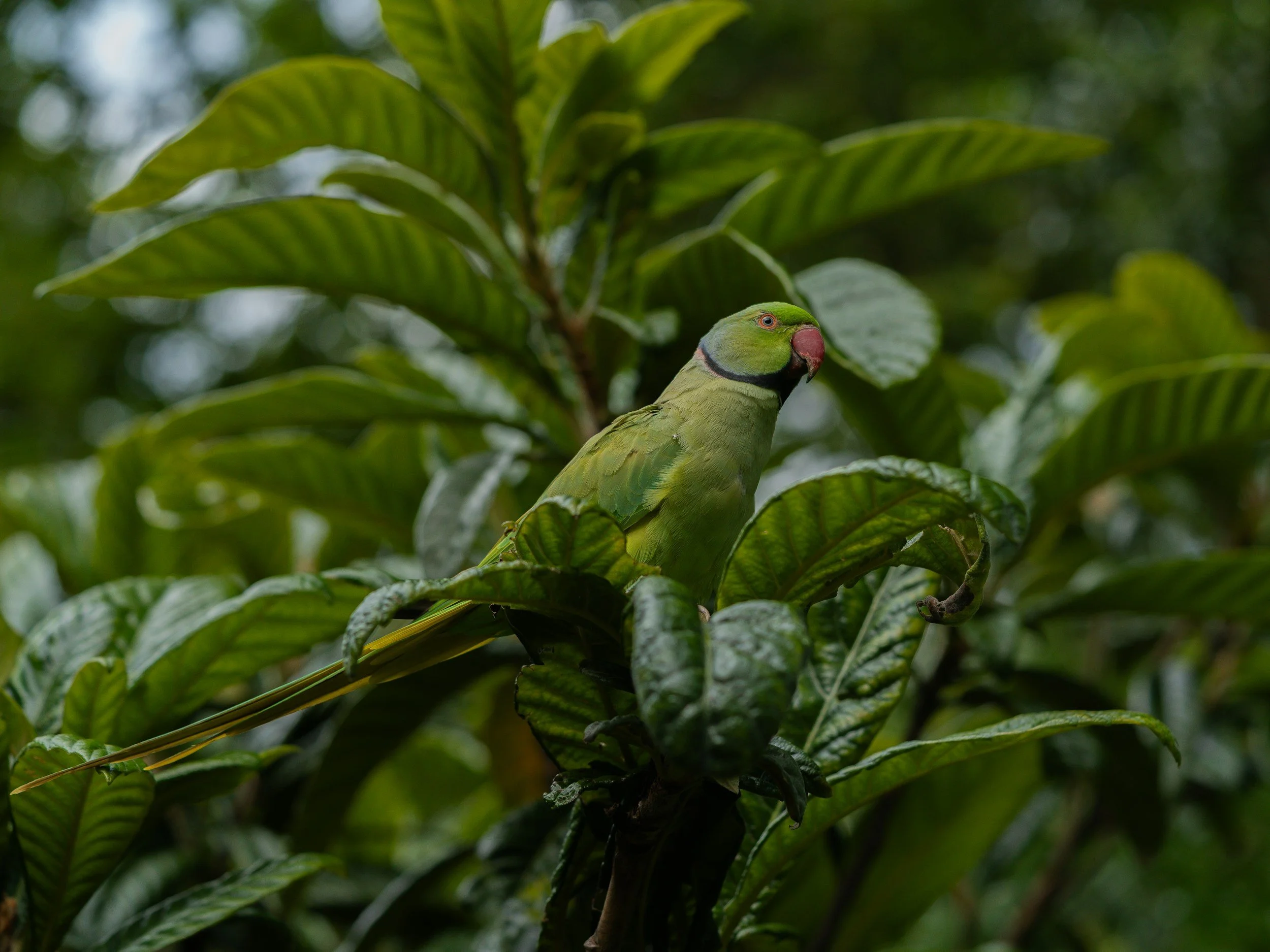
Ina writes ‘The birds are so well camouflaged that you generally have to be looking for them before you can see them, but it was wonderful to see that they are present.’
1964 August 17, to Willa
Letter written by Ina Erickson from the Malalo Mission station to Martin and Willa Tonn, Route 1, Box 224, Alexandria, MN
Dear Willa, Martin, and children and parents,
It really was good to get a letter from you, Willa, they really are few and far between, but we really do understand your busy schedule. How lovely it would be if you could only drop in on us for a visit. We would surely have many different things to show you. People say when they’ve gone home that their world and the world of their relatives is so different that they soon get tired of tales of New Guinea. And that we don’t know how to talk about anything else. It really is funny how queer one gets when he gets separated from civilization for a few years. You all will have a big job revitalizing us and civilizing our kids.
Kristi walks between people very well, and will go all across the room by herself if someone is waiting. But doesn’t strike out on her own. She sure can get into mischief. She pulled the meat and gravy on the floor tonight. Her little arm came up on the table, you can’t always see her, but that little arm sure can reach, and she’ll pull the tablecloth and send the dishes flying. The organ is small enough so that she can reach the music on it. One night when we are having devotions, she was pulling at the music. I shook my head. No, no, trying not to make a disturbance, she looked at me, and shook her head. Then she reached up again. Then she shook her head again, and after about the third time went away. She sure loves to eat and can really put away the food and milk. She stays about 24 pounds. We sure enjoy her sunny disposition.
Al is back at Sawet. He managed to get two boats down to Sawet to haul the timber. They both will turn up on the same day so he hast to really get a crew together to see if they can get them loaded in a hurry. It costs $100 a day so he wants to load them in the same day.
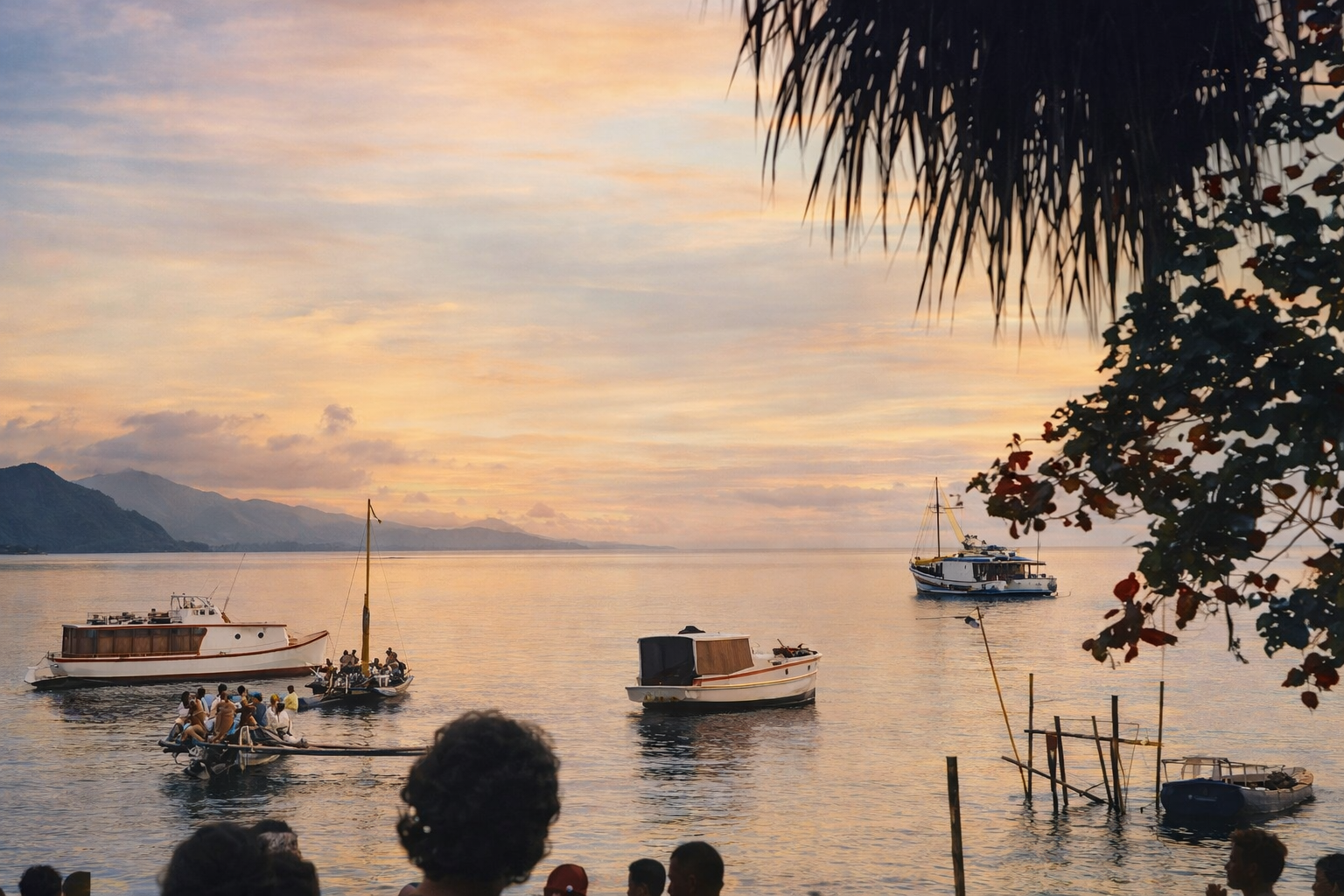

The Victor is on the on the left in the first photo and the Kuli in the foreground. The sticks in the foreground are marking the construction of a dock. only way to load the boats is by canoe. The right is the boat the Kuli. The Kuli was generally used to drag logs to the sawmill
We are hoping to get a school going in the area immediately in back of us. The Hotec area. We just might build a bush house in another mountain area and spend a lot of time there to see if we can get vegetable business going. Now there will be an army camp in Lae. They will need many vegetables, and now that they have an airstrip, they have transport for them. We have enough money in gifts to get a table saw for them to get going on some of their schools an area of about 9000 people and they have no one in schools. They really need a lot of help. They really need a tractor. Al is keeping an eye out to see if we can get a secondhand one somewhere but it will be a long time before that will happen.
I’m so glad that dad is feeling better. Hope mom isn’t getting too poohed. I know how slow your house seems to be going. Here it doesn’t really matter if it takes a while to get finished as there isn’t any really cold weather to make it impossible to build at least for very long.
Ordered a blood pressure cuff and an autoscope for the dispensary. I’ll really be happy to get them. A lady gave one of the girls that came out here to teach, $100 for some special project. I have to examine her girls so often that she asked if I’d like to use some of the money for that and I sure didn’t object. So soon I hope to have it. I love surgery so much when I was a student nurse. I don’t think I could go back to it now after my technique that is necessary in New Guinea. It sure is a challenge. I’m beginning to appreciate just how much all that hospital equipment cost.
We just found out that the money order that we received in May was from you people. Thank you very very much. How are the Coopers. Dickie‘s death, I’m sure was made harder under poor circumstances. Poor Cheryl would she be happy near Elsie’s again now that she is married settle down?
I haven’t heard very recently from Sharon. Is little Lori improving? It is good to that. Your kids are able to take swimming lessons. We go down to the beach so seldom as it just takes too much time. Sometimes the girls take Paula and Tommy down, and they love to kick their feet and want to learn to swim so badly. We surely got a lovely box from First Lutheran this week. The ladies had gone to a lot of work. They made such lovely dresses and such nice Christmas cards and made many dispensary books for us. I really was thrilled.
Slowly, I am learning to play a few hymns on the Organ. I sure enjoy trying. I hate to put everyone else through the misery of having to listen to me, but I do it anyway. Al has been gone so much that I have plenty of opportunity.
I hope your family can all get together soon. We certainly hope and pray that Martin can get transferred soon. Will mom and dad build a house on the front lot of the place in Carlos? How are things going with Bette? Has this new boyfriend proved to be a good thing or not. I do wish that she could have a happy home life. I’m glad that she and Wally broke up. They just have too many marriages between them to make a go of it. It really is too bad that Wally can’t be happy though. How are Beryl and Bruce fitting in at Austin? I’m not sure we’d be able to fit into a parish life after being so long in New Guinea. We pray that God will continue to bless us, sustain you all as you faithfully serve him.
Love Al, Ina, Paula and Kristi
PS I made marshmallows and root beer yesterday. I also found a recipe for crackers that I want to try. Last night, a mouse was in my room, and he chewed a big hole in my curtain before I saw him. So I brought our kitten in to kill it. I went to sleep again and the cat curled up in a stuffed chair. Tommy loves to collect butterflies and spiders and bugs and worms of all sizes and shapes. One day he’ll get bitten properly. It was so funny.
1964 August 18
Letter written by Ina Erickson from the Malalo Mission station Alvin and Louise Erickson, Box 1327, Glendive Montana, USA
Dear folks,
Thank you so much for the wonderful box we just received. Paula loved her dress, and Tommy was proud of his shorts, shirt, and jammies. Kristi‘s dress is so darling and just fits. Man is Al’s shirt ever sharp. He didn’t wait for his birthday. I really like my shorts and blouse. It all arrived in such good shape. We will sure be able to use the pen. The refills were so thoughtful. Pens disappear so fast. I’m glad to have our name on it, it’s easier to trace. Do I ever love the Dove soap!!
Al discovered the boy measuring logs has been measuring wrong. Adding an extra foot to the circumference, which makes a lot of difference in price. It really will cut into profits but I hope Sawet can survive.
Poor Kristi had a bad fall. She was playing on the veranda in her walker. Some schoolboys came onto the veranda, and left the gate open and quick as a flash she was down the steps on her head. We had to take her into Lae to get a couple of stitches to close a small wound. I also had them take x-rays as she had such a welt all the way across her forehead. She didn’t like the stitches but is happy as ever now. She seems to have no ill effects. Thank God. He surely was protecting her.
The two girls from Stevens Point will be spending some time with us next week. We saw one of them for just a short while, while we were in Lae. It was good to see her, and she didn’t quite seem the same, but seem to have adjusted to New Guinea quite well.
Paula said when she sees her grandma and grandpa, she’ll put her arms around them and not cry, and then she’ll talk with them. I heard her explaining that to Tommy one day.
May the peace of God, which passes all understanding. Keep your hearts and minds in Christ Jesus, our Lord.
Love Al, Ina, Paula, Tom, and Kristi.