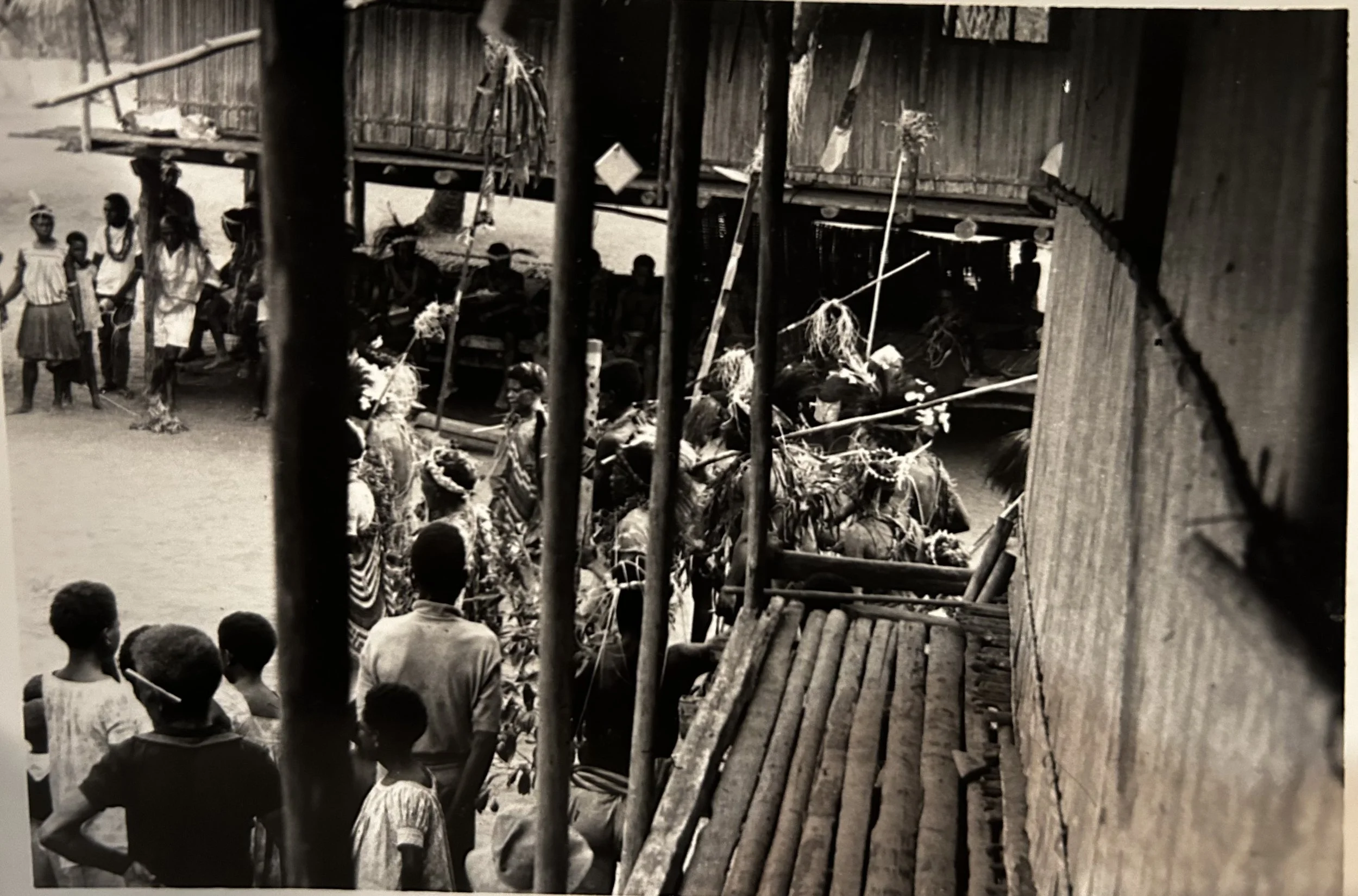
First baptism at the Malalo church, Hotec bush trip returning the tract grip.

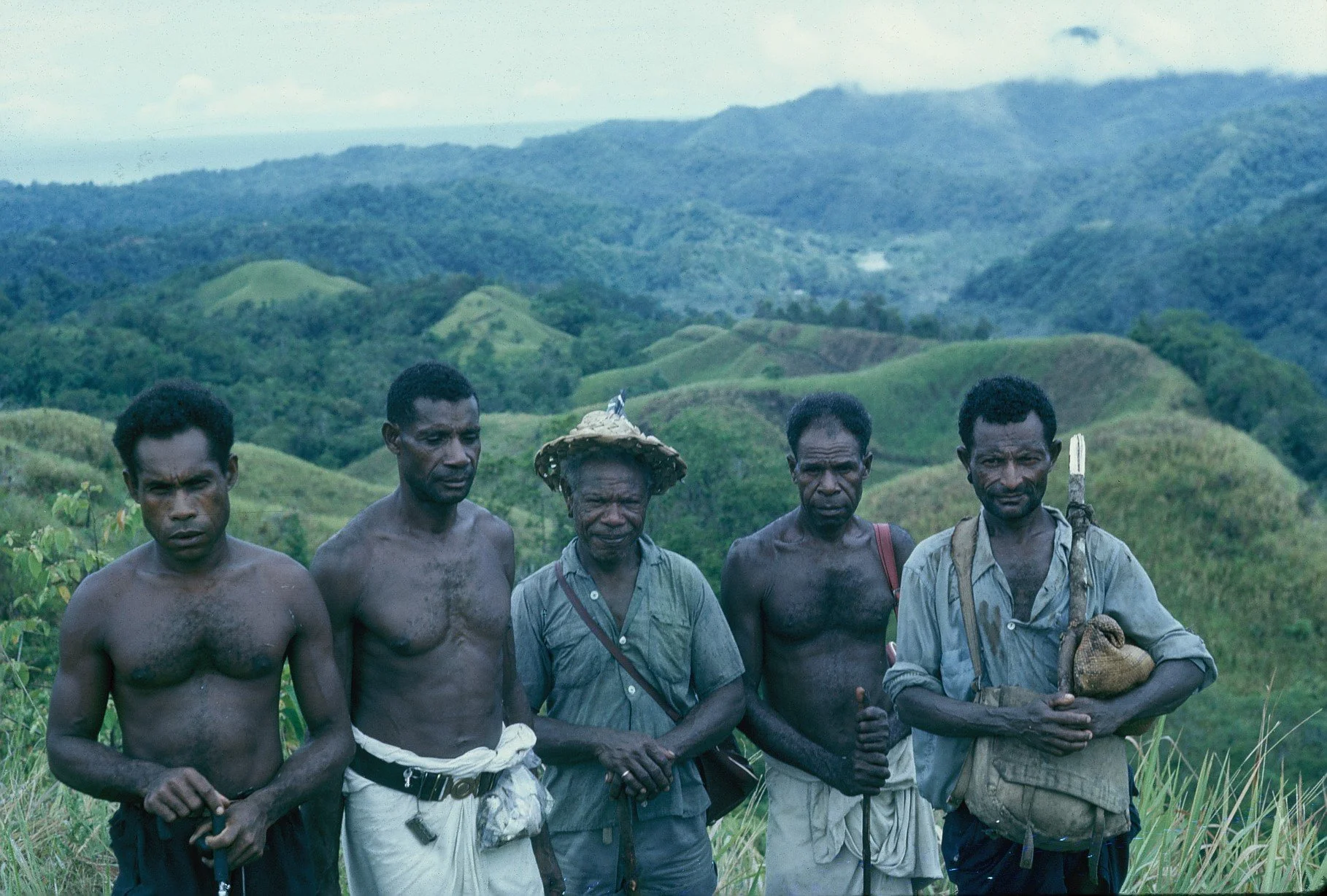
Yamap area - no one living in this area. Separating the Buangs from the Hotec area.
The following is a summary of the letters for March 1964
Light Returns: Mountain Trips, a New Stove, and the Dedication of the Church
March Opens with Mountains — and the Impossible Geography of “Progress” (March 2)
March begins with Al returning from a rugged mountain trip into the Hotec area—country so steep and broken that road building is not simply difficult, but impossible. The villages sit behind multiple ridgelines, cut off from the coast by sheer geography.
Earlier, a missionary (Fred Scherle) had tried to persuade the people to move closer—up onto a higher ridge where they would be only “one mountain behind” Malalo instead of two. The people had almost agreed… until a government official discouraged the idea for reasons no one can explain.
Now Al is trying again.
But this time he is not approaching it as persuasion alone. He is approaching it strategically: build a large school, place several teachers there, establish a dispensary—then the social gravity of education and health will pull families upward. Some will have to relocate simply to support the schoolchildren.
Even water becomes part of the argument. The streams are too small, but Al believes the people could harvest roof water if they had a tank like the mission tank.
This is a defining March theme: mission work as infrastructure, not only preaching. 1964 March 2
Authority is Breaking Down — and the “Two Wives” Test (March 2)
On the same trip, Al encounters something that alarms him more than geography.
A young man—recently returned from the compound—has taken two wives. This had been common before missionary influence, but had disappeared completely. Now it resurfaces as a deliberate act of defiance.
The young man “strutted about” as if daring the church to challenge him.
Al and the elders intend to act, even if they must take it all the way through the bishop of the New Guinea church. The elders feel their authority slipping—especially over the young men—and they are right.
Ina’s letter makes the cultural diagnosis plainly:
If youth have no discipline and no authority over them, chaos follows. Authority is already breaking down, and it will get worse before it gets better.
March is not only a month of practical progress. It is also a month of social unraveling—and the church trying to hold. 1964 March 2
Bula Girls School: Physicals, TB Suspicion, and the Hidden Work of Care (March 2)
While Al is in the mountains, Ina takes the children to Bula Girls School to do physicals on all fifty girls.
Most appear healthy, but Ina suspects a couple may have TB and will need further evaluation.
This is the pattern of her work: the daily routine is never “just routine.” It is triage, surveillance, prevention, and quiet worry. 1964 March 2
Kristi’s Baptism — and Water Poured Like a Flood (March 2)
On Sunday, Kristi is baptized—alongside about fifty other babies—because it is the first baptism in the new church.
Al allows two native pastors to do the baptizing, though Ina admits she would have preferred Al. But she recognizes the importance of precedent: if the local pastors lead sacred acts, it strengthens the church’s future independence.
Pastor Kakengnea blesses the line of babies, and Onesimus pours the water over each one—“and I do mean poured it over them.” The babies spit and sputter.
It is a small comic moment, but it is also deeply symbolic: this church is no longer only missionary-led.
1964 March 2

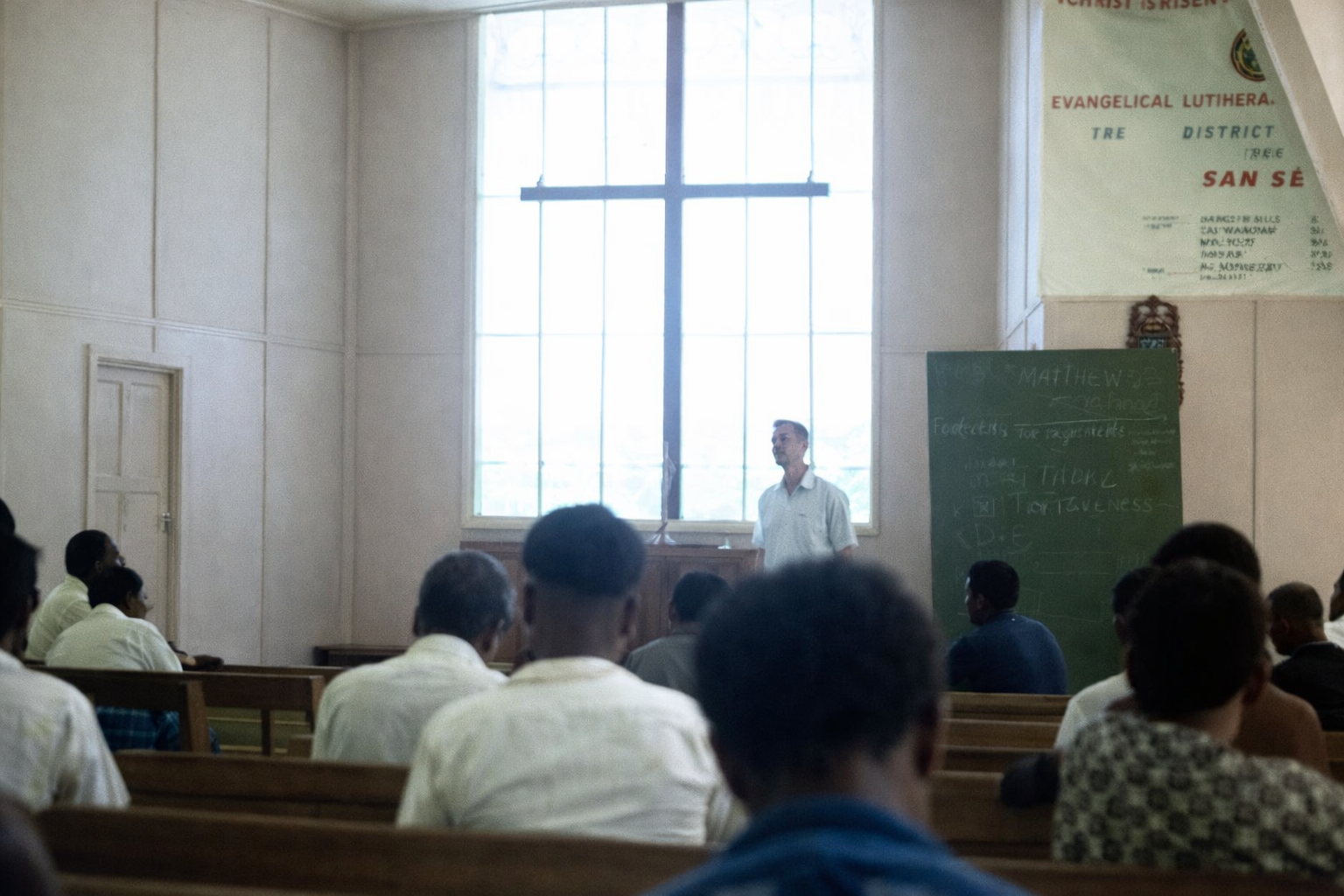
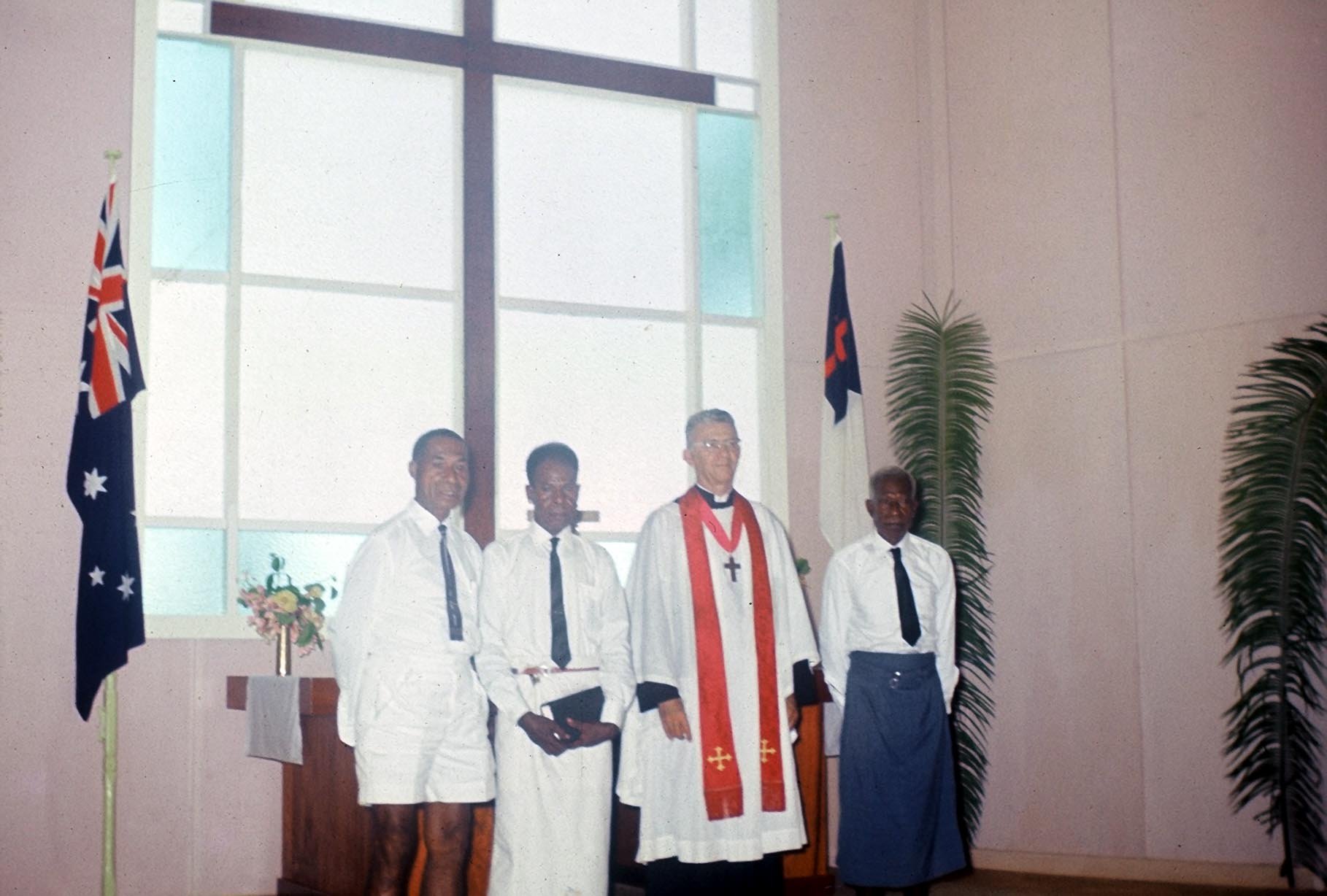
1963 Kristin's Baptism with Pastor Onesimus holding her. Pastor Kakengnea. Inside the new Church
The Generator Dies — and Ina’s “Track Grip” Odyssey (March 2)
March contains one of Ina’s most cinematic “this is mission life” stories: the generator failure and the epic retrieval of the track grip.
The generator “gave up the ghost.” It runs briefly, fails again, then spits fire and smoke. Ina finally persuades the work boy to turn it off.
She goes into Lae, gets the children checked for hookworm (Tommy is positive), forces down horrible medicine, and begins the battle of keeping shoes on.
Meanwhile, the mission’s track grip—a slow, stubborn tractor-like machine—has been sitting in Lae. It had been loaned out after a radio call urging them to send it to another station, but that station couldn’t build a road for it.
So Ina gets it sent back to Malalo so they can haul the generator and stove up the hill.
Then comes the ordeal:
The tank is empty.
Ina gets it started.
She drives it at a top speed of two miles an hour.
People stop her: “You cannot possibly do that.”
Work boys attempt it and fail.
The Kombi driver claims he knows its “idiosyncrasies” and drives it.
The whole procession creeps down the road at two miles an hour.
At the wharf, Metegemeng is not where he said he’d be. There are no planks. Ina goes to find planks. Plans change. The wharf is full of holes. Ina is reluctant but determined.
Finally, the track grip is dismantled and loaded onto the Victor.
And when they reach Malalo, it must be unloaded by canoe and up the beach.
Ina’s conclusion is absolute:
If anyone wants to borrow the track grip again, they will have to come and get it. She will not deliver it again.
This story is not just funny. It reveals Ina’s psychological core:
she is gentle with people, but relentless with obstacles. 1964 March 2 1964 winter

Angnganow holding Kristin, Martin Boerner driving the tract grip, Paula in front of June Prange
Light Returns: Stove, Chimney, Generator, Radio (March 11)
By March 11, the tone changes dramatically.
Ina writes with delight:
“Guess what? I baked a cake today.”
Not because cake is unusual, but because she baked it using her new stove—installed with the help of Mr. Boerner from Bula.
The stove is smaller but throws strong heat. The old stove had been useless for over a year and a half. Ina celebrates by making pizza, and for the first time in ages it gets crisp.
Even more: the generator is finally hauled up and installed.
They have lights again.
The radio works again.
And Ina realizes she got the track grip out of town just in time—the man who was supposed to claim it came the very next day.
For a moment, March becomes a victory month: the home is functioning again. 1964 March 11
Kristi’s Babyhood: Baths, Coos, and Fierce Little Hands (March 11)
March also contains some of the sweetest Kristi writing.
Kristi loves paper and is destructive with it. She loves baths in the big tub. All the children pile in together, and Kristi “can outkick the other two.” Ina notes that Kristi behaves in the bath just as Paula did at that age.
Kristi grabs faces with chubby hands and coos softly.
She lights up when she sees Paula or Tommy. Tommy is learning to be gentle, and Paula remains devoted—playing with Kristi constantly, wanting to dress her as she dresses her doll.
These details matter because they show what Ina always preserved, even in crisis: the children’s emotional world. 1964 March 11
Hookworm and Weight Gain: Tommy’s Small Turning Point (March 11)
Tommy has gained three pounds since starting hookworm medicine.
Ina takes this as proof they are “licking” it. It’s a small victory, but in this setting, weight gain is health.
She compares him to Martin Jr. (back home) and jokes about how astonishing it is that children survive the destructive toddler years at all. 1964 March 11
The Sawmill Still “Hangs Around Our Necks” (March 11)
Even as the stove and generator are solved, the sawmill remains the long shadow.
Al learns the government is interested in trees in their area. He uses this as leverage to pressure the mission into providing a sawmill man.
The government wants to buy entire leases at once, which gives villagers lump money but less overall. Selling log-by-log yields more.
A portable saw has been ordered.
But the timeline is crushing:
They may wait a year before it arrives.
March shows the mission reality: progress is measured in months and years, not weeks. 1964 March 11
Adam: Mental Illness, Sedation, and the Terror of an Axe (March 11)
One of the most sobering March events is the resolution of Adam’s case.
Adam is experiencing periods of insanity, terrorizing Buakup village. He runs from village to village waving an axe.
Ina tries sending messengers. Everyone fails—including Metegemeng, who returns amused that even he could not persuade Adam.
So Ina lights her lamp and walks down to the village herself.
Adam is suddenly meek.
In perfect English he says:
“I’ll go, I want to go to the hospital, can my mommy—his wife—go with me?”
Ina notes that Adam does not know English when he is well.
They sedate him and get him on the boat.
Ina is relieved—because she genuinely feared he would hurt someone.
This is one of those scenes that shows Ina’s courage clearly:
she does not do bravery theatrically. She does it because someone has to. 1964 March 11
White Ants, Wet Seasons, and the House Always Under Attack (March 11)
March includes a reminder that the environment never stops working against them.
White ants have begun eating at the house again. One long bearer will need replacement. When things get wet, the damage accelerates—and in Malalo, things always get wet.
Ina jokes that she has a hairdryer too: she just goes outside ten minutes in the sun and her hair is bone dry.
But the humor sits beside fatigue: the house is never “finished.” 1964 March 11
A Turning in Ina: “I’m Finally Feeling Human Again” (March 11)
One of the most important lines in March is personal.
Ina says she is finally feeling human again after having Kristi.
It takes her about six months after a baby to feel interested in life around her again.
This is a rare self-disclosure—quiet, honest, and deeply human.
And it is paired with something else: she enjoys the chickens and cows, watching their habits, pointing them out to the kids.
It’s not boredom. It’s recovery.
March is the month Ina begins to re-enter her own mind. 1964 March 11
The Church Dedication Letter: The Old Roof, Communion in the Rain, and Palm-Tree Worship (March 16)
The March 16 letter to friends and sponsors is a long-form narrative—almost an essay—about the dedication of the new church.
Ina explains the rule: the old church could not be repaired; all effort must go to the new one.
So when holes appeared in the roof, they were left.
Eventually communion was held on a rainy Sunday morning. Everyone—communicants, pastors, and missionary—were dripping wet. The bread stuck together. The wine diluted.
After that, the old church was pulled down.
Worship moved under palm trees.
This could be inspiring—unless it rains. And for six consecutive Sundays after the old church came down, it rained Sunday morning.
So a handful met in the school.
From this, Ina says, you can understand their anxiousness to finish the new church.
This is not romantic missionary writing. It is practical and almost funny in its misery.
And it sets up the church dedication as a triumph of endurance. 1964 March 16
Building the Church: Kwila, Bent Nails, Drilled Holes, and Brute Force (March 16)
Ina gives extraordinary detail about how the church was built.
It began in 1958 and progressed slowly under three different missionaries.
The Luther League poured cement by hand for a massive floor.
The rest was built of kwila—hardest wood in the territory. Nails bend halfway. Holes must be drilled first. The wood resists pests that destroy other structures.
The people cut the trees, skinned them, and dragged them to the sea.
The sawmill boat Kuli dragged logs to the sawmill. Some logs would not float in saltwater, so they were tied to empty 44-gallon drums or lighter logs.
The Victor—larger but not geared for pulling—once tried dragging a huge kwila log and took eight hours for a trip that normally took two.
Then the planks were carried on backs up the hill in the hot sun, planed, and finally usable.
The church is not simply “built.”
It is carried, dragged, drilled, hauled, and suffered into existence.
This is one of the strongest documentary passages you have. 1964 March 16
Mark the Carpenter — and the Phrase of the Year: “Get to Work Boys” (March 16)
Ina names Mark, the congregational carpenter, as unusually accurate and persistent. He grows impatient with the sloppy work of others.
The people have nearly given up hope the church will ever be completed.
Mark sets a dedication date to create urgency.
October 24 fails.
November 10 fails.
Finally: December 29 — finished or not.
For six months, the most common phrase heard is:
“Get to work boys.”
The church is a spiritual structure, but it is also a psychological one: it requires deadlines, pressure, and leadership. 1964 March 16

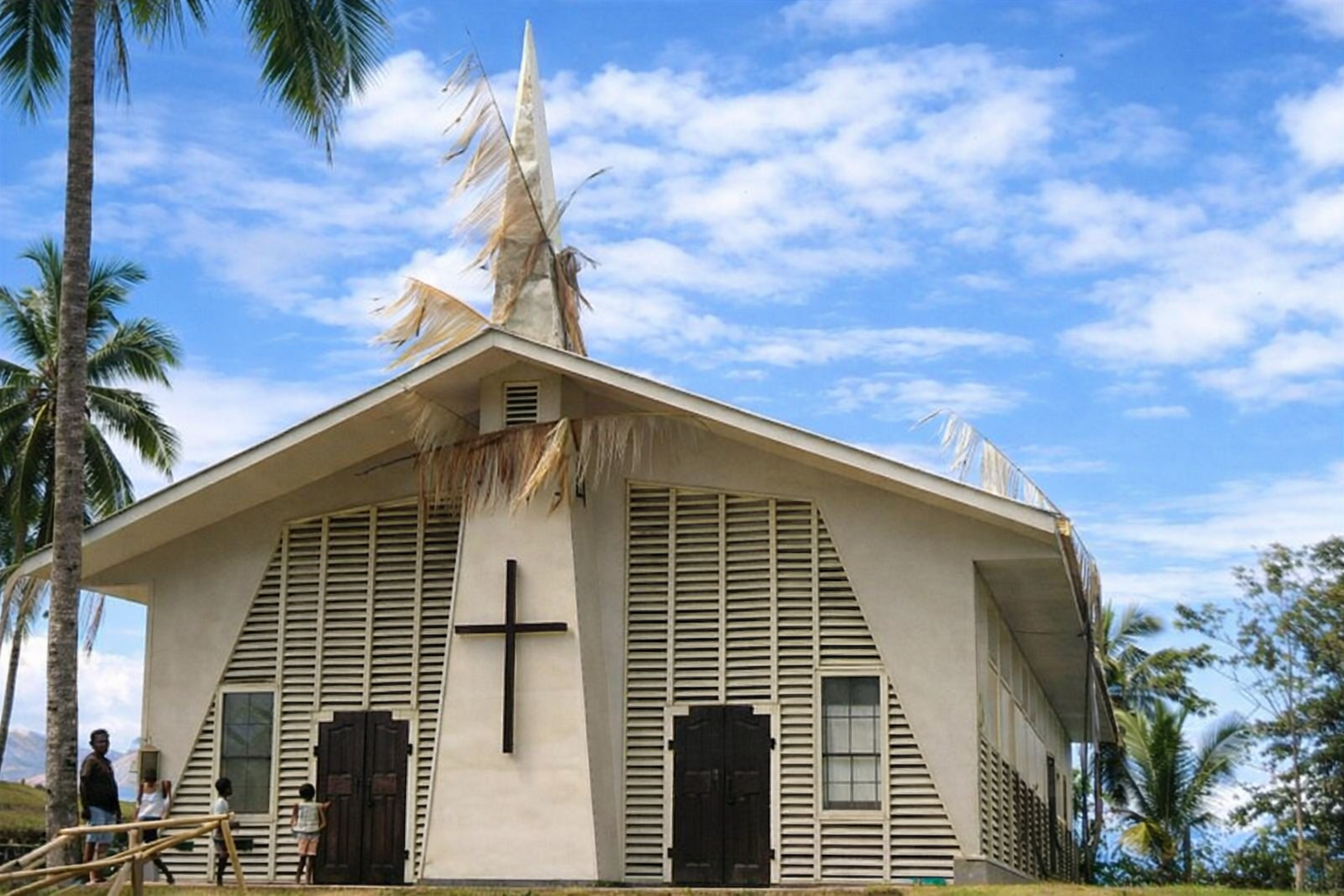
Immanual Lutheran Church. Mark, the carpenter from Logui of the Malalo church- 'I am the way, the truth and the Life
Dedication Day: Thousands at the Beach, 70 Europeans, a Gong, and a Merciless Sun (March 16)
The dedication day scene is huge.
December 29 dawns drizzly, then clears into a hot, humid day.
Visitors gather by the hundreds, then the thousands. The Malalo circuit assembles.
A ship from Lae brings 70 European visitors. They come ashore by canoe.
The gong is sounded—a hollowed log struck with a pole.
The procession forms and begins climbing the hill under the sun.
Leading is the carver of the altar crucifix carrying the cross, assisted by another church worker.
Two Luther League boys follow: one carrying the Christian flag, the other carrying the Australian flag on stands they made.
At the church an archway of palm branches stands, and a roadblock is ceremoniously removed.
Dr. Kuder arrives in robes and leads the final part of the procession to the doors.
A crosspiece is placed on the large cross outside the church—signifying completion.
Then the doors are opened.
Inside, Ina writes, it is surprisingly cool—almost as if air conditioning has been turned on.
This is not only religious ceremony. It is a communal victory. 1964 March 16



The Service: Pidgin English, God Not Confined, and Families Sitting Together (March 16)
The service is held in Pidgin English because many visitors do not understand Jabem.
Dr. Kuder reminds them they have not confined God to the building. God is present in villages, gardens, and markets.
Fred Scherle reminds them the church is not too large: if only two villages came, it would already be full.
He also tells them something culturally significant:
Families should sit together now—men on one side, women and children on the other should end.
At the close, one village performs skits mocking the building problems.
This is one of the most revealing moments: the people are not just receiving a church; they are owning it enough to laugh about it. 1964 March 16
Dinner and Division: Europeans Up the Hill, Villages Down the Hill (March 16)
After the service:
European visitors come up the hill to eat with the Ericksons.
The local people return to the villages for their feast.
The day before, villagers brought about 35 pounds of beef and pork for Ina to prepare.
This is another classic mission contrast: the Ericksons are the bridge between worlds, feeding one group while another feasts below. 1964 March 16
Alvin’s Bushtrip Letter: Cold Mountains, Bamboo Floors, and Streams for Baths (Pilemon)
Alongside Ina’s letters, Alvin’s bushtrip letter adds a parallel March tone: the lonely beauty of inland travel.
Al writes from the top of a cold mountain, sleeping in a teachers’ house with a bamboo slat floor—wide gaps between the slats.
At his feet is a fireplace he won’t use because of smoke. His sleeping bag is enough.
He has seven New Guinea men with him. They are visiting villages. In several places, people kill a pig for them to eat.
There are no roads. The only visitors people get are those who walk in.
He describes the jungle, rushing rivers, and big mountains as scenic.
They bathe in streams at the end of the day.
He visits schools to see if children are learning to read correctly, but most of all he listens for what they know of Jesus.
He writes something striking:
The people are very poor, but many know their real help is in Christ—who alone cares for them at all times.
This letter reinforces March’s larger theme:
the mission is not a station. It is movement. Pilemon from Alvin about a bus…
Closing: March’s Meaning
March 1964 is a month of regained function and deepened meaning.
The generator fails, and Ina drags the track grip through Lae like a stubborn miracle.
The stove is installed, and she bakes a cake as if light has returned to the home.
Kristi grows into a sturdy, joyful baby.
Tommy gains weight and strength.
A mentally ill man is safely removed before he kills someone.
The church—built of kwila, sweat, and years—finally stands open.
But underneath the victories, the deeper tension grows:
Authority is breaking down.
Young men test the church.
Government voices interfere.
The future is uncertain.
And still, the church doors open.
March ends with that image: a building that took six years, three missionaries, bent nails, drilled holes, dragged logs, and thousands of feet climbing under a merciless sun—finally becoming what it was always meant to be:
A place the people could call their own. 1964 March 16


The following are the actual letters for March 1964
1964, March 2. Letter written by Ina Erickson from the Malalo Mission station to Durward and Estelle Titus Box 224 Route1, Carlos MN USA
Dear Mom and dad,
Al is just back from one of his mountain trips. (Hotec area) This area is so rugged, that road building is impossible. Fred Scherle was trying to talk the people to move up a mountain, so that they would be only one mountain behind us instead of the present, two mountains. Now it is impossible to see any future economical development from there. The people were pretty well convinced and then about the time we came, a government official, for some reason unknown to us told them it wasn’t a good idea. So they have just stayed put. Now Al has been trying to encourage them to move again. He decided to go at it a little backhanded and build a big school there and have several teachers and a dispensary. Some of the people would have to move there to look after the school children. Water is a problem as the streams are very small. They could possibly get enough water off of the roofs if they had a big water tank like ours.
He had an interesting case. A young fellow, just returning from the compound had two wives. It had been a common custom before the missionaries time, but has completely disappeared until now. He strutted about as if to say, try and do something about it. And believe me, they sure will. They will take it through the bishop of the New Guinea church if they have to. The elders are afraid that they are losing their authority specially over the young people, and they are. Some of it is good, but if you have youth, with no discipline, and no one who has any authority while you know what chaos there is. Authority is already breaking down, and it will get much worse before it gets better.
The children and I went over to the girls school, Bula, on Thursday to do physicals on all 50 of the schoolgirls. None of them seem too bad off, but a couple of them I suspect may have TB. They will have to be checked further. On Sunday we had Kristi baptized. There were about 50 other babies, as it was the first baptism in the new church. Al let the two native pastors baptize her. I would have liked to have him do it, but it did set a little better precedence, I guess to have them do it. We took a picture of pastors Kakengnea, and Onesimus, the latter holding Kristi. The first one is only an intern, so he went down the line, blessing them, and then Onesimus poured the water over them, and I do mean poured it over them. The poor kids spit and sputtered.

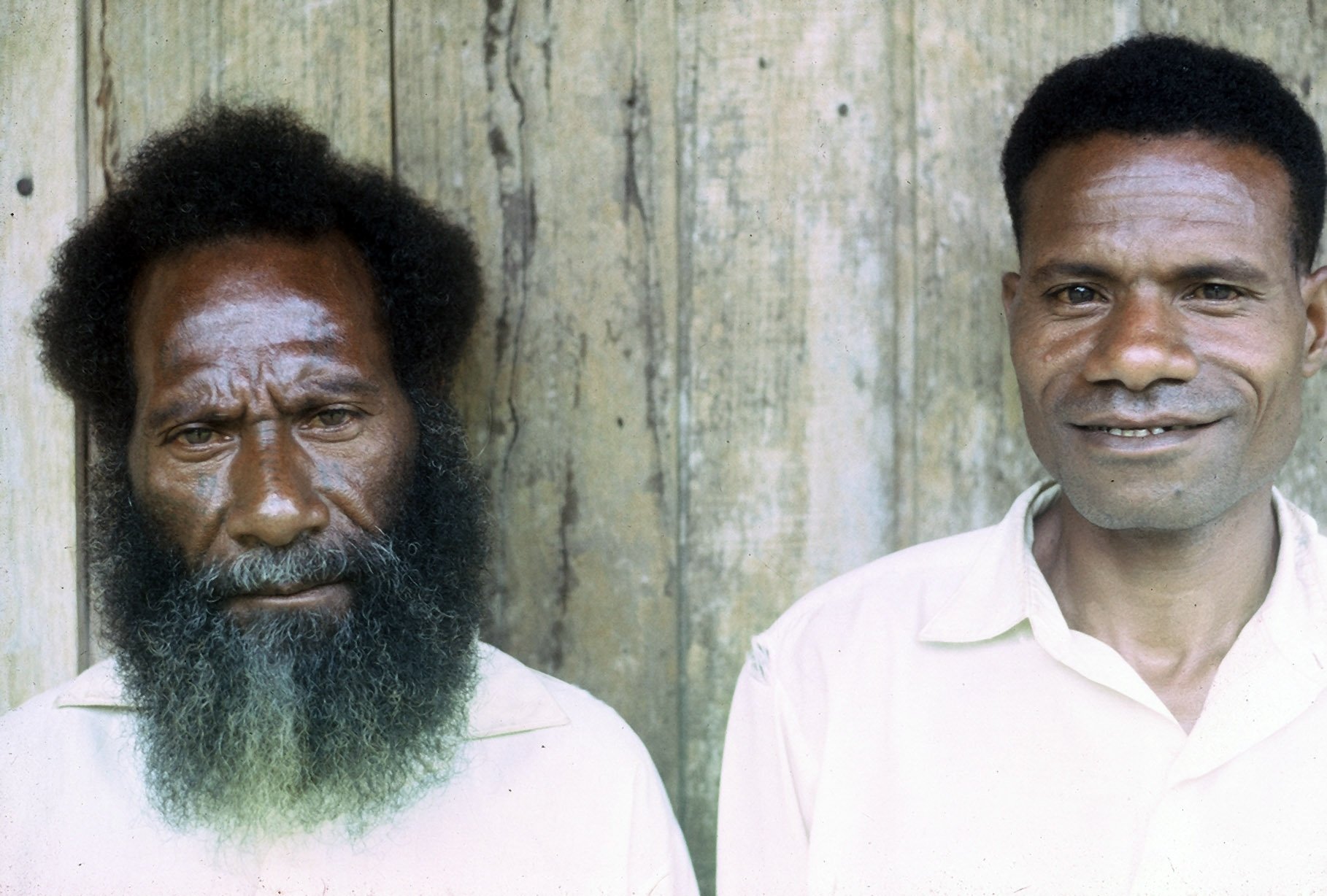
Photos above: Pastor Onesimus with red on the bible- Samsega Lae District. Pastor Kekengae without a beard from Hotec. Bearded man is a Hotec elder from area where John and Amy Lindstrom did their translation work. Pastor Kekengae recently died (now 2020)



Bula girls school, June Prange (to the right nearer to the steps) and unknown teacher. Mr Boehner that caretaker at the Bula School. Waterfall on the way to the Bulu school from Busameng
Our generator absolutely gave up the ghost. Tuesday the day Al left, the lights went out after only having them on for three days. Our work boy tried fixing it, which he doesn’t really understand, but tried anyway, and then the pulley flew off. He tried again, and the generator started spitting fire and smoke, so I finally persuaded him to turn the thing off.
On Wednesday, I went into Lae to have the kids checked for hookworm. Tommy was positive so after the horrible medicine I had to force down him, there was a hard campaign going to keep shoes on. Kristi cried all of Wednesday night and had a fever on Thursday that didn’t respond to anti-malaria, so I was a bit hesitant to go back to Malalo as I had planned by Thursday evening she was OK again. I think that she had had too much sun. Found out that our track grip is still sitting in Lae after we had gotten that urgent call on a radio on May to please send it to the station that the conference had given it to. They found building a road for it wasn’t as easy as they had thought. So I talked or rather Al had talked them into sending it back to Malalo so that we could haul the generator up the hill. The man at the workshop told me that he would have someone drive it down the 5 miles to the wharf from the guesthouse and workshop. Thursday it wasn’t down there.
Friday evening it still wasn’t down there, so on Saturday I got all of my things together and went over to see the man again about getting it down there. He wasn’t there but two of his work boys were. They helped roll a jeep out of the way and we push the track grip out of the garage and I found the gas tank was empty. We filled it up and I took off, the top speed being 2 miles an hour. I went only about a quarter of a mile when I reached the office and there were quite a few people around. They said I could not possibly do that. Someone offered one of his work boys to drive it down and then we got a ride in a Land Rover. The mission had a small Volks bus called a Kombi that does errands and takes people into Lae, which is about 6 or 7 miles from the guesthouse where we stay and all of the mission personnel live. The fellow driving the track grip only got a little ways and he couldn’t make it work anymore. The native driver of the Kombi said he knew the tract grips idiosyncrasies so he drove it and one of his passengers drove the Kombi and we came in the Land Rover, which was quite a procession -rapidly speeding down the road at 2 miles an hour.
When we got to the wharf, Metegemeng was parked four boats away from the dock. So I hopped over the decks and asked him what he was doing as he told me that he’d be over at a point a half a mile from the wharf where the boat can get real close to the beach. I would have to drive the truck over there. So he moved the Victor and I went to see if I could find something for two thirsty kids to drink. When I got back, everyone was standing around, but’ Misi’, we don’t have any planks. So I went to find some planks. When I had gotten some from the people who run the wharf, he decided, Metegemeng that is, to try and load it from the wharf after all, and would I please drive it over to the wharf. So back to my track grip, the road is longer than the beach, so some of the people carried the kids along the beach, rather than taking them on the dusty road. The wharf is built from leftover materials from the war- I believe. It has so many holes in it. I’m a bit reluctant to drive out on it, but I was determined to get the thing loaded, so we got it right next to the boat. They took it apart and got it on the Victor.
On the Victor, things are a bit crowded with the market people, and the tractor and all our things from the supply boat, but we made it.
When we got to Malalo, it had to be unloaded by canoe and up one of the beaches. And believe me if one of the other stations want to borrow the tract grip again, they will have to come and get it. We won’t deliver it again.
The road has been too wet with a lot of rain, so we still didn’t have the generator up the hill, two weeks later. We do, however, have the stove up the hill, put together and sitting in the kitchen. On Saturday, Mr. Boehner will come to help us fit a chimney to it. Chimneys don’t come ready-made, one has to make their own.
We are sending some negatives to the Erickson’s. Then they can send them to the Titus’s and mom-- if you would, we would like them back as we’d like to get several copies of them. They are black-and-white prints. We are pleased at how clear they turned out.
1. The dispensary and three nurses, it is a bit blurred.
2. On the road to Vince’s house.
3. The three children sitting in front of the Kainantu airport. We are trying to get a plane out of Kainantu after we had left Ponapa.- at the bottom of the photos
4. Paula and Tommy -at the bottom of the photos
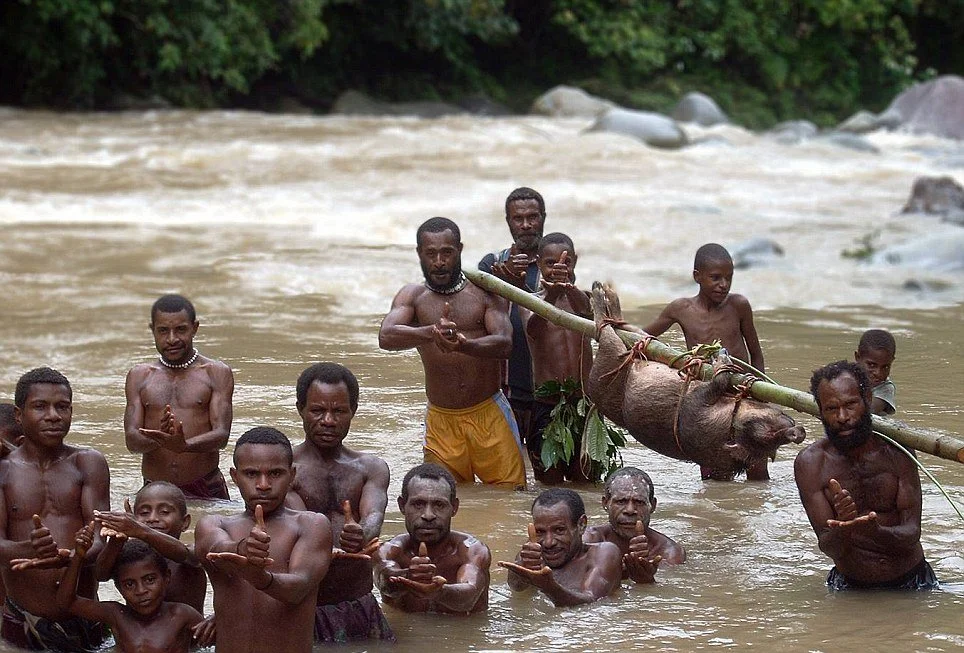
5 Carrying a pig to market from the mountains. They’d walk about five hours with that on their backs.
6. Typical day at the dispensary, patient sitting around waiting.
7. Tommy is in his carriage, or out of his carriage at Ponapa.
8. Paula and her carriage and carriers and a garden fence in the background. Some bananas, growing
9. Crossing a stream
10. Crossing a stream
11. The outside of the church, the inside of the church, and Mr.Boerner, the fellow that made the altar, the pulpit, and the lectern, and put the glass in around the cross.
12. Our vegetable basket, and some other items been carried up the hill
13. The road gang fixing the road where one of the bridges was washed out. The sawmill is in the foreground of one of them directing the proceedings. Two photos of this.
14. People watching me change and feed Kristi. Two photos of this.
15. Front of the church
16. Kristi on our way to church
17. Our work boy.
18. Metegemeng, and family with Kristi
Handwritten on the back:
Seriously, I would never encourage anyone to come out here. It is much too frustrating. I’d hate to take the blame for getting someone out here now after two years we’re getting used to it and can live with the frustration a bit better sometimes. It really isn’t so bad. I don’t know just what that gets one.
It will take persuasions to get me to come back for a second term, but I’m afraid Al will find living in the US too tame to be happy, after this. I just wrote you about the tract grip because it is such a typical frustrating account. We love you all. Thanks for your letters and prayers. We got the second tower down today. They sawed three legs and the vine they were going to pull it down with came untied. No one could climb back up to tie it back on with the legs sawed so they hammered and pushed and finally it went down. They all ran when it started to go and won. Poor man landed in a tree of thorns. Now to disassemble it.
Love Ina.
Photos below from the list above in the same order.




1964 March 11
Letter written by Ina Erickson from the Malalo Mission station to Durward and Estelle Titus Box 224 Route1, Carlos MN USA
Dear folks,
Guess what? I baked a cake today. You may not think that is unusual, but I baked it with my new stove! Mr. Boerner from Bula came over today and helped us get it in. It is quite amazing how much heat I can get out of such a little wood. We have good hardwood to burn from the sawmill but the other stove just wouldn’t give out any heat even with that. It is so considerably smaller in size than the other stove, but it has as much cooking space as the other one. We really celebrated and I made a pizza. It got nice and crisp. It is the first time that has happened in over a year and a half.
We got the generator up the hill and installed so now we have lights again and the radio is working again. I found out that I just got the track grip out of town in time. The fellow who is supposed to get it came the very next day to claim it. At least we got our stove and generator up the hill. I’m glad that all of my effort to get it to Malalo wasn’t in vain after all.
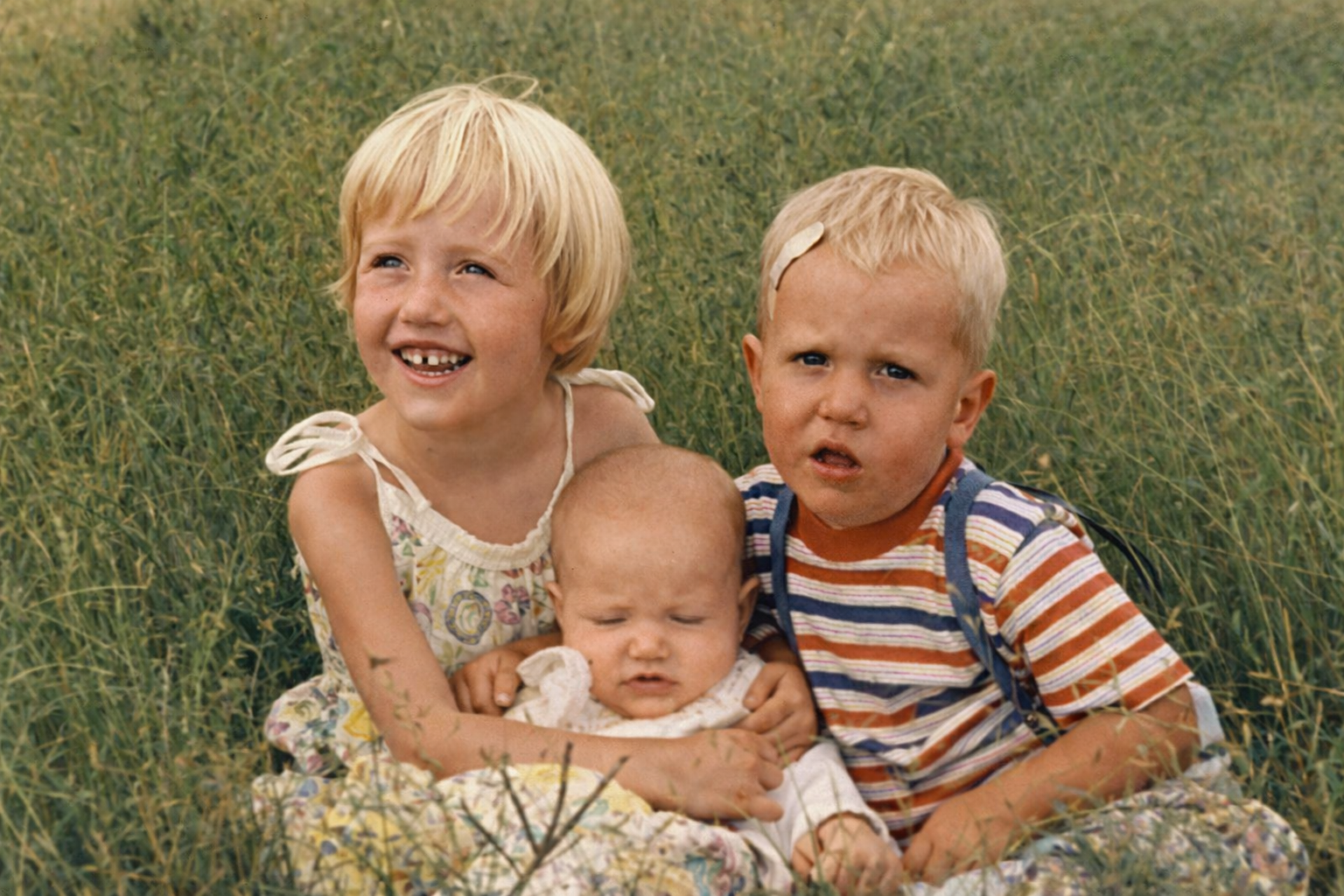
Kristi is getting to be such a big girl. She dearly loves paper and can really be destructive. When she hears it rattling, she tries for all she is worth to get a hold of it. She loves to have a bath in the big tub. All through the kids get in together and Kristi can outkick the other two. She does just like Paula did in the bathtub. I’ll have to get her going down in the sea and boy she should be able to travel. When we put our faces down close to talk to her, she reaches up and grabs our faces with her chubby little hands and coos so softly to us. She gets so excited when she sees Paula or Tommy coming. Tommy is learning to be gentle with her so she doesn’t screw her face up anymore when he comes to near. Paula continues to be so devoted to her. She plays and plays with her, now she wants to dress her like she dresses her doll.
Tommy has gained 3 pounds since I have him taking his hookworm medicine. So I think that we have it licked. Martin Jr sounds like he needs instructions from, Tom. If he can get into so much mischief before he crawls, you’ll really have your hands full when he can get around better. It really is amazing that children ever get past that age.
We still have the sawmill hanging around our necks. Al found out the government is interested in some of the trees in our area. He used it as leverage to get the mission going on getting us a man. The thing is that the government buys up a whole lease, that way the people get their money in a lump sum, but not so much of it, if they sell it log by log. The portable saw has been ordered, so now we just have to wait a year before it will get here.
Mother- the organ beginners book sounds all right. We’ve ordered a little five octave Japanese portable organ. I hope I’ll be able to make some music out of it.
Phyllis seems to be happier this year than she was last. She is very very busy with a full schedule just before school started she lost the main teacher. We finally got our man committed to the hospital that has been having periods of insanity and terrorizing his village.-Buakup. He told anyone I sent to talk to him that he wasn’t going—
so much to Metegemeng’s amusement when he came back with the story that he too had failed to talk Adam, the fellow that is having mental problems, to go to the hospital. I lite my lamp and walked down to the village. He was so meek, he said, “I’ll go, I want to go to the hospital, can my mommy – his wife – go with me?” in perfect English. And he doesn’t know English when he is all right. And so they got him on the boat under sedation and got him to the hospital. The fellow would run from village to village, waving an ax. Some schoolboys came running up, and so excited yelling that Adam was after them. They said they would run so fast that their legs didn’t even touch the ground. I really was afraid he’d end up really hurting someone. So I’m much relieved that he is in the hospital. If only they will do something for him.
Did a red box ever arrive with some carvings in it? In a letter to Beryl, I mentioned that I was ready to throw in the sponge and come home. But things are looking up again so we’ve decided to stay -temporarily anyway.
We just mailed another package and I’ll explain what it is all for.
We discovered that the white ants have been eating at the house again. One of the long bearers well have to be replaced. When things get wet, they seem to be able to do more damage, and things have a way of getting wet here. By the way, Willa, I have a hairdryer too. All I have to do is go outside for 10 minutes in the sun and it is bone dry.
We have all been quite well and really do enjoy Malalo a lot. Even though we complain a lot we think we have a very nice home. I’m finally feeling human again after having Kristi and feel like trying to make it home again. It seems it takes me about six months after baby to feel interested in life around me again. I’m getting to be an old foggy but I do so enjoy watching the chickens And cows, and to notice their habits and point them out to the kids. Tommy still has no conception of colors. We do have more fun with him as he announces so confidently yellow when asked about a blue car or red for a yellow picture.
We pray that something will open for Martin soon. we are so grateful for your letters and giving so abundantly of your love and prayers. A very happy anniversary mom and dad. I sat down, especially to write the letter for that reason and almost forgot. Sometime could you send some sticky fly paper. The flies are so bad and nothing controls them this time of year. Also, we need pectin. We have many things to make jam out of but no pectin. Thanks.
Ina