Closing the Dispensary: Weddings, Epidemic, and the Hard Lessons of Leadership at Malalo
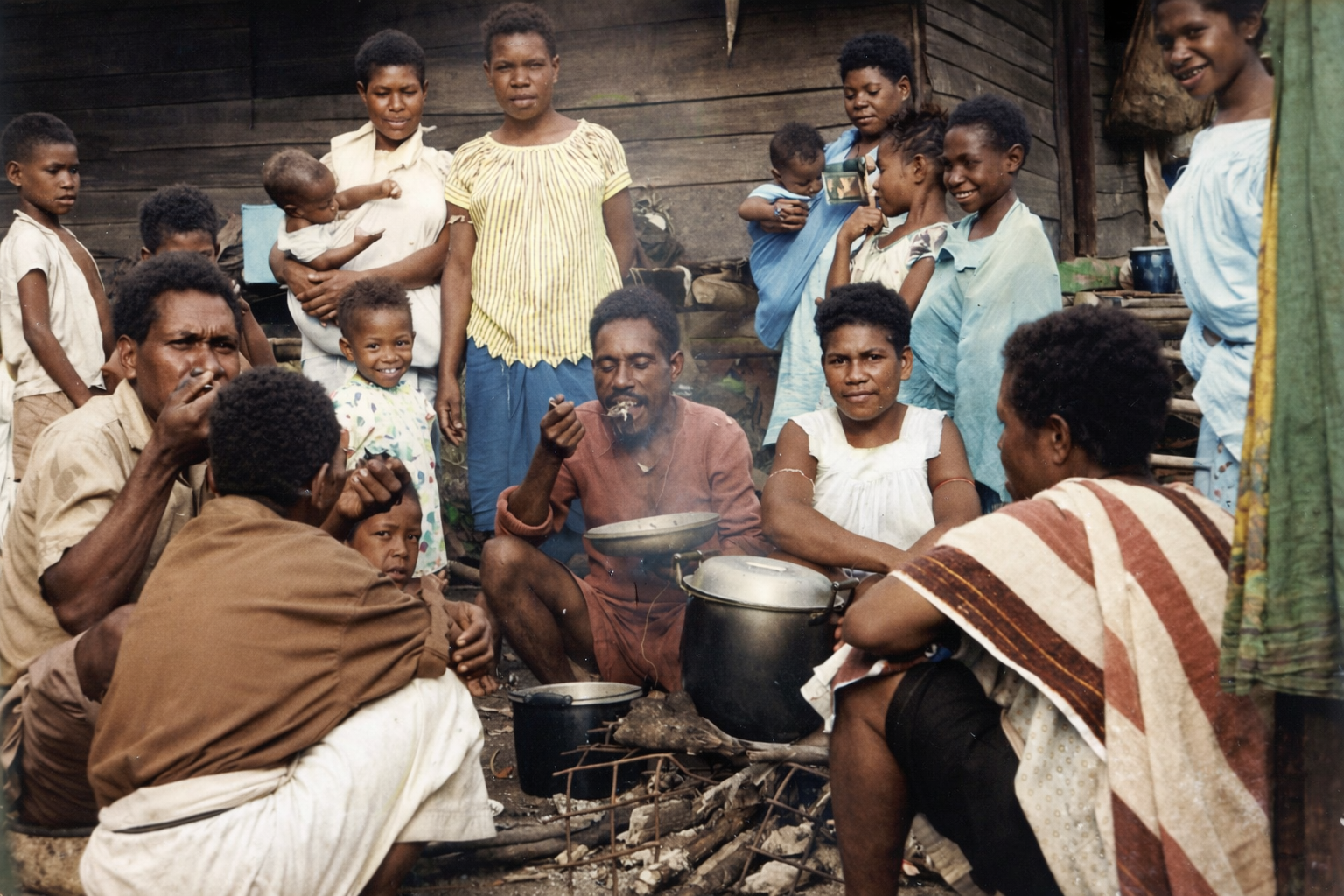
The following is a summary of the letters for APRIL 1964
April Begins with Gratitude — and a Pastor with Failing Eyes
April opens not with crisis, but with a letter of gratitude—one of Ina’s most telling strengths. Even when Malalo is strained, she begins by noticing generosity and responding with care.
A gift arrives from Miss Lillian Halverson in South Dakota, and Ina immediately directs it toward something deeply practical: eyeglasses for Taelabu, one of their most faithful pastors, whose eyesight is failing. Taelabu is not a man admired for appearance, Ina notes frankly, but for character—inner strength, humor, and the steady ability to hold together a congregation weakened by dissension.
His situation is precarious. His mountain posting is cold, his wife is suffering severe arthritis, and the family may need to be moved soon. Ina asks for prayer not only for Taelabu’s health, but for the fragile work of rebuilding a divided congregation—because in the mountains, leadership is everything, and it is always one illness away from collapse.
1964 April 7
Mail Drought — and the Sudden Return of Abundance
April also carries the peculiar emotional rhythm of missionary life: long silence, then sudden overflow.
For weeks, mail has been scarce because all post must go through Sydney, and the postal workers have been on strike. Ina remarks that they are “spoiled” by weekly mail now—already forgetting what early missionaries endured when mail came every three or four months.
And then, almost without warning, the boxes begin arriving. It feels like Christmas: parcels from Alex, Stevens Point, Glendive, Clarksville, and from friends and relatives of coworkers. The supplies are a mixture of the ordinary and the miraculous—linens for the dispensary, pillboxes, plastic spoons, books, clothing, fabric.
Ina does not treat these gifts as sentiment. She treats them as infrastructure. In a place where services are “so meager,” the boxes are not luxury—they are survival.
1964 April 13
Three Weddings — and a Feast by the Sea
One of the most vivid April scenes comes from the night three of Ina’s nurses are married.
Weddings in Malalo are folded into ordinary Sunday worship. Sometimes planned only a week ahead, sometimes three weeks. What has changed over time is not the ritual, but the community: when Ina first arrived, couples had no witnesses to stand beside them. Now the ceremonies have grown into gatherings.
After the service, Ina and the children descend the hill into Buakup village for the feast. They carry lamps, raincoats, supplies for the baby, and all the necessary gear for being foreigners in a tropical night.
Down by the sea, Ina finds a scene both humorous and beautiful: portable shortwave radios blaring beside tables set carefully in the sand. The villagers have chairs for the Ericksons. They level the tables by digging legs deeper into the beach. There are tablecloths, vases of flowers, and the background of a quiet stream reflecting palm trees at twilight.
The women bend over pots on open fires. Banana leaves cover the food. The smell of pork, chicken, curry, greens, taro, and pumpkin rises into the evening. Coconut is squeezed and mixed into taro until it becomes rich and creamy.
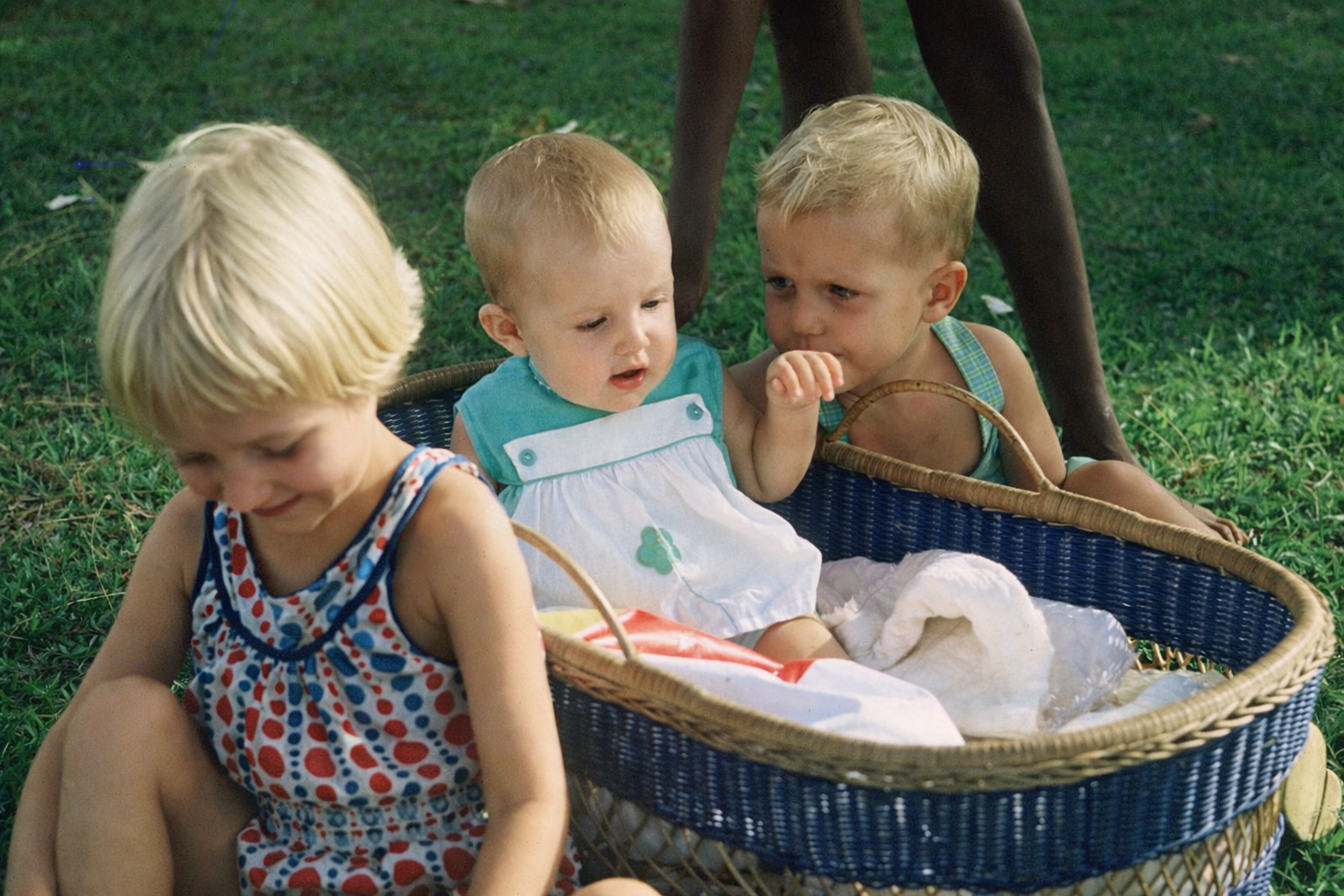
And there is Paula—almost four-year-old Paula—sliding naturally into village posture. When food comes late and the children are hungry, Ina asks permission to feed them early. Paula takes her plate and sits on the ground beside Kristi.
Christian—one of the men written about in the missionary magazine—watches her and says something unforgettable:
“Paula belong New Guinea TRUE, emi sit down all same mepela.”
Paula belongs.
1964 April 13
Rain, Mud, and the Long Climb Back Up
The feast ends the way so many Malalo evenings end: with weather.
A man studies the sky and warns that rain is coming. Ina and the others gather their belongings and start up the hill. They barely reach the edge of the village before the downpour hits—tropical rain, sudden and total.
People take turns carrying the children. Someone gives Ina a bark cape. Another woman gives her an umbrella. Ina stops to give medicine to one more woman even in the middle of the storm—because this is what happens when the nurse lives among the people: there is no clean boundary between “social time” and “medical time.”
Paula, meanwhile, lifts her dress proudly to show that her red ruffled panties—fresh from a box from Glendive—did not get wet, while everyone else is dripping.
It is funny. It is also a portrait of childhood inside a world where even celebration requires endurance.
1964 April 13
Epidemic: Fever, Weeks of Cough, and a Dispensary That Cannot Keep Up
Underneath the warmth of wedding scenes runs the darker current of April: illness.
A respiratory epidemic spreads across the coast and into the mountains. The pattern is consistent: several days of high fever, followed by a cough that lasts for weeks.
The dispensary is overwhelmed.
Paula has been sick but recovers. Tommy and Kristi catch it next. Al begins to come down with it. Kristi is teething on top of everything, making her unusually miserable. Ina, for the moment, escapes the infection—but she is carrying the entire dispensary load herself, while also mothering sick children.
She is grateful for experienced house girls filling in temporarily, but she is waiting anxiously for a replacement nurse—because three of her four nurses have just married, and in this culture married women typically stop working outside the home.
The loss is not just emotional. It is structural.
1964 April 16
1964 April 18
The Pastors’ Conference: Europeans Eat “So Little”
In the middle of the epidemic comes another scene that reveals Ina’s eye for cultural contrast.
A pastors’ conference is held at Malalo, but the people have not supplied enough food for the visiting pastors. Al brings three of the most distant ones home for supper.
Ina scrambles: another can of peas, rice added quickly, the pork roast from the wedding cooked and stretched.
Two of the men have never eaten in a European home. Their comments are not rude—just honest.
One pastor says he never understood how Europeans could eat so little. New Guineans can sit down to twenty pounds of taro because the food value is low. It takes mountains of it to satisfy hunger.
Now he understands: Europeans eat a small plate, then fill it again. The meal is not abundance by volume—it is density.
Tommy, meanwhile, becomes the comic centerpiece: he climbs down to fetch ketchup, and the pastors are coaxed into trying it. Onesimus—who baptized Kristi—tries it and likes it. Another man fears it will “all come out at once,” but he tries it too, and quietly takes more later.
Even dessert becomes story: canned peaches on cake. Onesimus tells how he once bought peaches by mistake, thinking they were pineapple, opened the tin, and believed the yellow halves might be eggs.
This is Malalo: theology and ketchup on the same table.
1964 April 16
“No Nurse, No Dispensary”: The Decision That Forces the Village to Act
The central conflict of April is not the epidemic itself.
It is what happens when the epidemic hits and the nurses are gone.
Ina expects a replacement nurse on the mission boat Simbang. The girl makes it as far as Lae—and then disappears. She finds a boy she has been writing to for a year and decides not to return.
Ina’s response is not sentimental. It is firm.
She had warned the people: if they marry off all their nurses without replacements, she will not take their place. The dispensary will close until they solve the problem.
So she closes it.
“Muske — no dispensary.”
It is a bold move. And it immediately reveals what leadership costs in this setting: the only way to force action is to let consequences arrive.
But consequences do not arrive cleanly.
A carpenter comes with his little boy suffering severe croup. He is desperate. He returns later with tears in his eyes, saying his heart is heavy because his child cannot sleep and only cries.
Ina finds a compromise: medicine from her own supply, sold at a cost that hurts him financially—but preserves the rule of the closed dispensary. If she breaks the closure publicly, the entire village will conclude that “Misi will do it” and nothing will change.
And then a second emergency arrives: a woman in the village in obstructed labor. The baby is not breech as described—it is transverse. She cannot deliver. Ina gives pills to stop labor and succeeds long enough to get her out by boat the next morning.
The village responds predictably: once they see Ina is willing to treat emergencies, everyone comes—pain here, pain there, sick child, headache, fever.
Ina refuses unless life is truly at risk.
It sounds harsh, but it is the only tool available to force the village to rebuild responsibility.
And it works: an elder goes to Lae to find out why the nurse did not return. Another tries to recruit a “doctor boy.” People begin to move.
The dispensary closure becomes not punishment, but leverage.
1964 April 25
The Fly Problem: Toilets, Protest, and the Limits of “Nice”
April also exposes the blunt underside of Malalo’s sanitation struggle.
The confirmation class—living on the station for almost a year—has not dug toilets. They have been using the bush. Meanwhile, the village below has drainage problems and cannot dig deeper than three feet before hitting water. So people use the coconut grove as a latrine.
Ina writes with disgust and exhaustion: “What a mess.”
She and Al now have to “holler and holler” to get anyone to act. Nice requests do nothing. “Nice pleases fall on deaf ears.”
The sanitation crisis becomes intertwined with the dispensary crisis. The village protests the dispensary closure by refusing to show up to meetings. Al waits an hour and a half. No one comes. So he leaves—an insult in village terms, and a deliberate one.
Al is learning the hard posture of leadership: “This is the law. Abide by it.”
But Ina makes clear that this toughness is not easy. It costs him inner turmoil.
And it costs her too, because she is the one who sees the sick faces first.
1964 April 25
The Replacement Arrives — Not a Nurse, but a “Doctor Boy”
By April 28, the story turns.
The nurse never comes. But a new figure appears: a young man trained as a medical assistant in a government hospital. He is home on vacation because his father is ill and there is no one to give medication.
He comes up to Malalo and offers to work.
Ina and Al radio the hospital and tell them he will not be returning. The mission funded his training, so they do not feel guilty taking him from the government.
Then, on the day he is supposed to start, he does not appear.
Ina sends a message to his village. The villagers try to block him from working. But someone—likely the local leader responsible—says bluntly:
“It’s too late. The Misi already called his hospital and told them he wasn’t coming back. He doesn’t have a job if he doesn’t work in Malalo.”
And so Malalo gains a reliable “doctor boy.”
It is not a perfect solution. But it is a solution born of necessity, not idealism.
1964 April 28
House Girls: Older, Wiser, and Part of the Children’s World
April ends with a quiet household shift that matters deeply for your story.
Ina now has two house girls who are older than the ones she has been having. They are responsible, and the children like them.
One of the girls had once suffered a very poisonous snake bite, and Ina remembers the effort it took to save her. Paula reminds the girl too—because children remember trauma and rescue as part of relationship.
Ina names them:
Angnganow and Jacclabuo. See bottom of this post for their photo
They are not background characters. They are part of the emotional structure of the home.
1964 April 28
Sawmill Progress — and a Glimpse of Political Storm
April also includes two outward-looking threads:
Sawet sawmill is running under full native supervision. Al has never seen people work so hard. They are trying to prove they can do it. Ina asks for prayer that it will continue, because success breeds initiative, and failure breeds collapse.
1964 April 28
A visiting Indonesian military leader tours Papua New Guinea and asks how Australia plans to “de-colonize.” He mentions border patrol posts, “normal wandering” from West New Guinea into East, and the need to survey the natural border.
Ina’s tone shifts into foreboding:
“I fear our peaceful days are limited.”
1964 April 28
This is a small line—but in hindsight, it carries weight.
Children in April: Growth, Language, and Birthday Longing
Even in epidemic and politics, Ina keeps recording the children.
Tommy’s sentences are growing longer.
He says: “I cannot do it’s.”
He responds tenderly to Paula’s sore knee: “Ohh isn’t that too bad.”
Kristi babbles constantly, and Paula interprets her.
Ina lowers the kerosene lamp at bedtime and Tommy complains he has to drink water and doesn’t like it in the dark.
Kristi has a tooth, sits well, loves milk, and is “still so good.”
1964 April 13
1964 April 28
And there is Paula’s birthday—looming like a holiday.
She is “dying” to open her box, but she believes she must have a cake first. She asks daily if Ina will make one. In April, Phyllis has had her birthday, and they made a cake, so the children conclude it must be “the season.”
1964 April 28
Closing: April’s Lesson
April 1964 is the month where Ina stops being merely the station nurse and becomes something sharper:
A leader who understands that compassion without boundaries collapses into dependence.
The weddings are lovely.
The feast is unforgettable.
The radios in the sand are funny.
The children are bright and alive.
But underneath, the dispensary crisis reveals the real Malalo reality:
When the nurses leave, the whole system fails.
And the only way forward is not more work from Ina, but responsibility from the people.
April ends not with comfort, but with a fragile improvement:
a reliable doctor boy,
two older house girls,
a sawmill running,
and a station learning—slowly—that consequences matter.
That is the true story of April.
The following are the actual letters for 1964
April 7
Elk point, South Dakota, Miss Lillian Halverson,
It is with deep gratitude that we received your gift. We are turning over to the general New Guinea mission office with the recommendations that it be used to purchase classes for one of our most faithful new Guinean pastors- Taelabu. if this is acceptable to you. He has been having such difficulty with his eyes.
Taelabu isn’t comley to look at but has unusual inner strength, and a sense of humor. We really appreciate him. He had been a teacher for many years before his congregation sent him to the seminary for two years. Following the usual, New Guinea pattern, he spent two years at Malalo, the missionary before he took his first congregation last year.
The congregation was very weak and full of dissension. Gradually, he has been pulling it back together again, reminding the people that a Christ centered life is the only life that counts.
It is very cold in the area he serves, and his wife has developed a, very painful arthritis in all of her joints so unfortunately, he will have to be moved and soon as the present intern at Malalo will be able to take his place. We ask you to pray for Taelabu and his family and their work among their mountain congregation. As we thank you for your very gracious gift.
Sincerely, Ina


Pastor Taelabu from Hotec. With his family. Most interesting and fun. Son came to Minneapolis later when Ericksons lived there. Farewell gifts. Paula has the drum Salamaua background
1964 April 13. ( Weddings)
Letter written by Ina Erickson from the Malalo Mission station Alvin and Louise Erickson, Box 1327, Glendive Montana, USA
Dear folks,
Well, it has been a bit of a dry season as far as mail is concerned, from the states for several weeks. All of the mail must go through Sydney and the postal workers were on strike. They have since gone back to work, so we are hoping to get some mail the next time the Victor goes to Lae. We get a little taste of what the early missionaries used to have to put up with, mail only once in three or four months. We get a bit spoiled having it every week.
Yesterday, three of my nurses were married. Weddings, here are a part of the regular Sunday service. It may have been arranged only the week before or in this case three weeks in advance. When we first arrived the couple getting married, didn’t have any witness to stand up with them. But the number has been steadily growing until now three gets to be quite a group. I’ll prefer the ceremony, the first marriage he has ever performed since his ordination.


These photos may not be of this particular wedding. The first photo is a marriage of 6 couples. The government decided that people needed to get a marriage liscensing. Alvin had to meet with them and do this. The 2nd photo is a married couple Yapuc and Mayalu Thom
One of the girls has a white chiffon draped over a white dress, and the other two girls had regular white dresses that they wear for communion. We were invited to the feast in the evening. Someone sent up a 5 pound pork roast for us to fix. We packed up our kids, lamps, raincoats, and what have you and descended to the village at the foot of our hill. (Buakup) We were greeted by the blare of short wave, portable radios, that some of the boys working in the compound have. It really was funny —such a contrast.
They had set some tables up by the sea and even had chairs for us. They had tablecloths on the tables and vases of flowers. To study, and to make the tables uniform height, they just dig them a little deeper into the sand. We really couldn’t have had more of a lovely background. We were sitting near a quiet stream that reflected the palm trees during the twilight, and the flaming, palm branches used for flashlights after the sun had faded. The children were running, and, jumping in the sand and men were gathered into groups, talking and smoking, and the women were busily bent over large, cooking pots on open fires. Most pots were covered with banana leaves sending the delicious aroma of pork being cooked over coals and chicken boiling. The younger girls and boys were cutting and spreading coconut palm branches for everyone else to sit on. As the sun disappeared, we let our Coleman pressure lamp, and soon others followed. We just could not have had a nicer garden party. It gets dark at 6:30 PM. They brought nice glass cups and saucers, bread, butter, and jelly mind you. Then tea sugar, and tinned milk. And came the taro and pumpkin, thoroughly cooked, but still firmed together in one bowl, then rice in another, pork with onions, curry, and some of their greens in an another, —very very delicious.
Chicken fixed the same way, then taro beat with a stick to attain the consistency of our mashed potatoes, the oil of the coconut squeezed out and mixed with it. MMMMMM But that was good. They brought us plates and silverware also. The important elders ate with us, the bridal party over to the left a bit, all at, and the rest of the villagers sitting on the palm branches on the ground. I spread out a raincoat, blanket and pillow and propped a bottle for Kristi as I’d fed her before we had come down. Paula and Tommy were hungry about dusk, they bring the food, and then let it get cold before partaking of it, maybe an hour and a half or two hours, so I inquired if it was all right to feed them, and they said it was even if it was, a breach of etiquette. Paula took her plate and sat down on the ground beside Kristi. Christian, the fellow June Prange wrote about in the missionary magazine, said ‘Paula belong, New Guinea TRUE, emi sit down all same mepela’
It was such a good chance just to sit down and talk with some of the people, something that we don’t often get a chance to do. With radios, especially now that some of the news comes in Pidgin English, they want to know what is going on in the world, and thanks to Time, we can tell them a little. They are proud of their way and happy when we approve of them. So many of their customs are being discarded for the white man’s ways, some good many bad.
As usual, there were a few sick people to see, but all in all, it was an enjoyable evening. One man got up and looked at the sky, and said he didn’t see any stars, he thought a big rain was coming, and that we should start up the hill. It took us a bit to gather up all our belongings and be on our way. We hadn’t even gotten to the edge of the village when the downpour came, as only it can rain in the tropics. We had a raincoats over the kids, then one lady gave me a bark cape, and I stopped to give medicine to one more lady before we went up the hill, and she gave me an umbrella. we were quite a large party with some of the station people and schoolboys. They all took turns, carrying the kids. It poured all the way to the top. It is a bit greasy to walk when it is wet, but the coolness felt so good that I didn’t really mind a bit. We’re always glad to get to the top, of course. We had a big kerosene lamps so we could see well, and didn’t encounter any dangerous reptiles, so it wasn’t too bad. Paula had gotten some red ruffled panties in a box from Glendive, so she proudly lifted her dress and showed everyone that her pretty red pants hadn’t gotten wet, while everyone else was dripping
Tommy is starting to use more complete sentences. His favorite at present is ‘I cannot do it’s. Paula was showing him a sore on her knee and he looked so sympathetic and said ‘ohh isn’t that too bad’. They are both disappointed that Phyllis should be able to see Danny and not they. I told him they had to grow quite big first and Paula added a knife to the top of her head and said that she was big girl now. I really have to keep my wits about me to keep head of them. I turn the kerosene lamp in their room, low for them to go to sleep, and Tommy told me he has drink a water that didn’t like it in the dark. Kristi, just jabbers away, Paula is always interpreting what she says. It is a bit late now, I can hardly keep my eyes open, so will wish you all a good night. Phyllis will be leaving in July. Mother and people did we ever tell you how much we enjoyed the reader digest. Thanks so much we do appreciate all that you do for us. It has been a bit like Christmas around here, three boxes from Alex, one from Stevens Point, two from Glendive, one from Clarkville, Jan, Rydahl‘s mother, another from her aunt, and another from a friend of their family. Some linens for the dispensary, pillboxes, plastic spoons, material, books, clothes, etc. God has certainly blessed us abundantly our services are so meager. We love and miss you all. Thanks so much for all you do. We really do need your prayers and are grateful for you and your faithful support.
Love Al, Ina and kids.
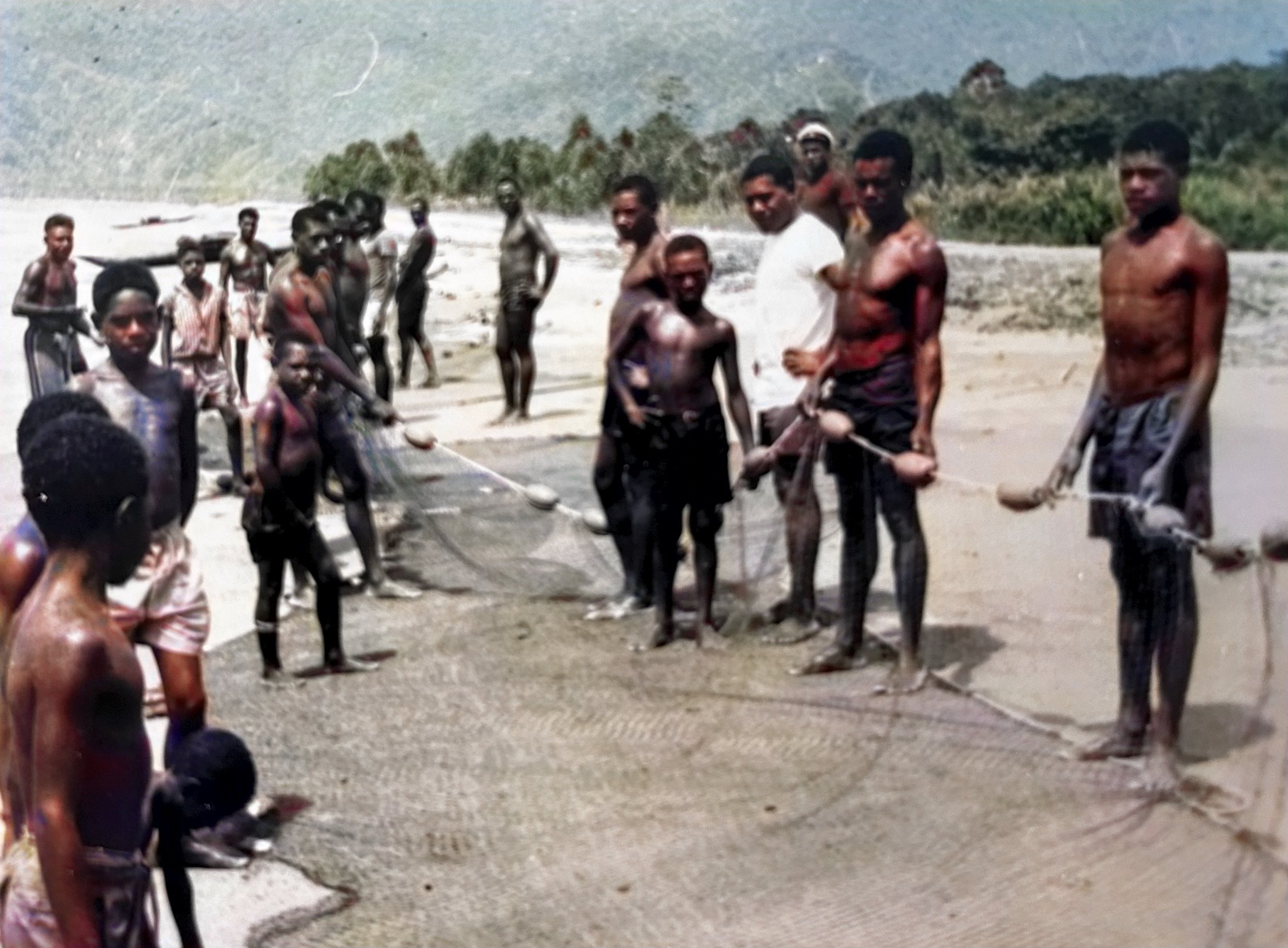
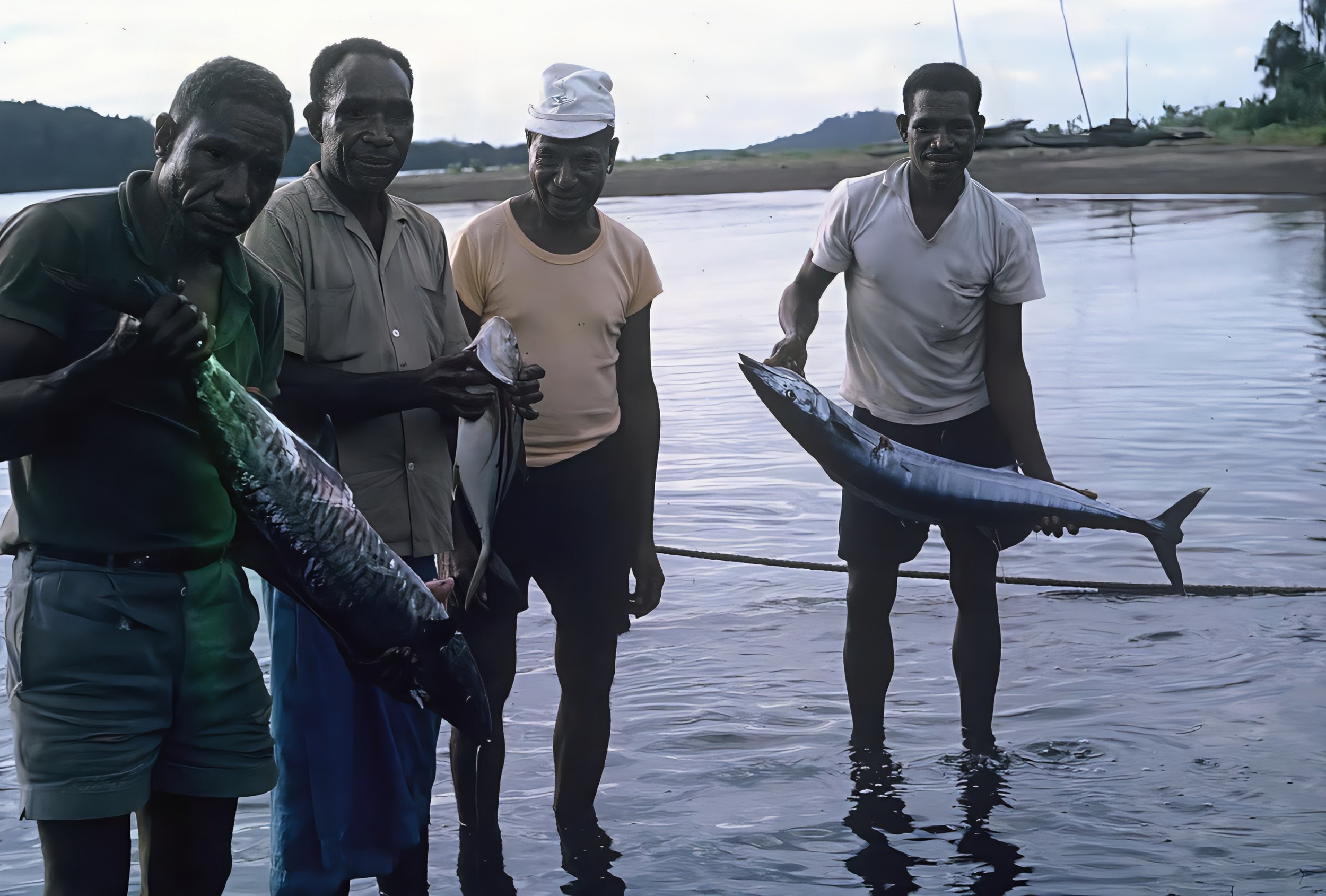
No sawmiller. Someone will be looking at it in May. We got some fishnets and have been able to get enough fish to feed the 200 people on the station. Like the school boys and girls and teachers and other workers.
Do you know you and dad could make a round-trip out here for $2000 round-trip. It would be well worth it. And a few years of teaching or payments from Dick Williams would pay for it. Maybe Carmen Miles or Al’s folks could come to. Really. Think about it.


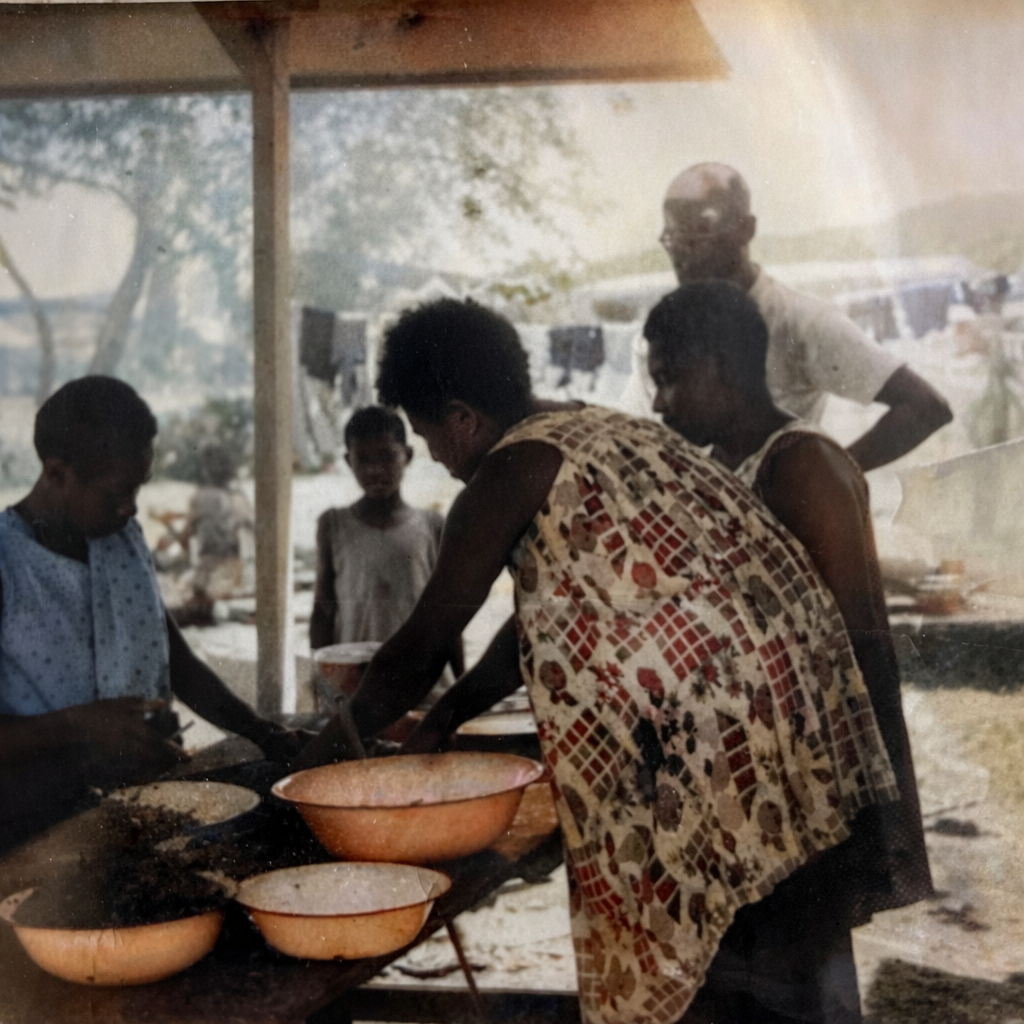
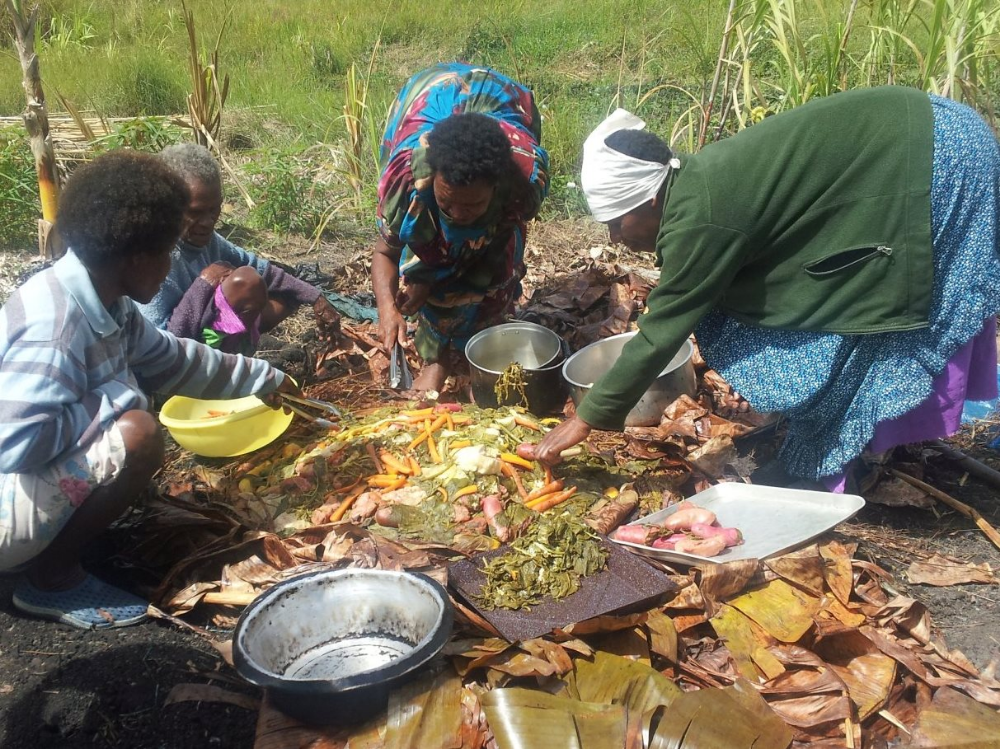
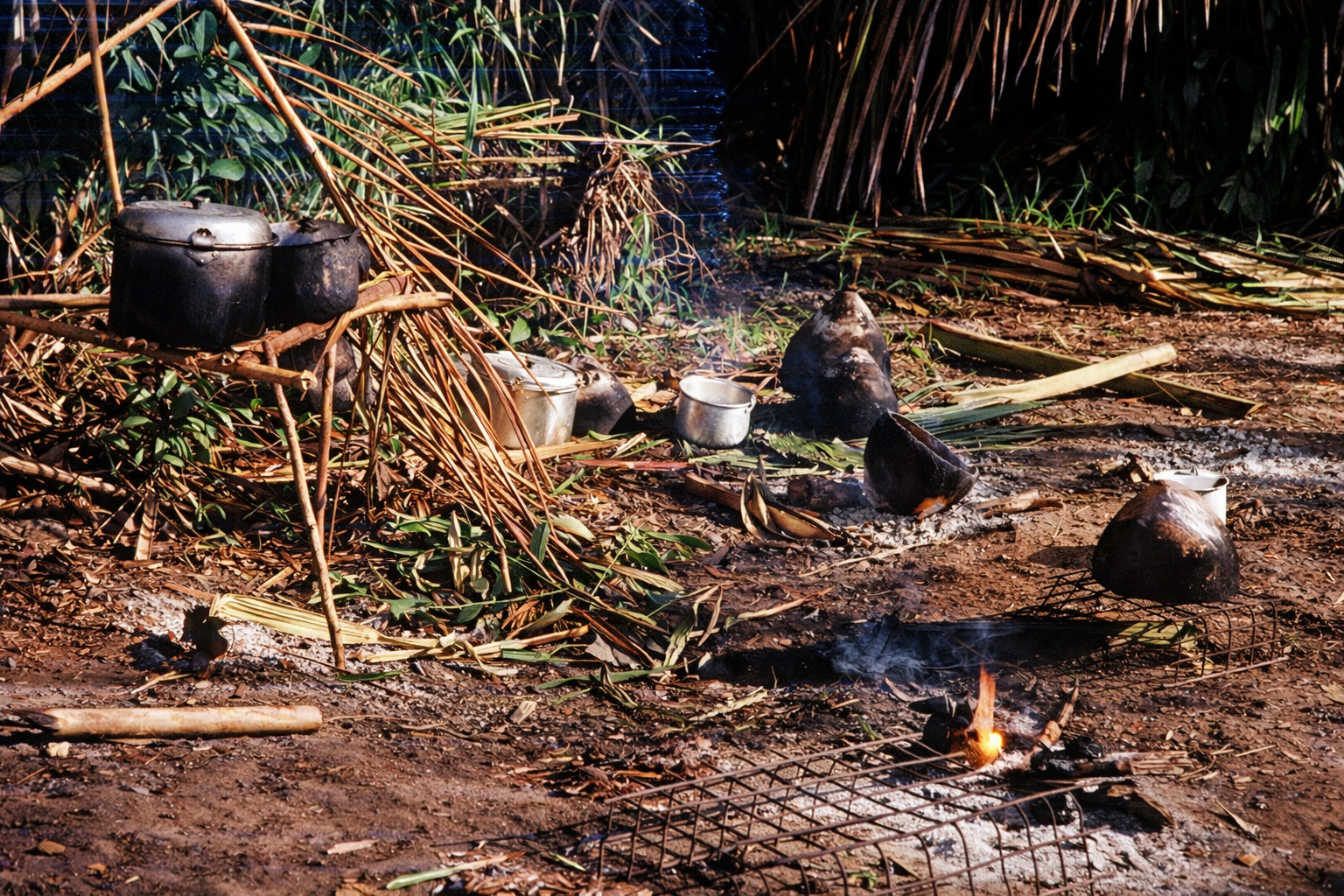
1964 April 16.
Letter written by Ina Erickson from the Malalo Mission station to Durward and Estelle Titus Box 224 Route1, Carlos MN USA
Dear mom and dad,
My life has been interesting around here. I do have some experienced house girls who are filling in until we can find permanent ones in November. I’m expecting a nurse in 20 days from Simbang to replace the three that were married last week.
We’ve been really having an epidemic of an upper respiratory infection with high fever for several days. Then a cough for weeks so the dispensary has been very busy. Paula had it and is OK now. Tommy and Kristi now have it now. Al is coming down with it. Poor Kristi is teething now, so she is really miserable. It’s so unusual to have her so fussy. So far I have escaped it. I’ve really enjoyed working in the dispensary, but I will be glad to have help again.
As we were going to sit down to supper, I’ll asked how much food I had. We’ve been given about a 5 pound piece of pork on Sunday from the wedding. I kept it in the freezer part of the icebox. Today I just decided to cook it all and then refreeze some of it. So I said plenty. He asked for 10 people? I hemmed a bit trying to figure it out. We’re having a pastors conference here and the people haven’t supplied them with enough food. Al brought three of the most distant ones. I quickly opened another can of peas and put some rice on to cook, and the roast was plenty big enough. Two of them had never been or rather eaten in a European home. Their comments were interesting. One said he could never understand how Europeans could eat so little. They sit down to 20 pounds of taro at a setting. The food value is so low it takes mountains of it to satisfy them. Now he said he understands. You take a little, eat that, and then fill a plate again. He said he thought when he sat around and saw such a little plate. He thought he’d go away hungry.
Tommy is such a ketchup boy. He got down from his chair and went to the kitchen to get it. So we talked the fellows into trying it. Taclaluc had eaten with us before, but not the other two. He was the first to try it. And liked it. Onesimus -the fellow that baptized Kristi, said he was game and tried it a bit too. So the third most bashful said he was afraid it would all come out at once. But he tried to, and then I noticed the next time the meat went around he took some again so he must have liked it.
We had canned peaches on cake for dessert. Al inquired if they had them before. Onesimus said he’d gone into a store once and got some by mistake. He thought he was buying pineapple. He opened it and found these big yellow things. He thought perhaps they were eggs. But cautiously he tried them and found they were good.
It really was a unique experience and we enjoyed it and they did after they could relax a bit.
I gave Kristi some nose drops and then quickly gave her a bottle so she could suck it before her nose plugged up again. She got to sleep. I don’t dare steam her as the house is so wide open it is impossible to keep her out of a draft. She seems better tonight. One thing this could have taught her and that is to drink out of a cup.
We surely love and miss you all. Hope someday you can make a trip out to see us. It is only $2000 round-trip for two. You could make it Your honeymoon. Made the love of our precious savior help you and strengthen you.
Love Ina and family.

The original photo is very dark so this is AI generated making AL, Ina and Paula look different but the tone of the photo coveys the idea of New Guineans sitting an European style meal.
1964 April 18
From Ina Erickson to Mr. and Mrs. Clarence Brown. 113 S. Merrill, Glendive, Montana
Dear Mr. and Mrs. Brown,
So good to hear from you. We really appreciate the wonderful support of our friends from home. Kris has been playing with her plastic lamp from Glendive. The children really enjoyed all of their things. We certainly were thrilled with everything.
Our dispensary still isn’t completed. But every little once in a while, it gets a little bit further. Last week we got much of the floor painted except for a square 6 inches square in front of the door, where the painter ran out of paint. A few weeks more and we will have that done.
Last Sunday three of my four nurses got married. They will take up domestic responsibilities instead of a medical career. I’m hoping that a nurse will come back on the mission boat. The Simbang to take over the dispensary tomorrow. It really has been fun running it myself. Talking, joking and getting to know the people better, but independence will soon come to new in the and they must have responsible dependable people to carry on. So I make the girls do as much as possible themselves. But being busy that I am, I always have to keep my fingers in the pie.
One of our village women had twins this morning. We have been having a real epidemic of very heavy respiratory infections. It really has been laying low. Many of the doctor boys in the village down the coast have been asking for more medicine as their supplies are depleted quickly with the epidemic. Fortunately, the government has been quite good about supplying it.

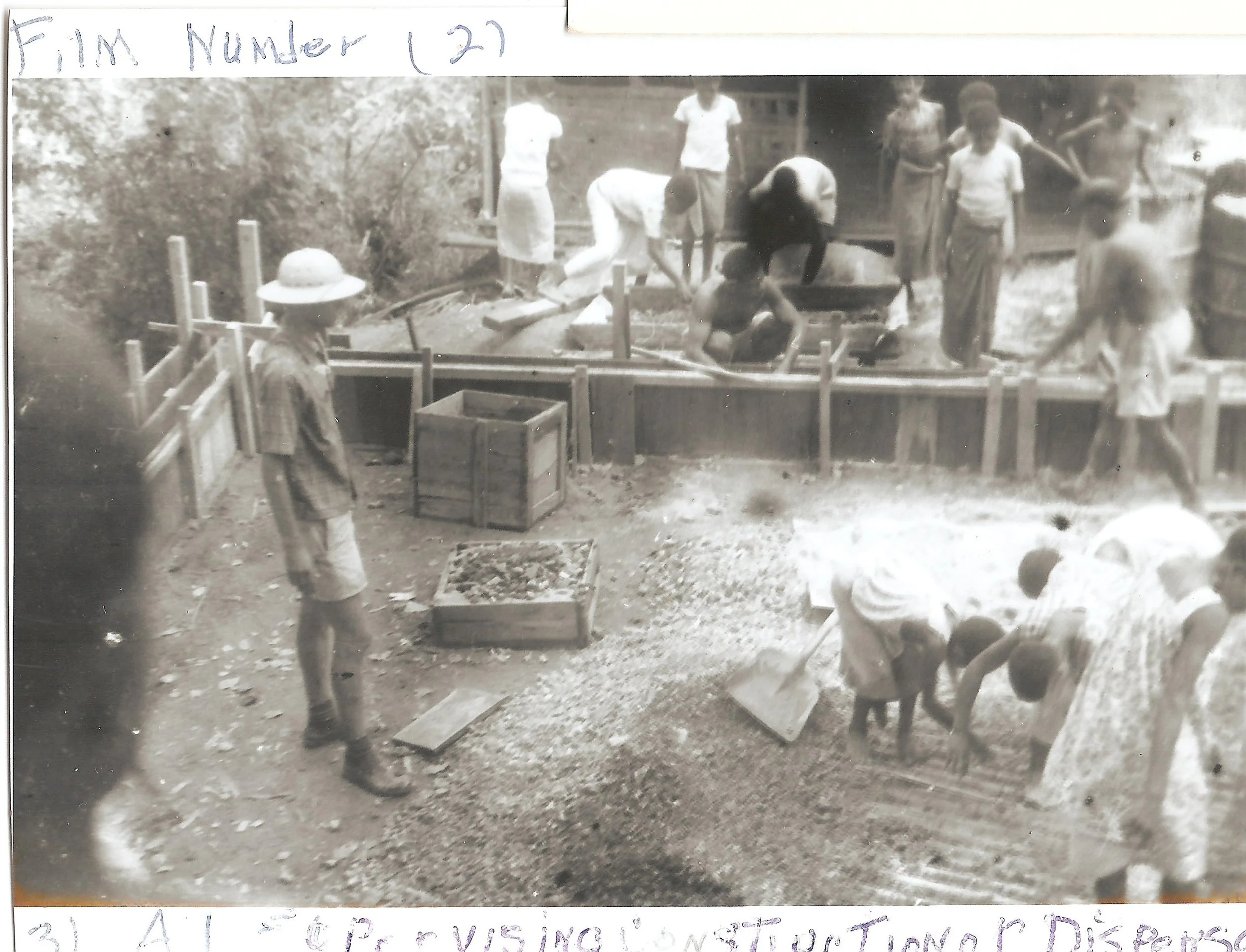
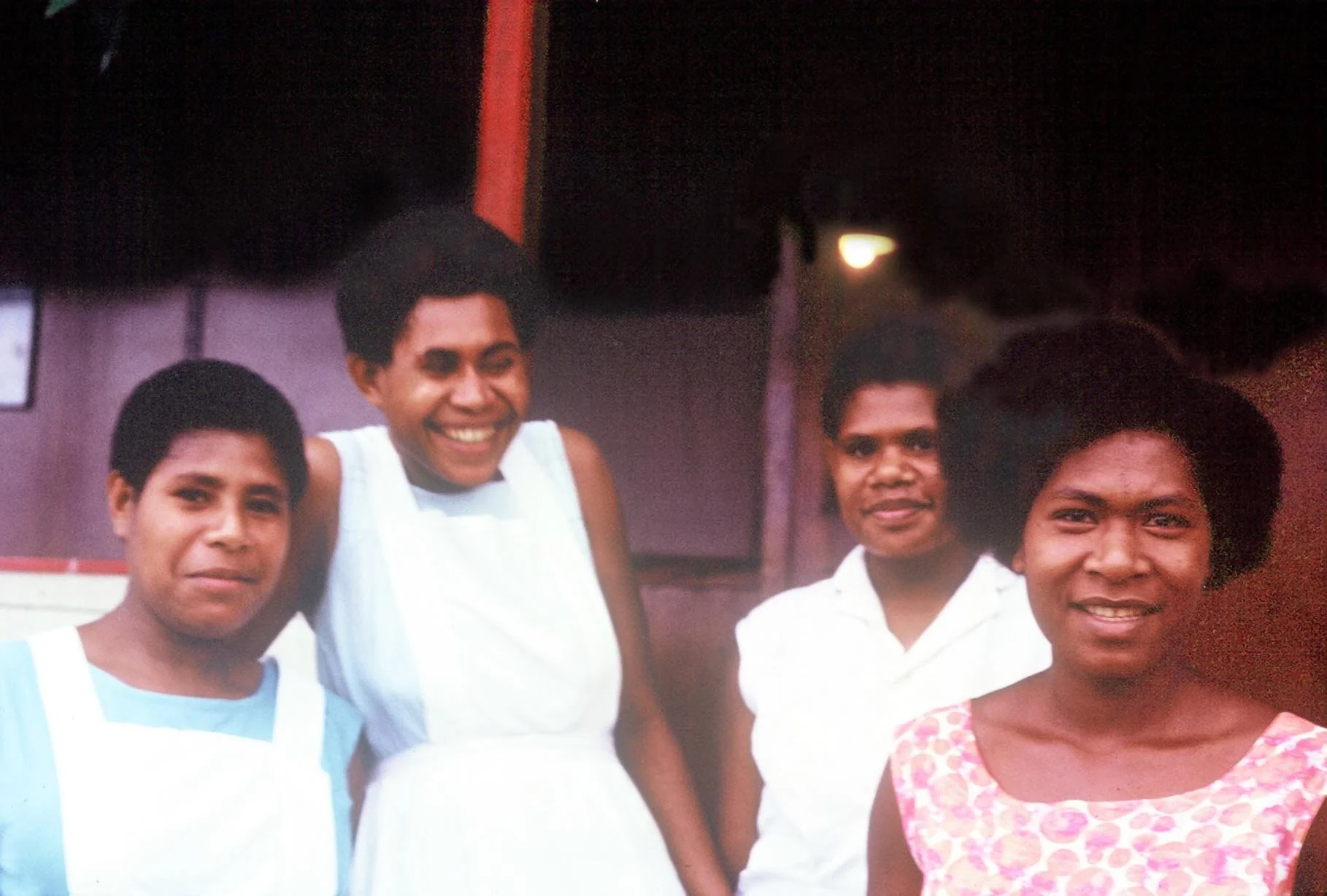
Construction of the dispensary and some nurses
We’ve gotten some fishnets. So our school boys have been able to get enough to feed themselves. There are about 100 students and 50 people living at the station +50 members of the confirmation class, so we really can’t complain of their success.
May Christ Lord strengthen you in his service.
Love Al, Ina and children
Footnote: Ina’s friend Inez Ramin who worked in the administration in Lae wrote to her congregation in America who sent $400 for the purchase of fishnets. Alvin bought 3-4 nets for Buakup and 1 net for the school.


1964 April 25 ( Lots of breakdowns regarding the nurses and dispensary)
Letter written by Ina Erickson from the Malalo Mission station Alvin and Louise Erickson, Box 1327, Glendive Montana, USA
Dear folks,
It sounds very much like the flu that has hit Glendive, is the same flu that has hit here. A fever for a few days, then such a wicked cough. It has made its way through all of our coastal villages, and now is running rampant in the mountains. Unfortunately people here aren’t in. Such good physical condition as these on the coast so they are having a really bad time.
As I mentioned before, our nurses got married, and usually the New Guineans don’t like to have married women working, but the Dr boys working in the mountain area skipped out about the time of the start of the epidemic, leaving the people helpless. So we asked our nurses to go to the mountains and see if they could help them. We sent quite a bit of medicine with them. But after only a weekend, they were out of medicine. They said that it was just everywhere.
We expected a replacement for our nurses on the mission boat, Simbang. Well, the girl got as far as Lae, then failed to show up at Malalo. She found a boy she’d been writing to for the past year and decided not to come back to Malalo. So no nurses, no dispensary. I told the people when they decided to marry off all their nurses without finding replacements for them that I wasn’t going to take their place. They just have to close the dispensary until they found someone. The congregation has paid for 10 years of school for these girls and are pretty hot under the collar when they refuse to work for the congregation in return. Well on the hope that the girl would be coming in for the next few days, I did work in the dispensary for one week. But still no nurse, so we said ‘muske’- no dispensary.
Then that night, our carpenter came up with his little boy. He gets croup so badly, we’ve really had to work to pull him out of it several times. And I had to say ‘the dispensary is closed’. Al explained how many years have been spent to educate these girls so that they would be there when we needed them. But they weren’t, now someone has to do something about it. He came back several hours later, with tears in his eyes “oh Misi, my heart is so heavy, my little boy doesn’t sleep, he just cries. I understand being Bingsu’s talk, but my heart is so heavy “I told him that I had some medicine of my own that didn’t belong to the dispensary and that I’d sell it to him, otherwise from the dispensary, everything is free except the two cents or the food for the nurses.
I really was concerned about him as he really does get sick with it, but it would cost him about 1/2 of month salary for five tablets. But if I gave them to him, I would be breaking down the law of the closed dispensary and people would just say musky. “Misi” will do it. So we had no other choice. I was glad that we’d figured out a way to get him something. Then the next morning a lady was having trouble delivering a breach baby or at least that was how they were describing it. It was the sister of our housegirl. I was afraid both the mother and baby would die so I relented and went down to the village. She wasn’t very far along in the labor, and it wasn’t a breech, it was laying crosswise so she couldn’t possibly deliver it. I gave her some pills to stop her labor and lo and behold if it didn’t. So she waited until we could get her out on a boat, the next morning. Then all the people started up to me “oh Misi’, I’ve got a pain here or there or my child is sick.”
But if I thought their life was not in danger, I’d have to say I’m sorry. Unfortunately, that is the only way to get action. Then one of the elders said he was going into Lae and find out why the girl didn’t come back, and another was trying to get a doctor boy. So we pray that it is the right thing and that it will get a little action. Maybe we will even get a room for the sick people to spend the night and when it is necessary for them to stay at Malalo. It has been well over a year ago, that the other one fell down and so far not even a thought of replacement. The problem of having to rely on volunteer labor.
Al is developing a tough hide, and able to say this is the law, now abide by it, or else, but it still causes a lot of inner turmoil. It seems to be the only thing people understand. Today we went to the village for a meeting. Fortunately, it was within a hours walking distance, and after an hour and a half of waiting no one showed up due to protest of the dispensary closing. So he just left and that is quite an insult to the village, wow! We will have to see what happens.
We’ve discovered the source of our fly problem. The confirmation class that has been here for almost a year hasn’t bothered to dig toilets and they’ve been using the bush. Also, the village at the foot of the hill has a drainage problem as they can only dig down 3 feet before they hit water, so they’ve been using our coconut Grove for their toilets. We hope to get the council in to make the people clean it all out , What a mess. We’re going to have to find out about septic tanks, or someway to flush everything into the sea as the salt water is a good sanitary, disposal unit. These are our civilized people. Them any effort to sanitize isn’t worth a bother. Now we have to holler and holler to get anyone to do anything about it. Nice pleases, fall on deaf ears.
Kristi has a tooth. She also sits quite well by herself, and has really developed a liking for milk. She really is getting big. The kids still all have coughs, but they really feel pretty good now. They are starting to eat again. Mother they’re just isn’t any mothering girl that would take over the responsibilities of the household, you must remember they are only a generation or two from savagery. But they really have come along ways but not that far. I’m glad that you are feeling better again mom Erickson. That flu can really be nasty. Thanks for your letters and for the lovely pictures. We’re really amazed at how Greg and Vicki have grown and everyone looks so good. Glendive really has out done themselves on building. I’m sure it’s changed the whole town.
Love, Ina.

1964 April 28
Letter written by Ina Erickson from the Malalo Mission station Alvin and Louise Erickson, Box 1327, Glendive Montana, USA
Dear folks,
We hope everyone has been able to dig out of the snowbanks by now. Our winter rains and heavy seas are just starting now.
Things seem to be working out better than we had hoped. Our nurse never did show up, but a boy, who is a medical assistant in a government hospital was home on vacation. His father was ill and there wasn’t anyone to give him any medication. So he came up and said he’d like to help his people and work at Malalo. We radioed his hospital and told them he would not be returning. He had been completely funded by the mission so we didn’t feel badly taking him from the government. The day he said he’d show up for work, he didn’t appear. So I sent a message to his village, and someone said his people did not want him to work. But the fellow responsible said “oh, it’s too late to say that, the Misi already called his hospital and told them he wasn’t coming back so he didn’t have a job if he doesn’t work in Malalo “. So we now have a very reliable doctor boy.
The two house girls I have are a bit older than the ones I have been having. One is a girl who had a very poisonous snake bite and we had quite a time bringing her around. Paula keeps reminding her of this. The children really like these girls and they seem to be real responsible. There names are Angnganow and Jacclabuo.

Angnganow (blue dress) holding Debra who is born in 1965 and Jacclabuo perhaps holding Kristin - not sure of her name. Woman in the middle is a visitor from Buakup
Sawet sawmill has been running with all native supervision and everything. Al says he is now seen the people working so hard. They are really trying to prove that they can do it. So far it really has gone well. Pray that they will be able to continue. If they think they can do something, then there is initiative to really want things to work, otherwise, so many things go wrong.
Phyllis has decided to stay until December to complete the school. Next year two of our New Guinea boys will be out of teacher training, so should be able to teach what she has been teaching this year.
We had a military leader from Indonesia, visiting New Guinea on a sightseeing tour, showing ‘New Guineaness’, and wondering how Australia plans to ‘de-colonize’. Mentioning that they would like to survey the natural border between East and West New Guinea, adding that they are going to put patrol post along the border. It seems some of the west New Guinea have taken to wondering a bit, somehow ending up in East New Guinea. Strange isn’t it? He said, as long as it is just ‘normal wandering’ as these people tend to do, nothing would be done about it. But! I fear our peaceful days are limited.
Paula’s box arrived from you and she’s dying to open it. She asks each day if I’m going to make her a cake so she can open her present. We enjoy the enthusiasm of the children and Kristi is still so good.
We pray that the Holy Spirit will wash on the hearts of our people, that they might grow more and more in dependent.
Thanks so much for all the encouraging letters and we really look forward to them.
Love the ‘E’s’
Repeat letter sent Titus with these extra notes to them :
I am waiting for Al to return from Lae. We had planned to go to Sawet tomorrow. The fellows have a shipload of timber ready. However, the Simbang isn’t able to pick it up now, so we will have to wait until June. Al will be disappointed.
Did Bette get moved. How about Ellen. Did you see Ted Helpert?
Paula is so anxious for her birthday. Phyllis had hers in April. And we had a birthday cake. So they think it is the season. Paula has gained since her flu so doesn’t look quite like a skeleton anymore. 4 pounds really made a difference on her. Tommy didn’t lose weight and Kristi drank more milk so gained weight. I hope Martin gets transferred. We love you all..
We’ve been doing a Bible study in Acts, and one of our chief leaders has advanced cancer. So he will only be with us for a few months. He is head and shoulders above anyone else. If he had been a generation later, he would’ve been the prime leader in New Guinea independence. We’re so grateful for his contributions, but will hate to see him suffer and leave. He’s the only leader in his village. His name is Anubis and his Christian name is Bingmaloo or Mercy.
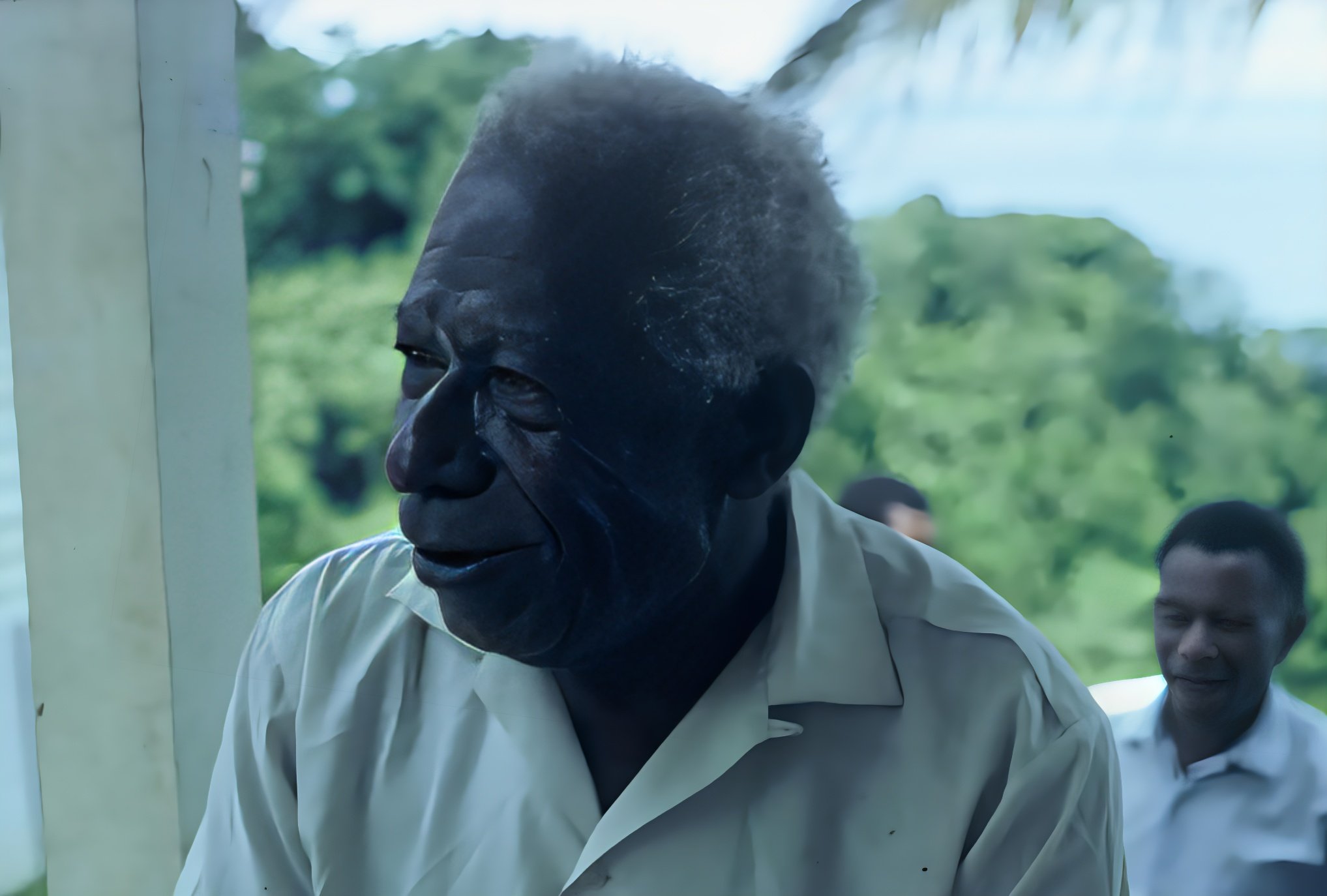

Bingmalo Anam, from Buakup