Recovery, Responsibility, and the World Pressing In
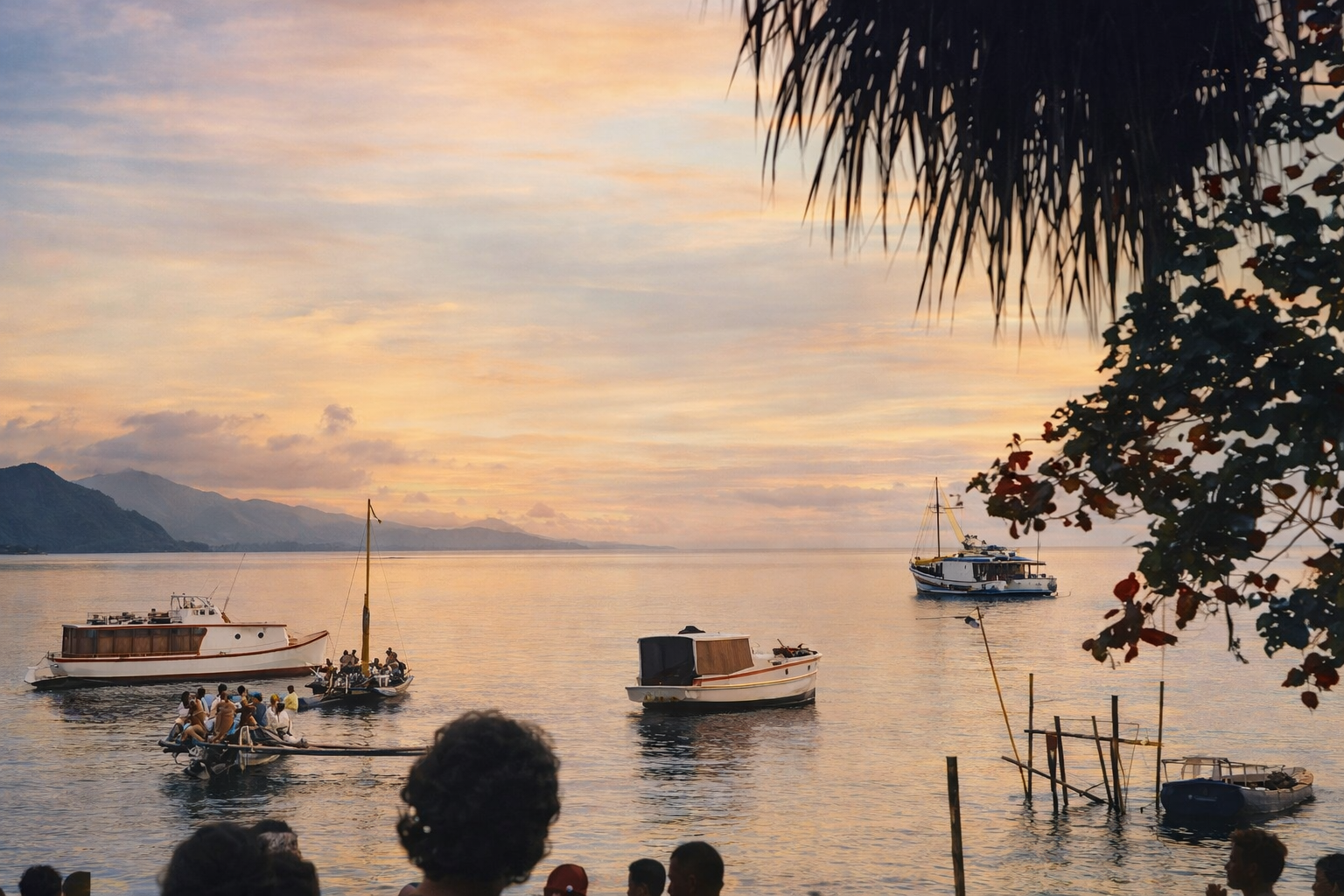

Second photo - Kuli in foreground, Victor in background with no people, looking from Malalo towards Lae but too foggy to see mountains behind Lae.
The following is a summary of the letters for JUNE 1964
Recovery, Responsibility, and the World Pressing In
Malalo Mission Station
Malalo at the Turn of the Season
June arrives with subtle shifts rather than sharp changes. The rains ease slightly. Nights cool just enough to make sleep deeper. The sea lies calmer more often, though never reliably. Boats come and go, but always at the mercy of tide and weather.
Malalo remains what it has been since Fred Scherle rebuilt it after the war: a station perched high above Buakup village, open to wind and light, exposed to the needs of the coast and the mountains alike. From here, paths stretch north toward Lae, south toward Salamaua and Sawet, and inland toward villages that take days to reach on foot.
It is a place where nothing happens in isolation. Health, leadership, money, politics, faith—everything arrives braided together.
June will make that clear.
Alvin’s Recovery and the Cost of Medicine
At last, Alvin begins to recover.
The pneumonia has cleared, but not cleanly. After the illness itself comes the reaction—hands and feet swelling painfully, joints tender, skin erupting in angry welts from penicillin. The itching is relentless. Walking becomes nearly impossible.
With no antihistamines at Malalo, Ina takes him to Lae.
There, a single injection of Benadryl changes everything. Within hours, the swelling eases. He can walk again. His chest is clear. The cough disappears.
The relief is enormous—and sobering.
Ina carries the weight quietly. She had administered the penicillin. She had no lab reports, no X-rays, no way to confirm the diagnosis. She hates medicine given without certainty, yet this is the only kind available here.
Alvin recovers, but tires easily. He is thinner than he should be, weaker than he admits. Still, by June, he is again up and moving, preparing to travel.
Malalo does not pause long for convalescence
1964 June 5
Illness Without Names
Even as Alvin improves, a troubling pattern emerges.
Infants are brought to the dispensary with very high fevers—temperatures that do not respond to anti-malarials. Convulsions follow. Each case looks the same. None of Ina’s own children have been affected, but that offers little reassurance.
She treats symptomatically: cooling, sedatives when needed, prayer always. She does not know what this illness is. There is no way to test, no name to assign.
This is among the hardest parts of Malalo: not suffering itself, but suffering without explanation. People ask what it is. She cannot tell them.
She carries that uncertainty quietly into the next case, and the next
1964 June 5
Inadequacy and the Weight of Isolation
June presses hardest on Ina’s sense of inadequacy.
There is still no permanent dispensary help. Nurses come and go. Promises are made and delayed. When mistakes happen—and they do—they are not easily undone.
Ina writes with rare honesty about discouragement. Forgetting something here is not trivial. It cannot be fixed with a phone call or a note sent overnight. Memory itself feels unreliable, dulled by anti-malarials that keep fever at bay but cloud thought.
She knows this discouragement well. She believes it may be the single greatest burden missionaries carry: the constant visibility of one’s own limits.
There is no hiding them here
1964 June 5
Children Moving Forward
Inside the house, life continues.
Kristi, long frustrated by immobility, finally learns to move. She pulls herself along on her stomach, then masters a walker purchased in Lae. She flies across the floor with delight, liberated at last.
She is heavy now—so heavy that Ina hesitates to take her to Lae again until she can walk. But needs intervene. It has been four months since their last trip.
Tommy shoots up suddenly. Paula works hard to remain just a little taller. Birthdays pass quietly. Paula’s angel food cake with chocolate frosting becomes an event. The Bulaites are over. Tommy celebrates as if it were his own birthday.
Toys are hard to find. After Christmas, Lae offers little for small boys. Tommy adapts. He always does.
These children grow between worlds—at home in bilums and barefoot play, yet still anchored to stories, books, and pictures sent from across the ocean
1964 June 5
Words from Home, Worries That Cross the Sea
Letters from home bring joy and concern in equal measure.
Ina worries deeply about Rose and her family. News is fragmentary. She urges her parents to go to them, to help in practical ways—to pay hospital bills, to cover what insurance may not.
She grieves missing Bruce’s ordination. Another milestone passed at a distance. They pray for him anyway, trusting that absence does not diminish blessing.
She reflects with gratitude on her own children’s health. Life would be unimaginably difficult here without that gift.
These letters remind her how far away home has become, not just geographically, but emotionally. Events there feel remote, muffled by ocean and time
1964 June 14
Alvin’s World: Timber, Responsibility, and Turning Things Over
While Ina holds Malalo together, Alvin writes at length to old friends—the Becks—about the work at Sawet, the sawmill that belongs to the Malalo circuit.
The mill has not collapsed in their absence, as some feared. Instead, it has found its footing.
Logs are being cut and hauled from villages up and down the coast and into the mountains. The forests near Buikela and Busamang reveal their abundance slowly. Men walk long roads into the jungle to bring timber out by hand.
The Dolmar saw proves workable. Conference approves its purchase. Loans are arranged. The financial picture improves. Profits are shared: half to household, a quarter to debt reduction, a quarter returned to the congregation.
This matters deeply. For the first time, villages see tangible evidence that their own work can sustain their institutions.
What impresses Alvin most is not production, but ownership. Kepoasing steps into leadership. Nikolaus supports him. Gideon’s nephew becomes bookkeeper, log buyer, trade store manager—all at once.
They simplify everything, sometimes to the point of absurdity. Still, the crew takes responsibility. They watch one another. They try.
Alvin recognizes the paradox: the work is imperfect, even fragile—but it is theirs. And that makes all the difference
1964 June 20
Politics at the Edge of the World
Global politics reach even Malalo.
Rumors arrive of motions at the United Nations, accusations that Australia is turning New Guinea into a military state. Talk of independence circulates, unsettling and premature.
Ina sees the irony clearly. There is no army to speak of. Airstrips are little more than jungle paths where mission planes risk landing. Were Indonesia to move, resistance would be minimal.
The newly formed House of Assembly responds bluntly: Russia should get its facts straight.
Still, planes begin flying low along the coast, back and forth. Observation or intimidation—it is unclear.
The world beyond Malalo presses closer, even here
1964 June 30
Work, Accidents, and Ordinary Embarrassment
At Sawet, Ina cuts her thumb badly while chopping wood too quickly. The axe lands squarely on the joint.
She is embarrassed more than frightened. With no sutures available, Al and Mr. Johnson tape it carefully. It heals well, with no loss of function.
It is a small incident, but telling. Even the nurse is not immune to haste, fatigue, or misjudgment.
Mr. Johnson, a professional sawmiller from near Madang, visits the mill and is astonished. The men have 122 logs on the beach and more waiting inland. The machinery is well cared for—something he has “never seen” among New Guineans before.
Plans form to move the mill to a better site, to build a house for a European guide—not a manager, but a teacher. The men have proven they can run the mill themselves.
This is quiet vindication of years of patient work
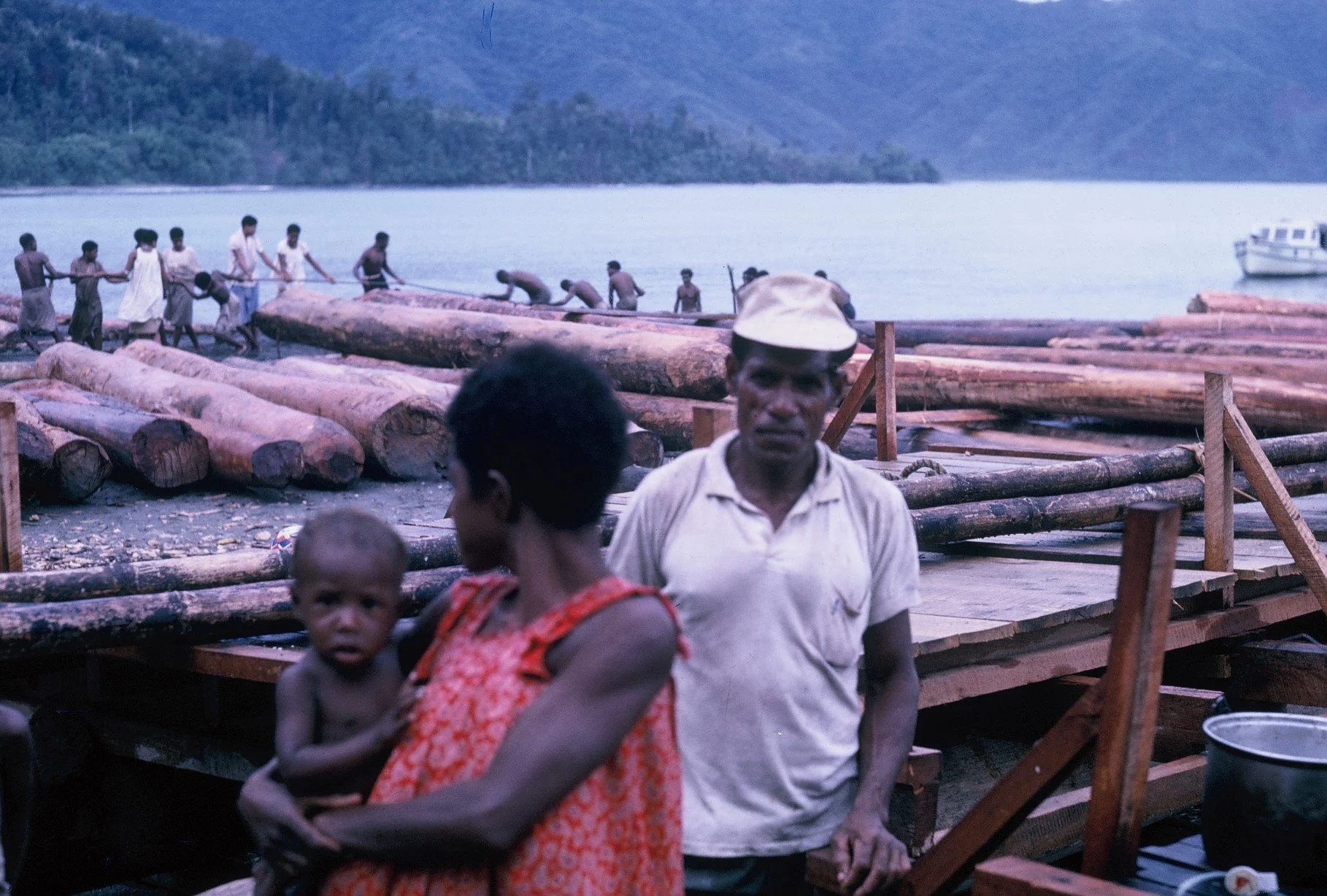
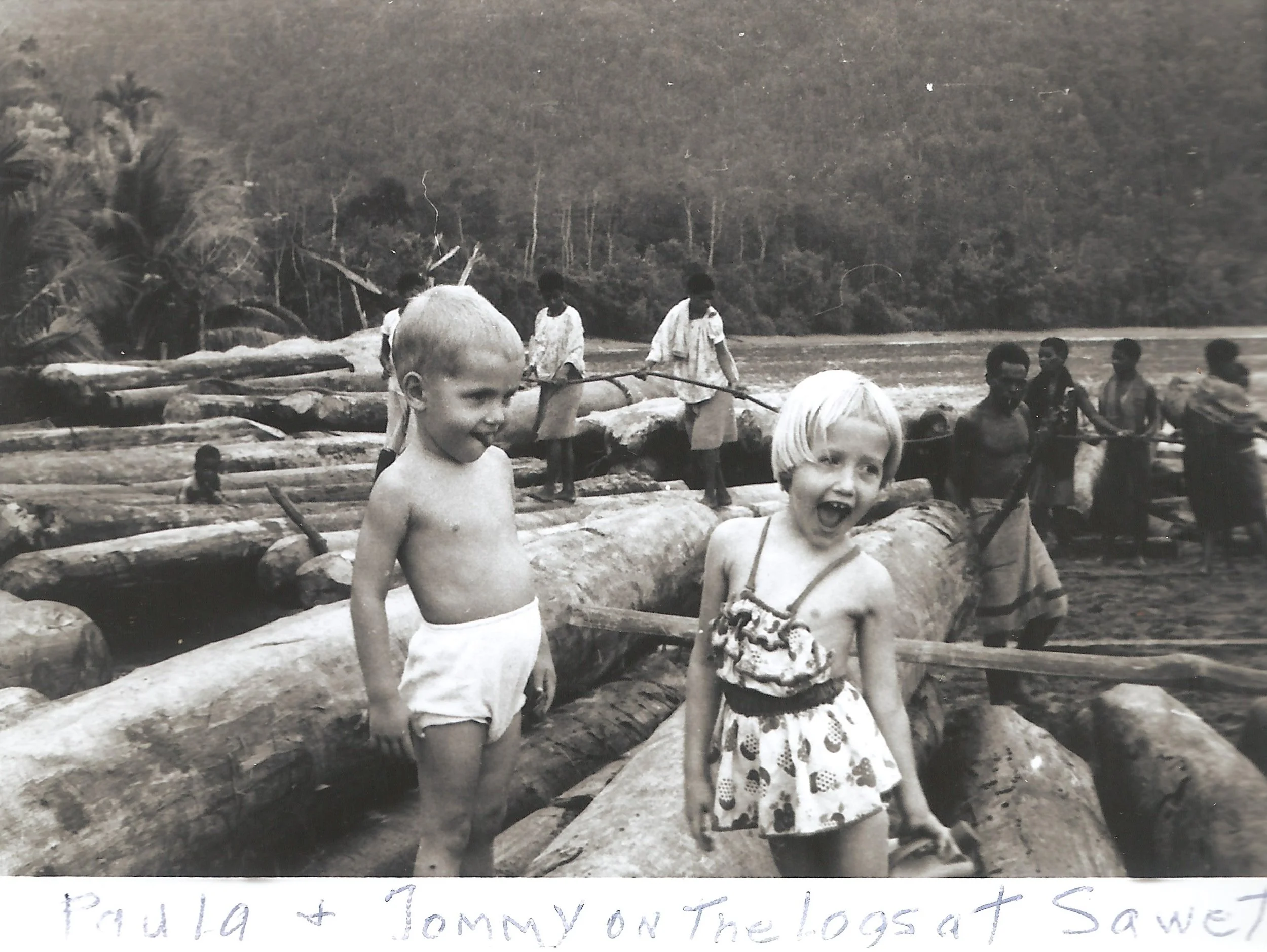
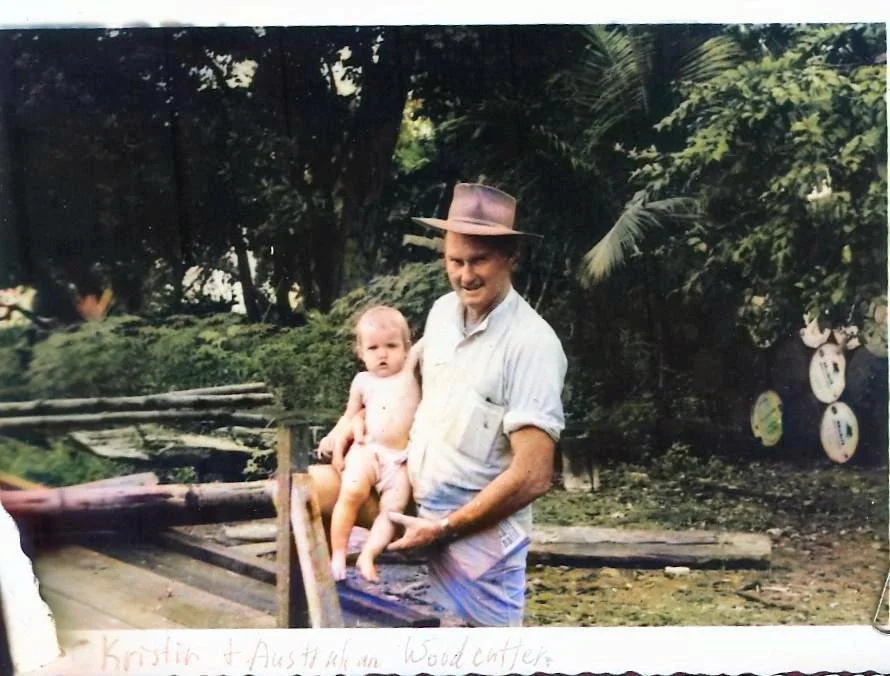
Photos: Sawmill south of Malalo and Salamaua and far photo is Johno the Australian woodcutter holding Kristin. Johno, a sawmiller that is running a mill near Madang, came to look at our mill and the timber around here.
1964 June 30
Loss Without Explanation
Not all stories end with improvement.
A young woman—pregnant, unmarried—comes to Ina saying she feels cold. Ina assumes malaria, gives treatment. Four days later, the girl dies suddenly in her village.
There is no pain, no bleeding, no clear sign. Ina cannot explain it. She feels the weight of not having examined her more thoroughly.
The story behind the girl is painful: closely guarded village life giving way to new freedoms without guidance, young men absent in city compounds, young women left behind with no vocation and few choices.
Ina feels this deeply. Progress brings fractures. She names neither villain nor solution.
Only sorrow remains
1964 June 30
1964 June 5.
Letter written by Ina Erickson from the Malalo Mission station to Durward and Estelle Titus Box 224 Route1, Carlos MN USA
Dear folks,
Greetings from NG. Finally after a month of fooling around, Al is finally on the mend! After he had gotten over his pneumonia, he got a penicillin reaction. His hands and feet swelled way up and became so tender as did his hip and thighs. His face legs and chest weren’t too bad, but did he itch. So having no antihistamine on hand, we came to Lae. He got a shot of Benadryl and is finally able to walk. His chest has cleared and cough disappeared.
We continued to have a few infants with this high temperature that doesn’t respond to anti-malaria. So what it is? I don’t know and they all get convulsions so far. My kids haven’t gotten it.
Australians have pledged full support in case of foreign intervention in New Guinea but that is really isn’t a big deal as their defense is so decrepit even Indonesia has more arms in better condition and even more men in the army. But then there is the good old US behind them so they don’t have to worry much about defense.
We still don’t have permanent dispensary help. I get so disgusted with myself because I get so poohed. I think that is one thing that discourages missionaries more than anything else, is our inadequacies. They are so glaring, and when we forget something or make a mistake, it usually is so difficult to remedy. You can’t just pick up the phone and make arrangements or write a note and expect it to get there in a day or two. Loss of memory? - oh we get so disgusted over that. The anti-malaria is mostly to blame for that. But it surely is awful to live with.
Kristi can pull herself along on her tummy. We bought her a walker yesterday and she really likes it. She can really make it go. She has been so dissatisfied with her state of immobility so it really feels good to be able to get around.
Thanks so much for the picture mother and such a beautiful mother I have. I showed it to my house girls explaining it was my mother. They exclaimed - ‘Najasm Kelilic’-the highest possible compliment in Jabem and literally it means it’s niceness excel all else. In other words, you’re beautiful. They have never really seen an attractive, older woman.
Tommy is shooting up but Paula manages to stay a head taller.
Kristi is so heavy to haul around. I doubt I wouldn’t bring her to Lae until she walked. But I had to. It had been about four months since we’ve been to Lae.
Poor Fritzie we hope he is in better health. Paula had an angel food cake with chocolate frosting for her birthday. The ‘Bulaites’ were over so she had a gay time. Tommy was as excited as if it was his birthday. We haven’t been able to find any nice toys for his birthday. After Christmas there were many little girl things but nothing for little boys. We love you all, and it’s still seeming like a long time before we’ll be coming home.
Love, Al, Ina and the kids.
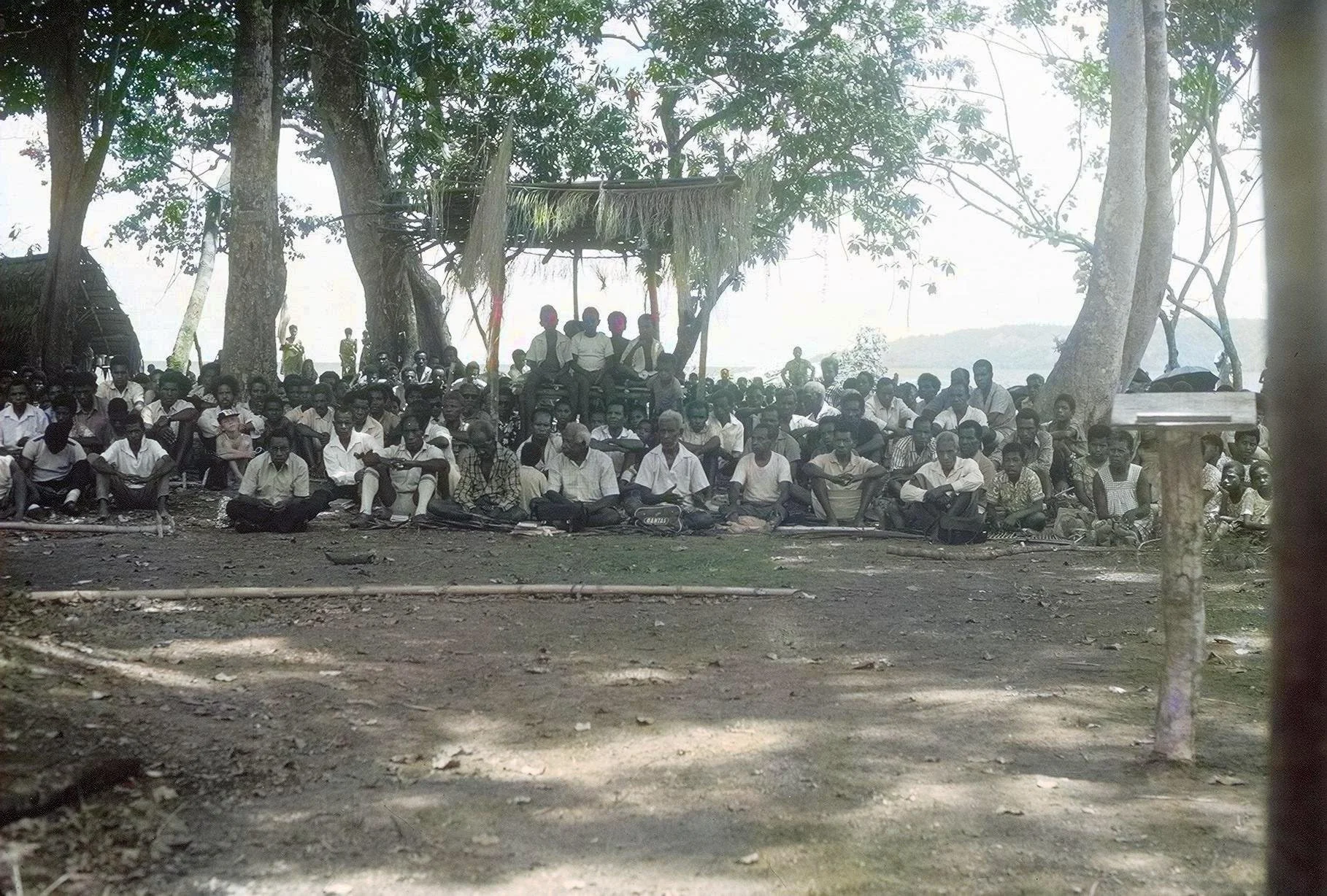
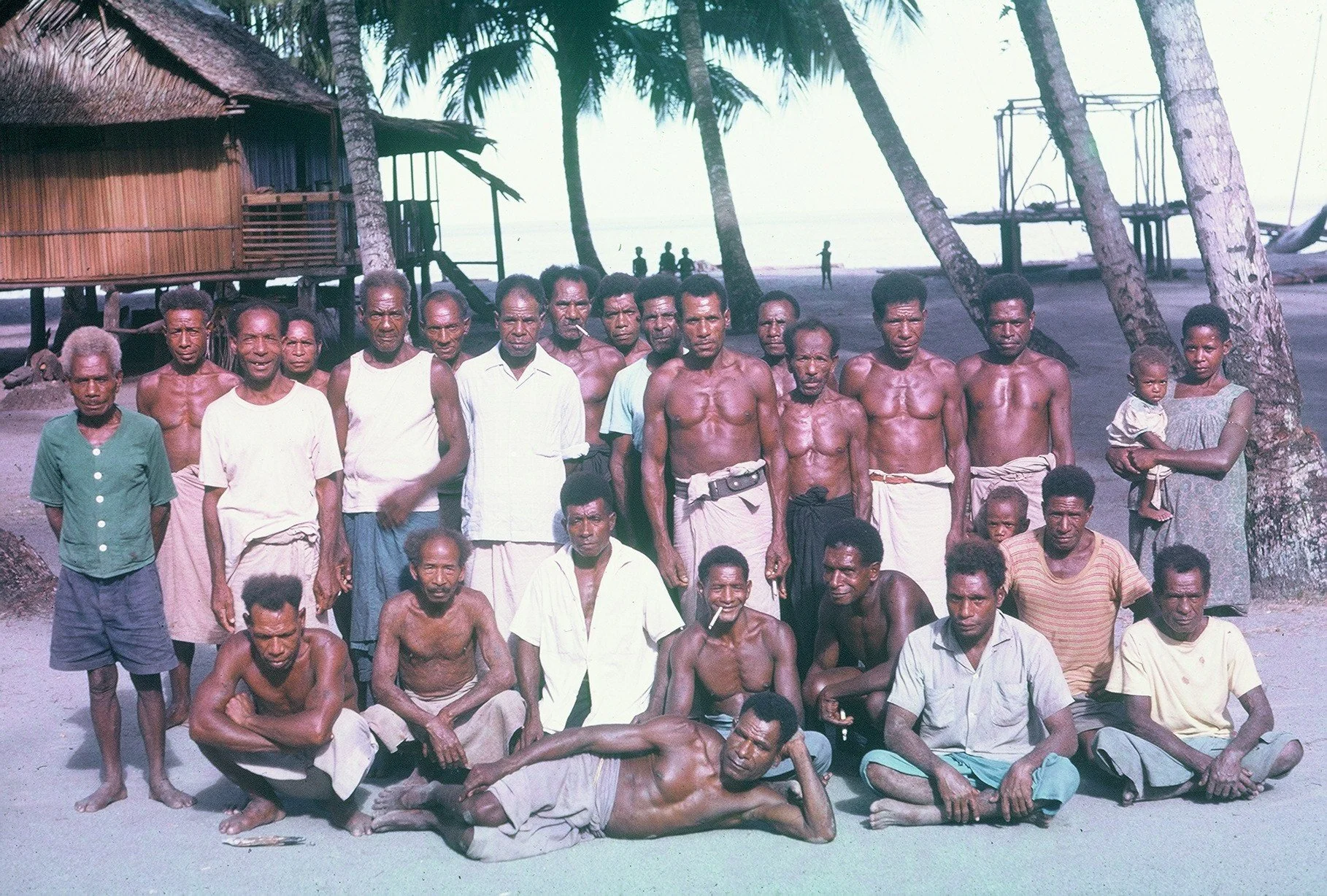
1964 June 14
Letter written by Ina Erickson from the Malalo Mission station to Durward and Estelle Titus Box 224 Route1, Carlos MN USA
This letter is referring to back home:
Dear mother and dad, Willa and Martin,
Poor Rose and what about Richard and the baby. Were they killed or injured or what? I do hope you go down to see them. Rose has been such a brave plucky little woman. Coming through so much smiling. Do all you can to help them through this tragedy. Will The? Be paying hospital bills? What about paying for the brother’s car?
Is little Martin Junior better now – poor little thing! He had so many things it really was no wonder his gamma globulin was so low. Will be waiting to hear if it picks up a bit or not.
Today you’ll be going to Bruce’s ordination. We’ve missed all of his big days and really makes us feel out of it. We pray God‘s blessings on his ministry and a safe arrival of a healthy baby. I don’t know how we were so fortunate to have healthy, happy youngsters. Life would be difficult without them.
Tommy spotted some cookies I bought in Lae. He told me he’d keep them in his pocket for me. I told him they’d be all right in the cupboard. He thought perhaps he should stand by the door holding it shut so they wouldn’t fall out. He didn’t manage to get one, but he sure tried all the angles.
Al is up and about, but tires easily. Australians believe in curing diseases, rather than preventing them. Four months ago, while in Lae, I tried to get Manto tests for us all, but we didn’t hit the right day so could not. Now when Al went in, I wanted him to have an x-ray, which they did, but thought it was most foolish. I don’t really believe they thought he had pneumonia even if he was a walking skeleton, because his chest had cleared before I had taken him in.
Have no anxieties, but in prayer and supplication, let our request be made known to God. Though my heart was heavy, we knew God had his protective arm around us. I was terribly upset when Al broke out in these mass welts and swelling from the penicillin so to think I had done it to him. I hate giving medicine without no having any lab reports to get by or anything.
I’m so glad you got to see the Erickson‘s. In his picture, Greg has really shot up. Grandma E loves him so. He takes the place of Al for her to shower her affection on. With Helen working both he and Vicki appreciate her. Would you buy the book – your God is too small, and after reading it, put it in the jail in Alexandria for people to read. You could leave your name and address in it in case someone wanted to contact you.
All that God would really make us feel like the responsibilities for ourselves and those of our families, friends and neighbors. The books arrived – thanks so very very much. We love and miss you all,
Love Ina
1964 June 20
Written by Alvin Erickson from Malalo to Peter Beck in Australia. No envelope or address. But the Becks ran the Sawmill in Sawet and finished their 5 year term in December of 1963.
Dear Evelyn, Pete, Carol, and Rhonda,
Hi from a long lost neighbor ! Were very glad to hear you’ve been able to take up some kind of normal living again, although we miss our friends on the last frontier to the south. As you have no doubt heard, there have been some minor developments at the old Homestead down on thousand bar, all of which have substantiated the fact that both the crew and the village people were put on pretty solid footing before you left, whether you might have thought it or not.
Here is pretty much what we did. Since Kepoasing did not have any other mischief to get in, I first took him with me on a trip back to the Kaiwa mountain people. From Bujaval, or Mubo, we hiked down to Buikela. Coming down from the mountains like that, we got a pretty good view of the landscape and the two big rivers that come together about 5 miles from the coast. We were surprised to find that the forest was almost nothing but Taun1 coming right down to the river. The Taun is the white tall straight variety. Although the river was good sized, the Buikelas themselves have never cut any trees there. Instead, they were far down the river with long roads into the jungle to pull their trees out. Kepoasing was quite surprised to see just how much effort they had been going to get their logs out and what a big area of good forest land they still hadn’t touched. Of course the Buikelas have never denied any of this!
After this, Dr. Kuder asked us to send a man to Wau to appeal for a sawmiller, if he wanted one. The circuit appointed Kepoasing to do the honors.
January brought two developments which helped the things along. Kepoasing did a little check on the best forests which each village had to offer. He spent about three days in each village from Busemeng to Kui. He was instructed to look also in areas from where the Dolmar saw could work. What he found was nothing startling, but it served as a reminder that quite a bit of timber is available especially at Busemeng or Buso if there was a way to get it out.
We took a little spell in January with the big dedication finally over. On our way through Madang, we saw Johno and the Dolmar saw at Yagaum (in madang). Since Johno had mentioned in his Sawet report that the Dolmar might be practical as a way to get a log flinched and out of the bush, we were interested to hear what he thought of it now that he had had a chance to be around one. His comments made the venture of having a Dolmar at Sawet, seem quite plausible.
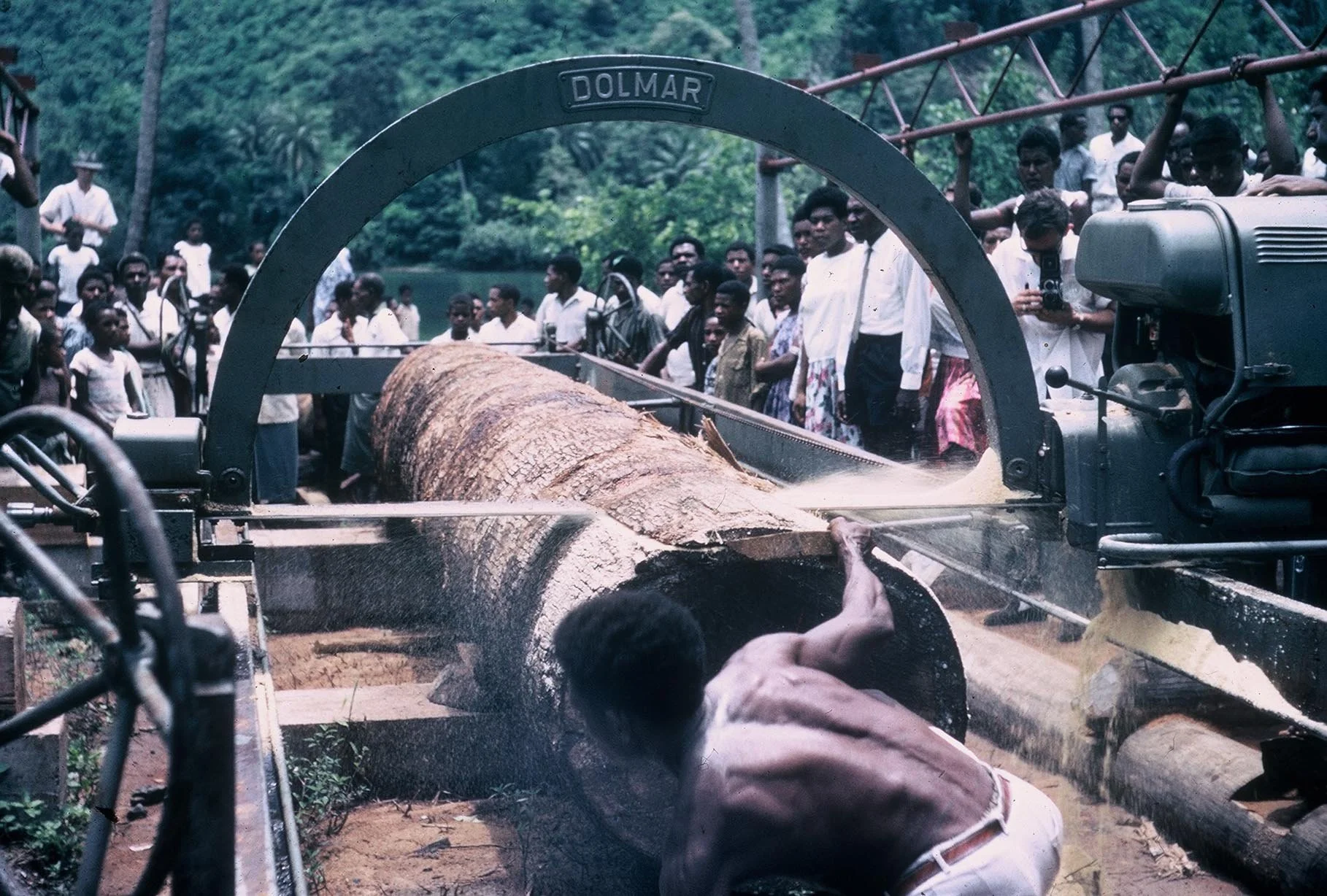

Photo 1: This Dolmar saw which can cut huge logs. Photo 2: Sawat area Laukana village to the right of the photo and the Becks lived on the peninsula at the lower right of photo.
Conference came next, where the business and plantation committee heard from Kepoasing and Johno and made the suggestions.
We buy a Dolmar.
The mission finds us a new man.
We moved the mill. Since there seems to be quite a bit of timber at Busemeng and in the Busemeng Buang valley, it was still suggested that Laukano’s old village site become the new mill site.
This is still pending.
It was recognized that such steps would cost quite a bit, and therefore a loan made. We were very thankful to see that the financial picture was much brighter after last year, and that we were in a real position to go ahead if that’s the way things would work out. I just got a statement which shows that, including the trade store profits, the gross profit was a little over 4000 pounds. Half went to household so your plane fare was more than covered, 1/4 knocked the Deb down to about 450 pounds and the last thousand came back to the congregation which means they now have 2400 pounds. Of course, part of household might come back if the executive committee approved it. I hope you folks will take this report for what it is and that it is a real tribute to the way you put Sawet on its feet. it was recognized that if the mill was moved, one of the first rec requisites would be a house for a European. That was conference.
After conference, we sent some boys to Madang to be trained in buying logs by Johno and in handling the Dolmar by Bill Schultz. During February, Kepoasing took a better look at some more forest. Johno said he could come down to take a look at some of the good spots Kepoasing had spotted and see possible new sites.
By the middle of March the crew was pretty antsy as to just what was going to happen next. Z. We decided to see what would happen with the boys if they would start the thing up by themselves. Gideon is teaching at Laukano this year and so he could buy logs and open the trade store once a week. Although men in Australia had been contacted, there was no sawmill in the wind.
By this time I had had fire Gwaleyam. I remember your advice to try to keep him on, but I just couldn’t get him to follow orders. Luckily, Abele from Buakup, who used to work as a mechanic for Namasu has come back from the Dolmar saw training and he has kind of overseen the mechanical maintenance of the Kuli.
Work started up fairly slow. The boys knew they were really on trial. Nuancing and Laukano set some logs. Buikela went Bush. All of April the mill operated at a steady home. Buikela and Kelkel now send about 100 logs. The Kiawas from Guadagasal moved down in April in back of Buikela. About June 1 they sent about 80 logs. Running almost trouble free as far as the machinery and personnel problems were concerned. We got the Simbang on June 5 and they put about 28,000 on board. Lloyd S. Went down and figured out the amounts. I was at the Kaiapit Sam. Since that time Buikela and the mountaineers have continued to cut. Labsbia, Buso, and Kui are cutting and should have about 175 logs between them.
(the following part of the letter has small piece torn and is gone so I put in “blank” where the missing part is.-Paula, Jan 2023)
All of which – blank –, I think, is mainly shows that Sawat is somewhat in the -blank – people by now. A little pushing and prodding, and the people are ready to work. Even more now they realize they really are economically independent on Sawet. Taxes have been a vital factor.
The thing which has impressed us the most is the way the crew has taken a hold. I’ve been down several times to try to get some semblance of order into the bookkeeping end. However, in the mill itself, it has really been their baby. Underneath is a real drive to show that they as New Guineans are able to take the responsibility. I have been most surprised at the way Kepoasing has really taken on responsibility. Janingua has worked out well. Nikolaus is kind of the overall supervisor and a support for Kepoasing. But, who is Gideon’s nephew is now working as a bookkeeper, log buyer, trade store, boy, and report writer. We have over simplified this work to the point of ridiculousness to keep things going.
As I look over the whole situation, I realize that the boys probably learned a lot more from you folks than they ever showed but now, when the pressure is on, they are using their brains, looking over the other fellow shoulder, and trying to act like proprietors. I see the things as a farce in someways, because there are so many angles they don’t know about. On the other hand, it’s refreshing to see a New Guinean have a little confidence in his work and stand up like an equal. We’ve really seen this at our Jabem Sam, where Gedisa and Gabmadzung Bible school is taking over as district president. This year I have felt very deeply the need there is to really turn things over, haphazard, though it may be. I thought I have been pounding is possible sale of the Victor to Metegemeng and that’s purely confidential.
I believe basic principles such as hard work brings profit, careful, handling of money is necessary for growth of business, proper care of equipment is not a sideline, but a must to have been bred into the present crew at Sawet. Only years of patient participation can bring these lessons home. That’s your contribution to Sawet which has really been at ground level and it is on that that building still goes on.
The future of Sawet pretty much with Johno. He will be down on Thursday. If he wants to he can just let the mill keep rolling till something goofs up or it just runs out of steam. If he decides it is worthwhile to build a new mill, then, who knows what might happen in the next several years. I think he would like to come down and get the show on the road but there’s the illness in his family holding him back.
That’s enough about the old stomping grounds. Now Tommy and Paula would like to see Carol and Rhonda and have a good play. They still talk about them a lot. Kristi has been so jolly and pleasant to have around. We’re wondering about your plant life i.e. is the botanical flower still blooming? Would you like a nice warm New Guinea day about now? Heats provided free of charge. We still treasure your friendship. May he whose Grace has ever astounding make of you – blank- in an amongst your (The letter stops here -Paula)
Footnotes:
1Taun (Pometia pinnata) is a species of large tropical hardwood tree native to Southeast Asia and the Pacific region. Also known as matoa, island lychee, or tava, it is valued for its durable, reddish-brown timber used in construction and furniture, as well as its edible, lychee-like fruit. Taun, is a medium-sized to large tropical hardwood tree native to Southeast Asia. It is also known as the Pacific Rosewood or Tahitian Ironwood. The wood is strong and durable, with a fine, even texture, and distinctive red or reddish brown heartwood. The wood is very resistant to wear, decay, and insects, making it an excellent choice for furniture, flooring, and construction applications. Taun is also prized for its attractive grain pattern and is often used for decorative veneers and paneling.
2 Alvin is talking about villages in the Kiawa area which is south of Malalo - the coastal and inland from the Sawet area which is south of Salamaua
1964 June 30
Letter written by Ina Erickson from the Malalo Mission station to Durward and Estelle Titus Box 224 Route1, Carlos MN USA
Dear mom and dad,
Mr. Johnson, a sawmiller that is running a mill near Madang, came to look at our mill and the timber around here. The men down at the mill have really been doing a good job. He was awfully surprised. They had 122 logs on the beach, and many more in the villages cut, just waiting to be pulled in. They’ve been taking good care of the machinery, which is completely unheard of for a New Guinean. He wants to help them move to a new site where they have room for stockpiling logs, and anchorage for a boat for loading timber after it has been sawed. They will build a house for a European, but the European will be more of a guide, and teach and try to improve on logging methods and use of new equipment. And not run the mill which the fellows have demonstrated that they can do.
Some of the villages have left everything in are going into logging full-time. They need money for their taxes. Then they have to buy food instead of making gardens, so I’m not sure just how far I had they will come out.
Tonight we heard that Russia had put a motion before the security council that Australia was making a military state out of New Guinea. They think that New Guinea should be independent. Nothing could be farther from the truth. It would be a funny joke if it weren’t so serious. True, they have they have many airstrips, if you call the jungle paths that our mission planes risk their necks on to bring in supplies to the missionaries on outstations. There are only three or four strips that are capable of landing any aircraft of any size. They don’t even have an army capable of any defense, if Indonesia took over the three airstrips, they’d have captured the territory with little, or no fight at all. If independence were to be pushed on these people, now, they’d fall into the hands of the Indonesians, and they don’t want that. The official comment from the newly formed house of assembly, was that Russia should get some facts straight before they start making such foolish motions in the UN. if the situation should break loose in southeast Asia, so that the US were involved, old Sarkano would be on the march. I’m quite sure.
I really pulled a boner. I was trying to chop some wood quickly while we were at Sawet. A European medical assistant had pulled into Sawet in a boat at about 6:30 AM. I need a bit of firewood, so proceeded to try and chop some. With the first blow, I laid an accurate aim to the second joint of my thumb. Fortunately, my strokes are as powerless as my aim is poor, and I cut only to the bone and not through it. I didn’t have any sutures with me, but Al and Mr. Johnson managed to do a good job of taping it, and it is healing nicely with no loss of function. I certainly was embarrassed and thankful that it has been no worse.
As Al will be gone this week, we celebrated Tom’s birthday before he left. He could hardly wait for his birthday. One of the circles from Glendive, sent him a little John Deere tractor and does he ever love it. He even sleeps with it. I also rated and got a nice wrap-around dress. It is such a practical pattern. I’m going to try and copy it for my girls. I really like it.

Toms 3rd Birthday
Our Dr boy seems to be working out pretty well. So I have a little more time to help out with a few secretarial duties of which he detests. In typing stencils, I can just block out my mistakes with the red eradicator, so each stencil is highly decorated when I get through.
Paula is starting to talk about Christmas already, she will have a long wait. Kristi has a tooth on top, she sure is slow in getting them, she tries to walk, but is so fat that she has a hard time getting around.
I’m glad to hear that Fritz is feeling better now, poor little thing. How is the house coming? Now, if you were missionaries, you’d get not only house furnished, but all the furniture as well. Al was moaning the fact that when we come home, we won’t have a stick of furniture that we can call our own. Not that it really matters. I don’t really think there will be many more years to serve in New Guinea. Oh -that the Holy Spirit will move our hearts of our people that Christ might be preached and be received.
Al has been feeling quite well. Now, he will be going, or rather went to the Buangs, the area that the film was from, he flew for the first time instead of the usual day walk, only 10 minute flight. ( Very likely landed at Wagua airstrip that Fred Scherle and Alvin oversaw the construction of) We’ve had several planes observing our coastline, flying low and going back-and-forth.
Just behind Sawet, the sawmill, the government has discovered, nickel, which they will soon start mining – or so the rumor goes.
We had quite an unfortunate thing happened while we were at Sawet. A girl who got pregnant out of wedlock, died in her village. She had come to me, saying she was cold. This isn’t unusual as most everyone gets chills with malaria. I gave her an anti-malaria and didn’t really check her thoroughly, four days later, she still was cold, and then just died. I haven’t a clue what happened. She didn’t have any pain or bleeding, but must have had some internal hemorrhage. I certainly feel bad about it. She had been a nice girl. I had sent her to the hospital with some other ailment. While there, she got mixed up with a married man and so the sad tale goes. Up to now girls have been so closely guarded, and then married off when they were 12 or 13. Now with all of the boys off in the cities working in the compounds not marrying, leaving the to girls sit in their villages, and become old maids or desperately looking for a husband. None or very few of them have any vocation.
Now, we surely miss you all, in many ways these three years have gone by quickly. But in others it seems that life at home is so remote. Bilumof, taro, grass houses, outrigger canoes, seam, more than norm of life now instead of unusual train, car, stores and TV now seems strange.
Love, Ina.